

























Rare earth elements in mobiles

Rare Earth Elements (REEs) are the "hidden minerals" that make modern smartphones possible. Despite their name, these 17 chemical elements (such as Neodymium, Lanthanum, and Yttrium) are relatively plentiful in the Earth's crust, but they are "rare" because they are seldom found in high enough concentrations to be mined economically.
In a typical mobile device, REEs are indispensable for three main reasons:
Miniaturization and Sound
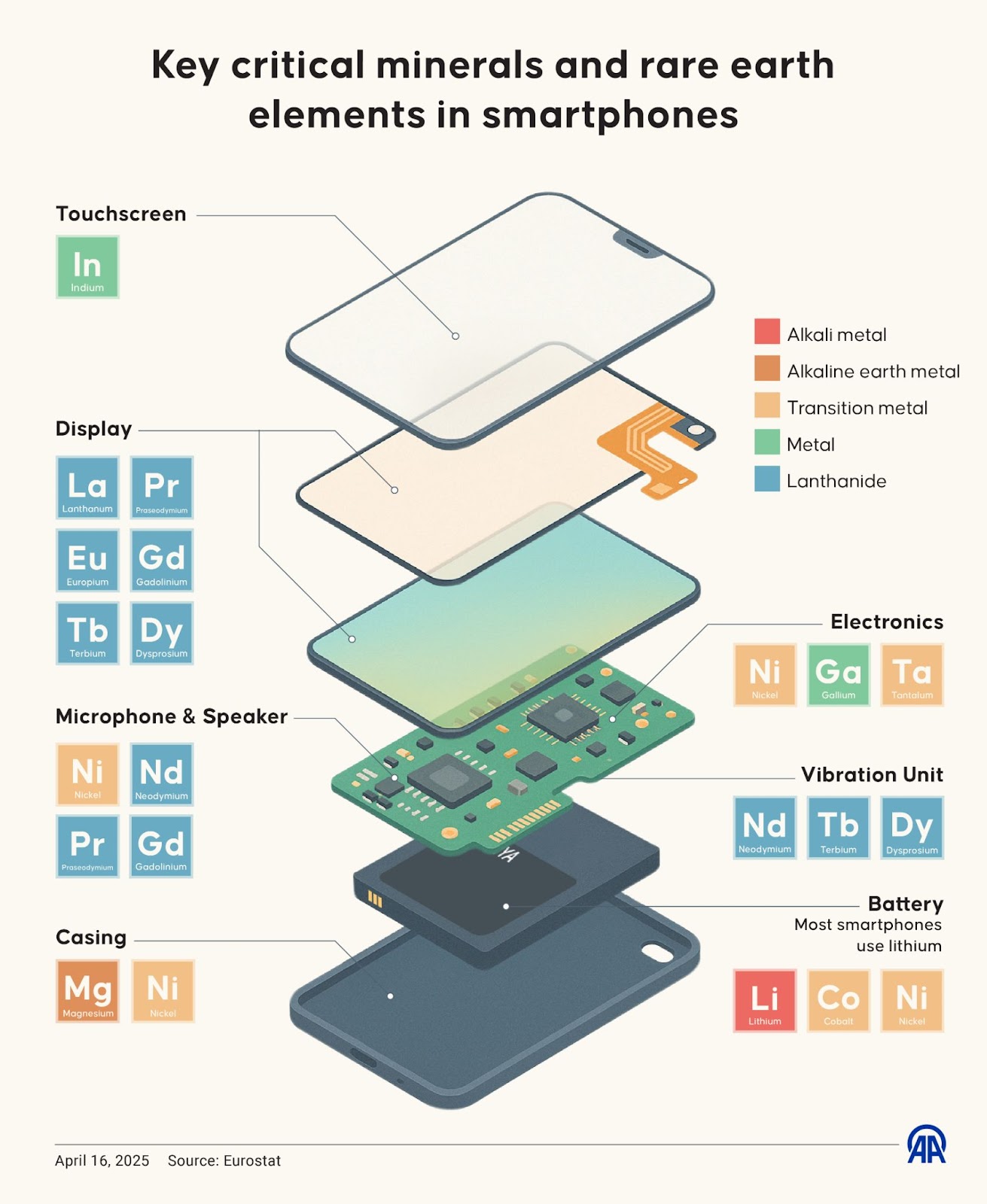
Neodymium is used to create incredibly powerful, tiny magnets. These are essential for the speakers, microphones, and the vibration motor that provides haptic feedback.
Visual Brilliance
The vibrant colors on your OLED or LCD screen rely on phosphors made from Europium (for reds), Terbium (for greens), and Yttrium. Without these, smartphone displays would be dull and energy-inefficient.
Camera Precision
Lanthanum is often added to the glass of tiny camera lenses to increase the refractive index, allowing the lens to be thinner while maintaining a sharp focus.
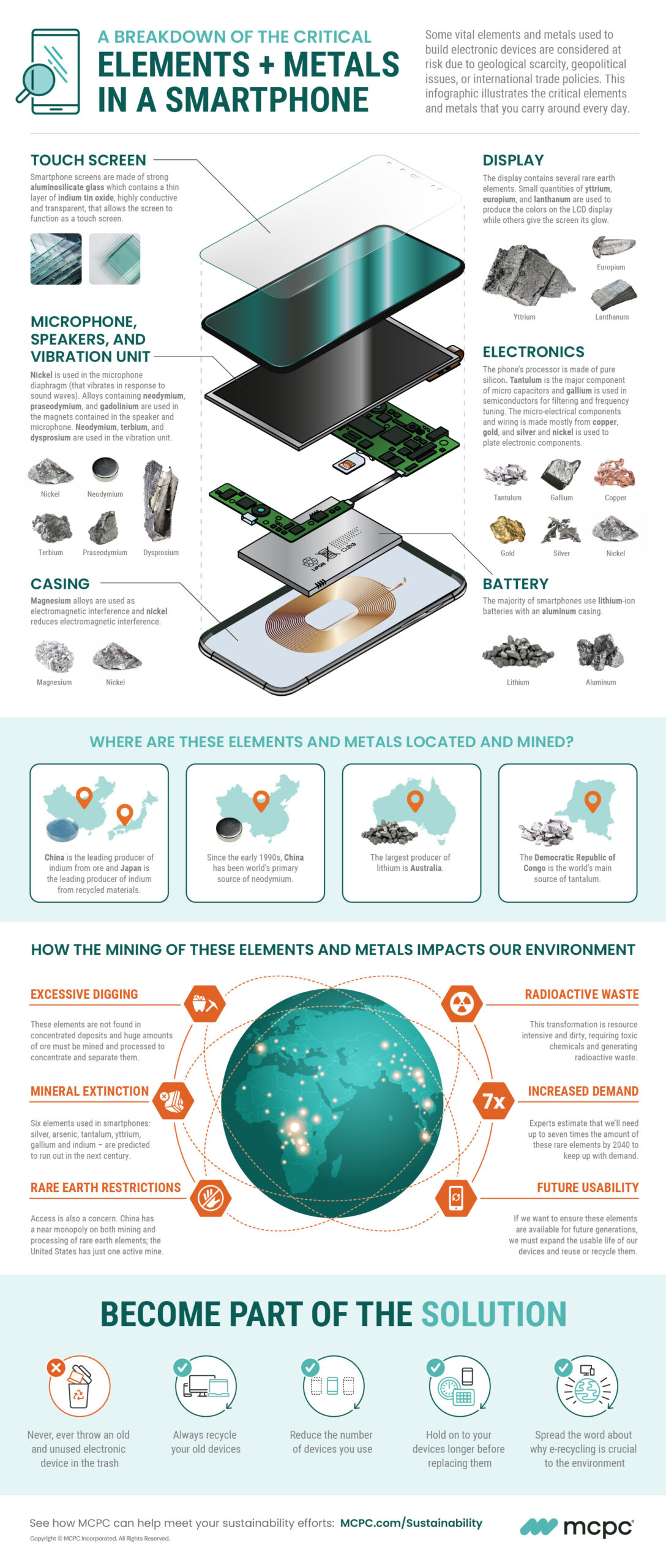
However, the use of REEs presents significant environmental and ethical challenges. The extraction process is chemically intensive and often results in toxic or radioactive waste. Furthermore, because a large majority of the global supply is controlled by a few regions, they are considered "critical minerals" for economic security.
As we move forward, the tech industry is focusing on circularity. Because REEs are difficult to substitute, there is a growing push for "urban mining"—recycling old smartphones to recover these elements rather than digging new mines.
Please sign in
Login and share