



















🧵 How a DC Generator Works ⚡

A DC generator converts mechanical energy into direct current (DC) electrical energy using the principles of Faraday’s Law of Electromagnetic Induction. Let’s break it down:
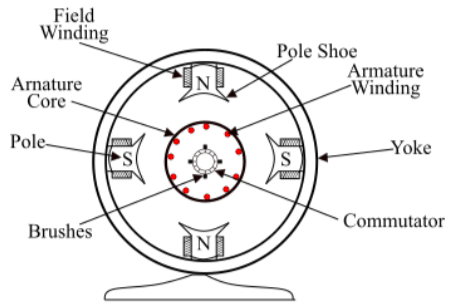
Figure 1, view larger image
1️⃣ Mechanical Rotation
- A prime mover (like a turbine or motor) rotates the armature inside a stationary magnetic field.
- This rotation causes the magnetic flux through the armature to change.
2️⃣ Electromagnetic Induction
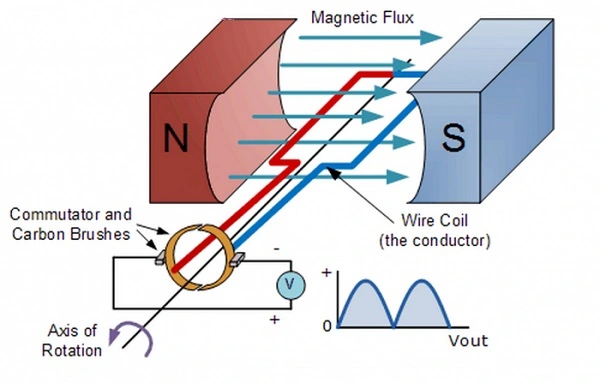
Figure 2, view larger image
- According to Faraday’s Law, a changing magnetic flux induces an EMF in the armature conductors.
- This is the basic principle that generates electricity.
3️⃣ Role of the Commutator
- A commutator is a split-ring device that reverses the armature’s connection to the external circuit exactly when the current direction changes.
- This ensures a continuous unidirectional current (DC) output.
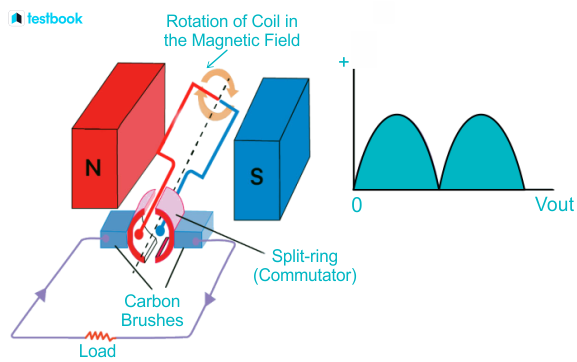
Figure 3, view larger image
4️⃣ Output via Brushes
- Carbon brushes conduct the current from the commutator to the external circuit.
- The result: a smooth, steady DC supply.
💡 Fun Fact: Without a commutator, a generator would produce alternating current (AC) instead of DC.
💫 Happy Questing, Fam 🚀🎉
— @Mrrajput_2212 (iQOO ID: 100459)
📸 Instagram: mrrajput_2212 💙🔥

Figure 4, view larger image
Off-topic Lobby
65
2
Please sign in
Login and share
Sign in