

























Poly-functional Robots

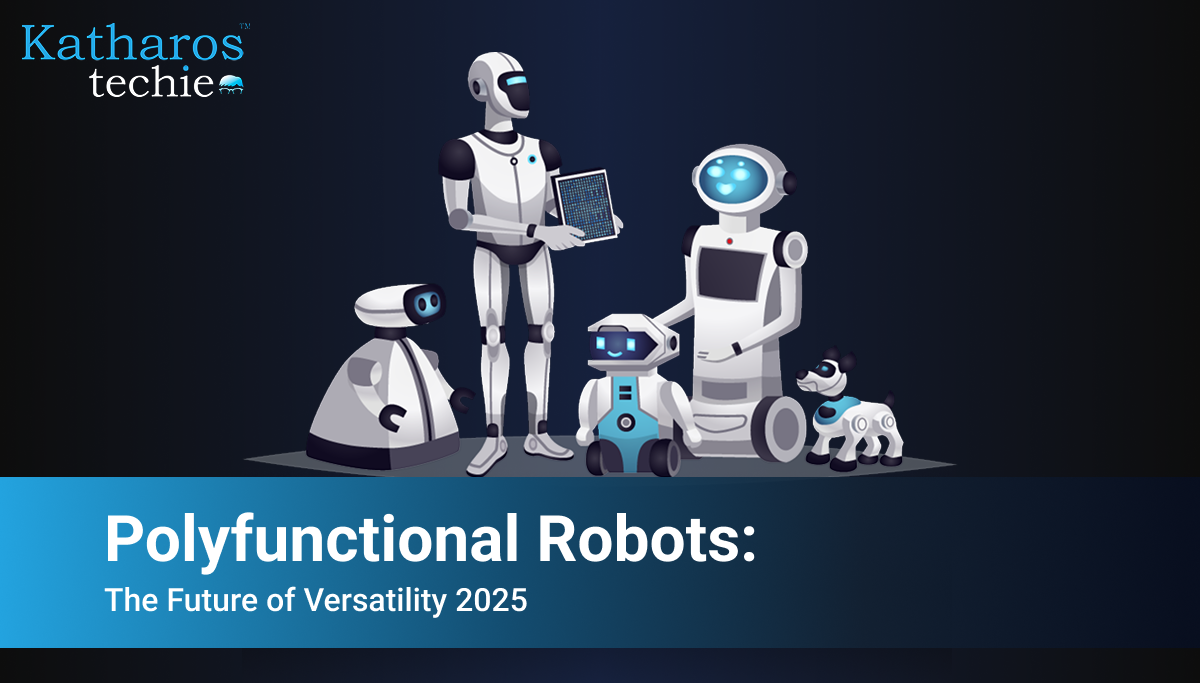
Figure 1, view larger image
“Poly” means many, and “functional” means capable of performing tasks.
So, Poly-functional Robots are robots that can adapt and perform many different jobs without needing complete redesign or reprogramming.
🤖 How They Work
- Modular Design: Their body parts (arms, sensors, tools) can be swapped or reconfigured depending on the job.
- AI-Driven Adaptability: They use machine learning and computer vision to understand new environments or tasks automatically.
- Multi-purpose Software: One AI brain can control multiple task modules — for example, the same robot can cook, clean, and deliver items with different attachments.
🌍 Real-World Uses (Examples)
- Home Robots: A single robot that can vacuum, serve food, and monitor home security.
- Factory Robots: Robots that can switch between assembling phones one day and packing boxes the next.
- Healthcare Robots: One robot that can deliver medicine, assist in surgery, and help with patient movement.
- Agriculture: A robot that can plow, plant, and harvest based on the season.
🔮 Future Potential
- In the next 5–10 years, these robots may become common in homes and workplaces, similar to how smartphones replaced many gadgets.
- Combined with AI and 6G, they’ll be able to coordinate with each other — forming smart robotic networks that manage entire systems (like smart farms, factories, or hospitals).
Thank you
Your Qool Quester
Ayush pandey
Tech
55
2
Please sign in
Login and share
Sign in