



























Dispatch already missed a big opportunity to make my choices matter

What should be a consequential early moment in Dispatch turns out to be a placebo
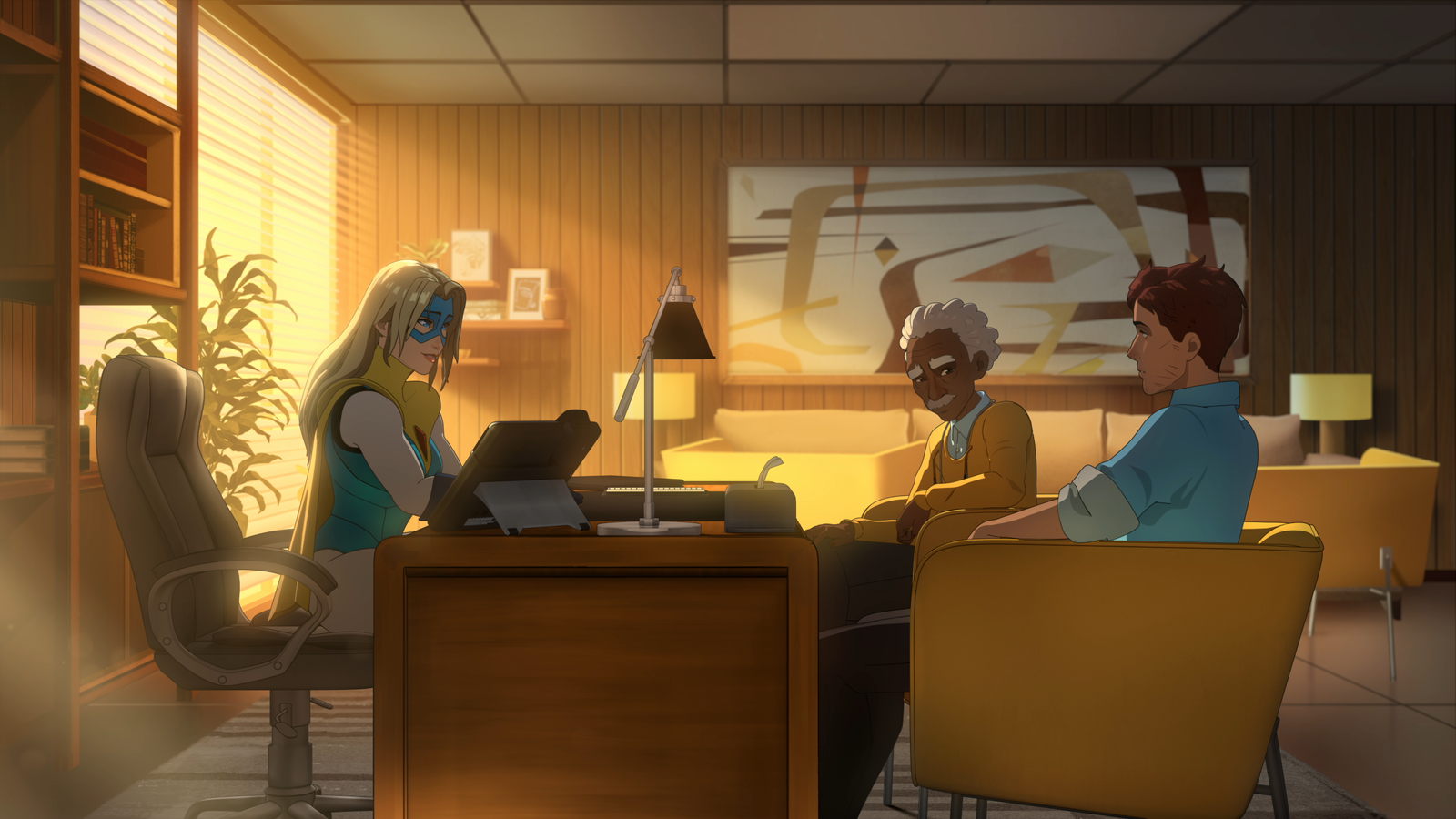
We’re now four episodes into Dispatch, the latest narrative adventure created by former Telltale Games writers now at AdHoc Studio, and the superhero story is already coming into focus. Though the choices that players make throughout those chapters haven’t proved too consequential yet, it’s clear that we’re at a turning point. A steamy love story has kicked into high gear, tensions are flaring between heroes, and a grander supervillain arc is likely about to emerge from the shadows. There are plenty of cliffhangers that make it worth coming back week to week, but it’s the promise that players’ choices will shape the story that gives Dispatch its real pull.
Unfortunately, I’m failing to feel that the weight of my actions will pay off. It’s not that I don’t think that my dialogue decisions will matter in the long run; I’ve made some major decisions that are bound to bite me in the ass soon enough. It’s more that Dispatch has yet to give me confidence that the management sim minigame that appears in each episode actually matters.
Dispatch’s story centers around Robert, a retired superhero who gets a gig working a desk job at the Superhero Dispatch Network. His job is to send heroes from the Z-Team out on jobs each day, deciding who has the best stats to deal with any given crime in progress. It’s both a way to learn a bit more about SDN’s roster of heroes and give players a mini-RPG that gives an otherwise traditional narrative adventure some more active gameplay. Those 15-minute interludes were highlights of my playthrough in the first two episodes, but I wasn’t initially sure how they’d play into the wider story of Dispatch.
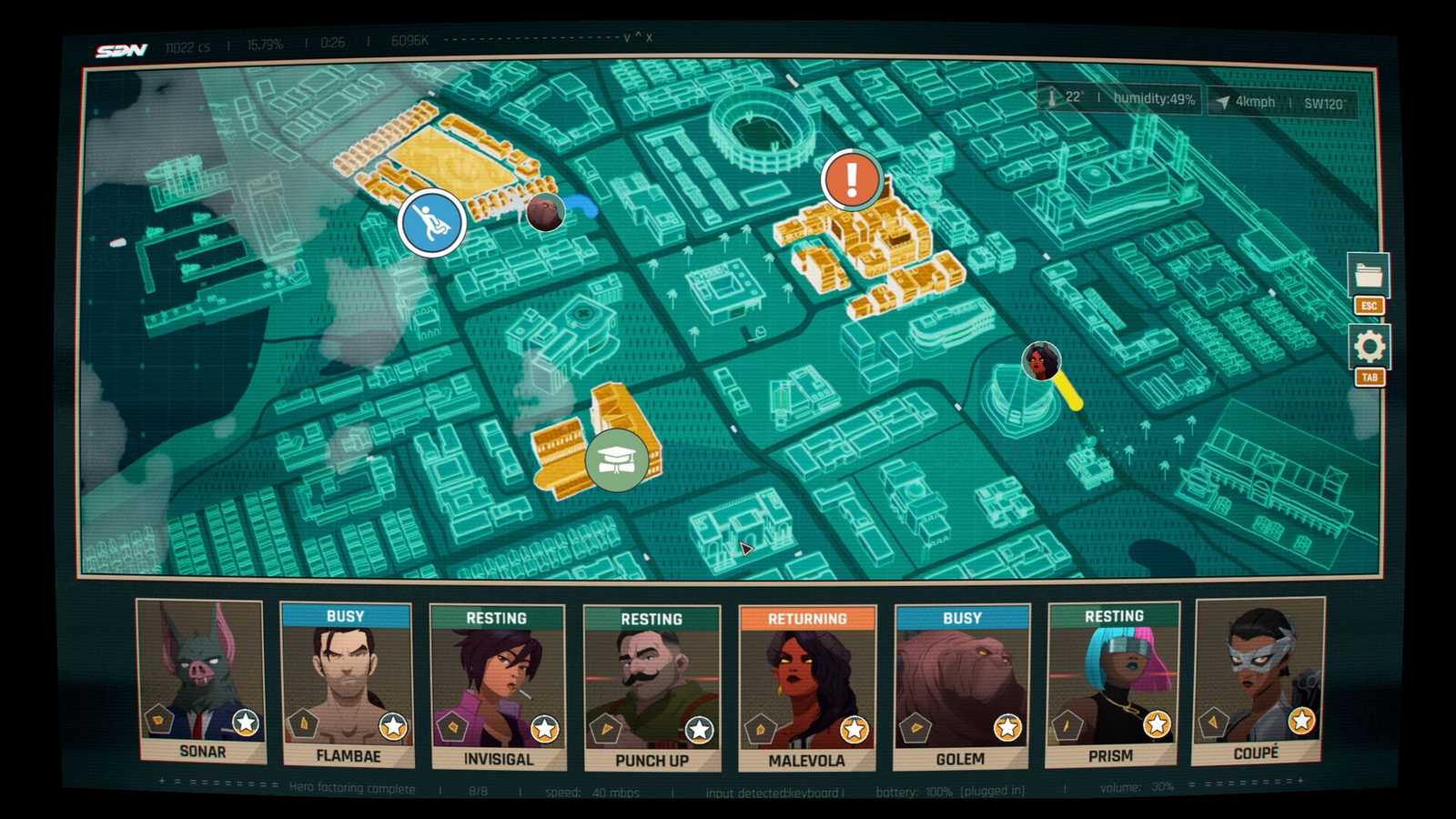
Now following its latest batch of episodes, I’m even less certain. My worry stems from Episode 3, which presents itself as the moment where what you do in the management sim will have a major impact on the story. To whip the team into shape, SDN head Blonde Blazer decrees that the hero with the weakest performance will be cut. It’s a great setup. As I logged in to play the chapter’s dispatch mission, I became hyper-aware of everything I was doing. Who was I not sending out enough? Who was failing missions? It was a more tense session than usual as I started to feel like the characters I’d been overlooking were in danger of getting fired before I could learn about them.
At the end of the day, I was left with a gutting choice: get rid of Sonar or Coupé. How could I have failed two of my favorite characters already!?
It turned out that I hadn’t done anything wrong at all. No matter what happens during the management sim, Sonar and Coupé will always be the choice you’re given at the end of the chapter. I figured that couldn’t be right, but the player stats at the end of the chapter, Steam achievements, and chatter on the game’s Reddit community confirmed that there are only two options here. Prism could have failed five missions and ended the day with an injury and she never would have been an option.
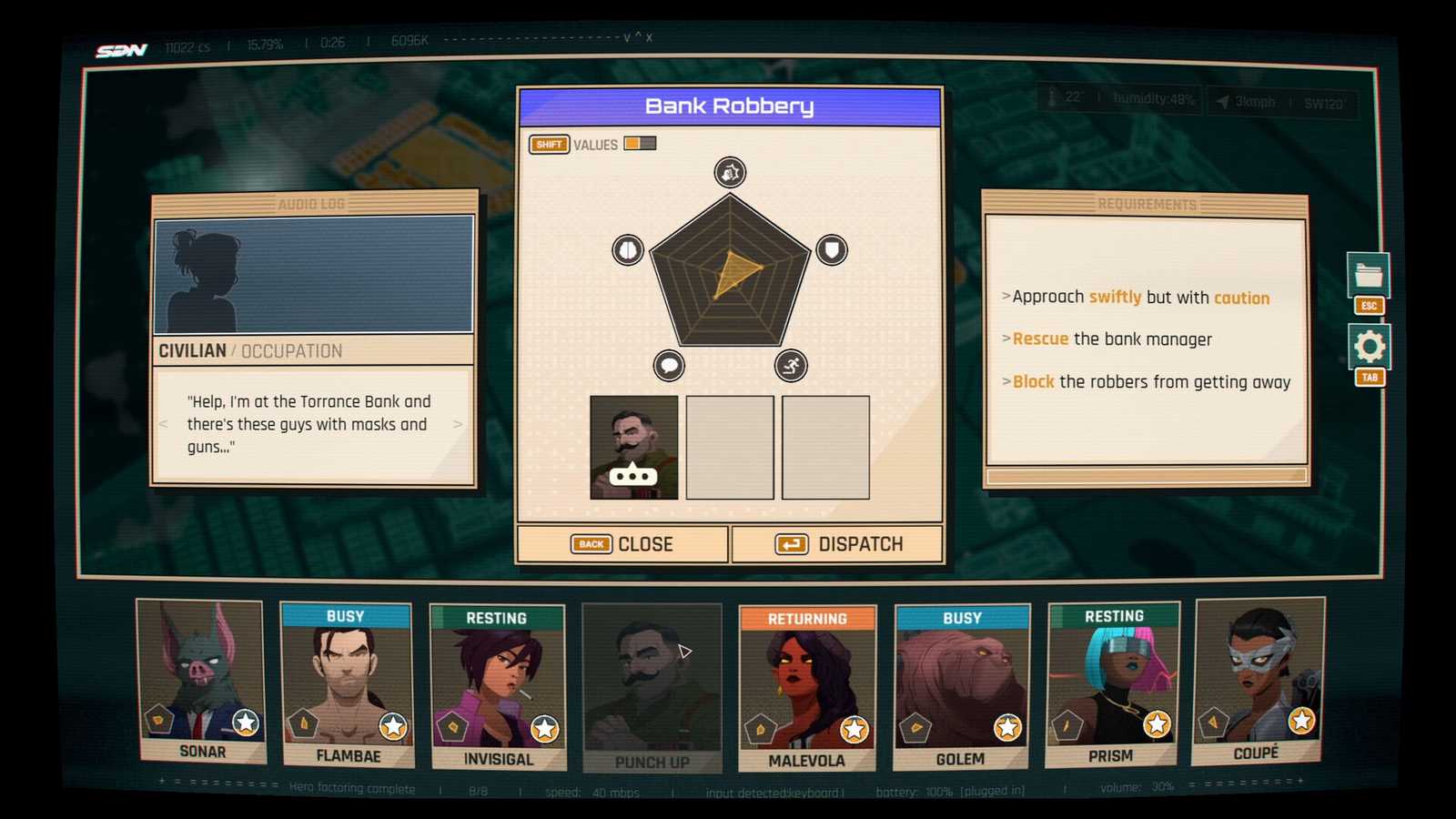
It makes sense when you consider how much variability AdHoc Studio would have to account for in a truly reactive moment. It would create eight branching paths that would only permeate further with each new choice and story twist. It just wouldn’t be feasible. Fair, but then what is my incentive to take the management sim seriously going forward?
My sense so far is that the minigame exists more to emphasize some narrative moments rather than shape them. After I was forced to fire a hero (sorry, Sonar), my next day on the job was grueling. I was suddenly understaffed and started completely missing hero requests for the first time. It’s a clever piece of narrative design that underscores that no member of the team is expendable, even if they’re all a pain to deal with. But my actual performance in that scene? Seemingly inconsequential! It leaves me feeling like I’m being fed some placebo gameplay to keep me arbitrarily engaged with a choice-driven animation.
I’m sure the long-term consequences are coming — this is a Telltale-style game, after all. I expect that some crucial, late chapter moment will hinge on my heroes’ stats that I’ve been building up through each episode. But that’s not a given. It’s up to Dispatch to make me trust that my actions have consequences and play accordingly. Episode 3 actively works against that idea, telling me that the script is the script and the management sim is an island away from it. There’s no equivalent to a “Blonde Blazer will remember that” warning to signal that my failure on any given dispatch mission is going to have consequences. It’s just a day job I clock in and out of.
Hey, maybe that’s the point!
There are still four episodes left to go in Dispatch’s run and I admit that I might just be jumping the gun by not being able to see how the system works in the grand context of it all. That’s the tradeoff you get with an episodic format like this; the tension of a good cliffhanger gets counterbalanced by the impatience that comes when game systems aren’t coming together fast enough.
Even if there is a grand reveal coming, though, Dispatch hasn’t given me much of a good reason to care about Robert’s gig, even though it’s something the character himself is starting to take pride in at this point in the episodes. I want to be right there with him, but I’m going to need some real stakes to get there in the next few episodes.
Please sign in
Login and share