



























Navi Mumbai’s Game Changer: Welcome to BKC 2 📍

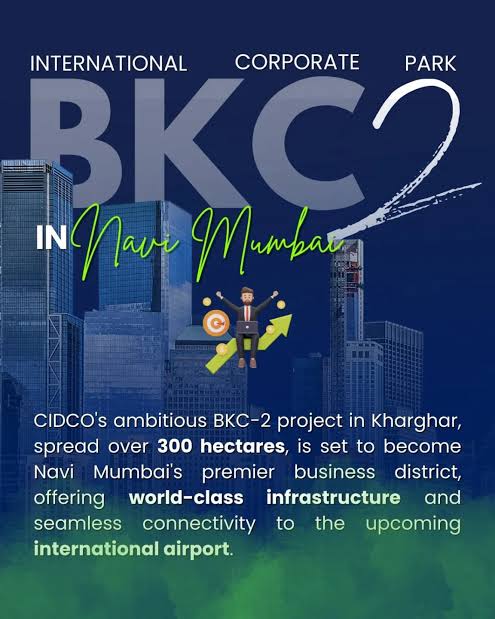
Mumbai, the financial capital of India, is constantly evolving to meet the demands of global commerce and rapid urban growth. After the tremendous success of the Bandra Kurla Complex (BKC) as Mumbai’s premier commercial hub, the City and Industrial Development Corporation (CIDCO) has taken on a new and ambitious vision the creation of BKC 2 in Navi Mumbai. Also known as the International Corporate Park, this project aims to replicate and surpass the success of BKC, establishing Navi Mumbai as a major international business destination.
Concept and Vision
The idea behind BKC 2 is to create a modern, world-class corporate and commercial district that can cater to India’s expanding business landscape. CIDCO envisions this as a mixed-use hub that seamlessly blends corporate offices, retail zones, entertainment spaces, and green environments. The ultimate goal is to provide an alternative to Mumbai’s overcrowded business areas and attract both national and international companies to Navi Mumbai.
Unlike the original Bandra Kurla Complex, which primarily functions as a daytime business center, BKC 2 is designed to be a 24-hour active district. CIDCO has emphasized creating a vibrant ecosystem that includes shops, dining areas, and entertainment facilities, ensuring a lively atmosphere even after business hours.
Location and Scale
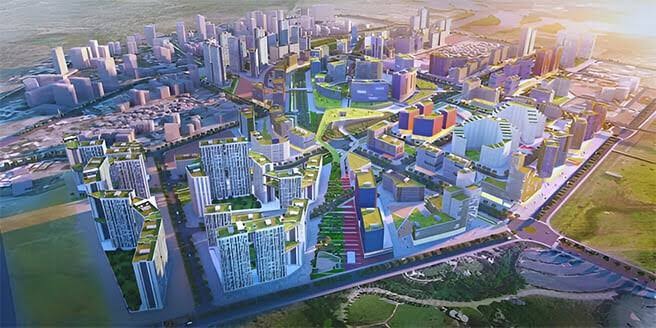
BKC 2 is proposed in Kharghar, one of the fastest-growing nodes of Navi Mumbai. This location was strategically selected due to its proximity to key upcoming infrastructure projects such as the Navi Mumbai International Airport, Mumbai Trans Harbour Link, and the Navi Mumbai Metro network.
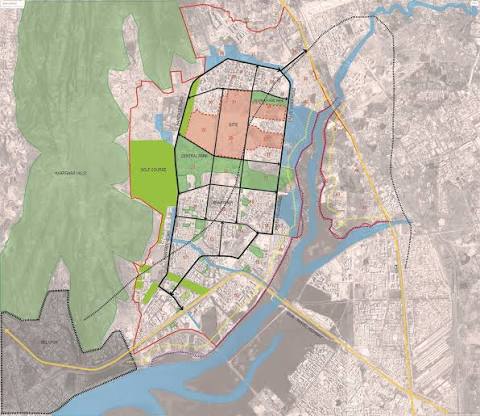
The project is expected to span approximately 200 hectares (around 500 acres). Out of this, around 125 hectares will be dedicated to corporate and commercial use, while the remaining 80 hectares will feature a central park and golf course to provide open green spaces within the urban landscape. According to early reports, BKC 2 will be nearly twice the size of the existing Bandra Kurla Complex, making it one of the largest planned business hubs in India.
Infrastructure and Design Features
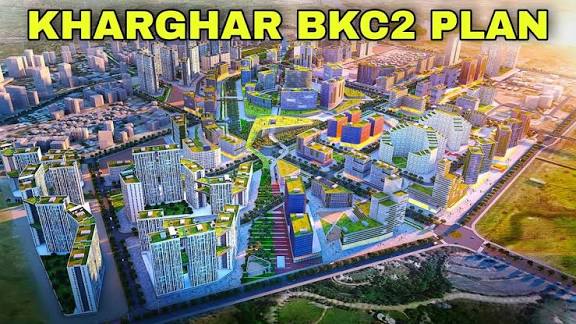
CIDCO’s plan for BKC 2 focuses on high-density, vertical development supported by modern urban infrastructure. The Floor Space Index (FSI) is proposed at around 3, allowing the construction of tall, efficient buildings and maximizing land use.
Key design features include:
Mixed land use: Offices, retail centers, hotels, and residential zones for an integrated urban environment.
Green and recreational zones: A large central park, landscaped open spaces, and a golf course to promote a sustainable lifestyle.
Smart infrastructure: Advanced utility systems, digital connectivity, and eco-friendly waste management practices.
Transport and accessibility: Direct links to the Navi Mumbai Metro, express highways, and proximity to the upcoming international airport, ensuring excellent regional and global connectivity.
The development will also prioritize pedestrian-friendly pathways, dedicated cycling tracks, and efficient public transport systems to reduce congestion and promote sustainability.
Current Status and Timeline
The initial planning and design work for BKC 2 began several years ago, with CIDCO engaging consultants to prepare detailed master plans. The design phase was expected to be completed within six months of the project announcement, and since then, various updates indicate steady progress in land acquisition, infrastructure planning, and feasibility studies.
While the project remains in the planning and early development stage, groundwork has started in some areas. The upcoming Navi Mumbai Metro and nearby airport construction are key components that will support BKC 2’s long-term development. Given its massive scale, full realization of the project is expected to take several years, unfolding in multiple phases.
Economic and Regional Impact
The establishment of BKC 2 is expected to transform Navi Mumbai’s economic landscape. Here are some of its anticipated benefits:
Business expansion: BKC 2 will attract multinational corporations, startups, and financial institutions seeking modern office spaces with better connectivity and lower costs compared to central Mumbai.
Job creation: The project will generate thousands of employment opportunities during both construction and operational phases.
Real estate growth: Kharghar and nearby areas are witnessing a surge in real estate demand, with residential and commercial property values steadily increasing.
Infrastructure development: The need to support this business hub will lead to improved roads, transport links, and public amenities across Navi Mumbai.
Urban decentralization: BKC 2 will reduce the pressure on Mumbai’s core business zones, balancing economic activity across the metropolitan region.
Challenges and Considerations
Despite its promise, the BKC 2 project faces several challenges typical of large-scale developments — including lengthy approval processes, funding allocation, and ensuring timely infrastructure completion. Additionally, managing traffic, sustainability, and urban design balance will be key factors determining its success.
However, with CIDCO’s strong track record in city planning and the state government’s focus on developing Navi Mumbai, the prospects for BKC 2 remain highly positive.
Conclusion
The BKC 2 project in Navi Mumbai stands as a symbol of Maharashtra’s forward-looking urban development strategy. It represents a bold step towards decentralizing Mumbai’s commercial activity while offering a futuristic, sustainable, and globally competitive business environment.
Once completed, BKC 2 will not only reshape the skyline of Navi Mumbai but also redefine how India envisions its next generation of corporate hubs — a city within a city, where business, lifestyle, and innovation coexist seamlessly.
ℌ𝔞𝔭𝔭𝔶 𝔔𝔲𝔢𝔰𝔱𝔦𝔫𝔤,
ℜ𝔬𝔥𝔞𝔫 ℜ𝔞𝔧𝔢❤️
ℭ𝔩𝔞𝔫 𝔪𝔢𝔪𝔟𝔢𝔯
Please sign in
Login and share