



























Why AI Often Fails to Create Images of People Writing with Their Left Hand

Artificial Intelligence has advanced rapidly in recent years, especially in the field of image generation. AI models can now create highly realistic portraits, landscapes, and even complex scenes with remarkable detail. However, despite this progress, one area where AI still struggles is generating accurate images of people writing with their left hand. This limitation may seem small, but it highlights how AI learns, how it interprets visual patterns, and where it still faces challenges.

The primary reason for this issue lies in the training data used to teach AI models. Most of the images available online and in datasets feature people writing with their right hand, simply because right-handed individuals make up the majority of the population. Since AI learns from patterns it sees repeatedly, it forms an internal assumption that “writing equals right hand.” As a result, when the AI is asked to create a left-handed writing pose, it often defaults to the patterns it knows best, leading to inaccurate or confused results.
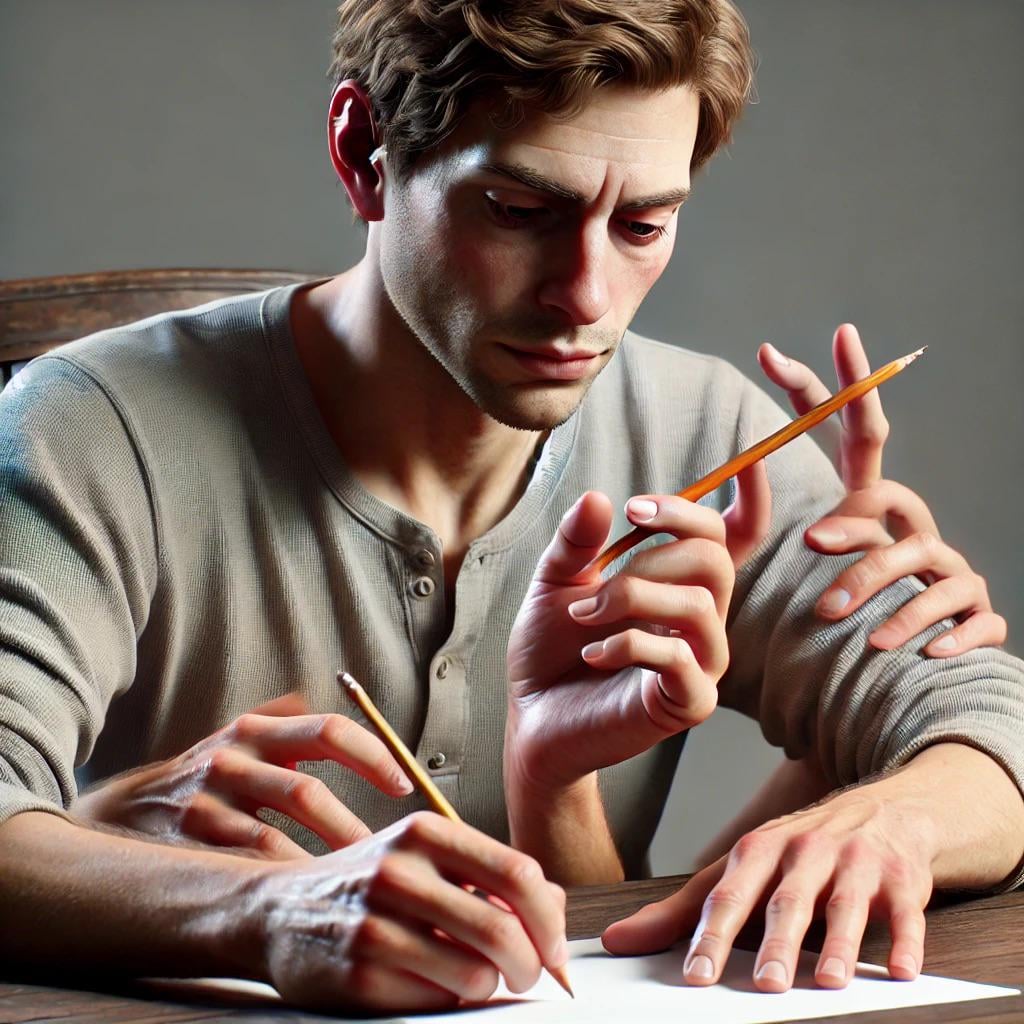
Another significant challenge is the complexity of hand–object interaction. Human hands are one of the most intricate parts of the body, with delicate movements, precise finger positioning, and subtle angles. Writing adds an extra layer of complexity because the AI must understand how the pen, fingers, wrist, and paper all interact. Left-handed writing introduces unique wrist angles and paper orientations that differ from right-handed writing. Since the AI does not truly understand the logic behind these movements but only mimics patterns, it often becomes confused and produces unnatural or distorted images.
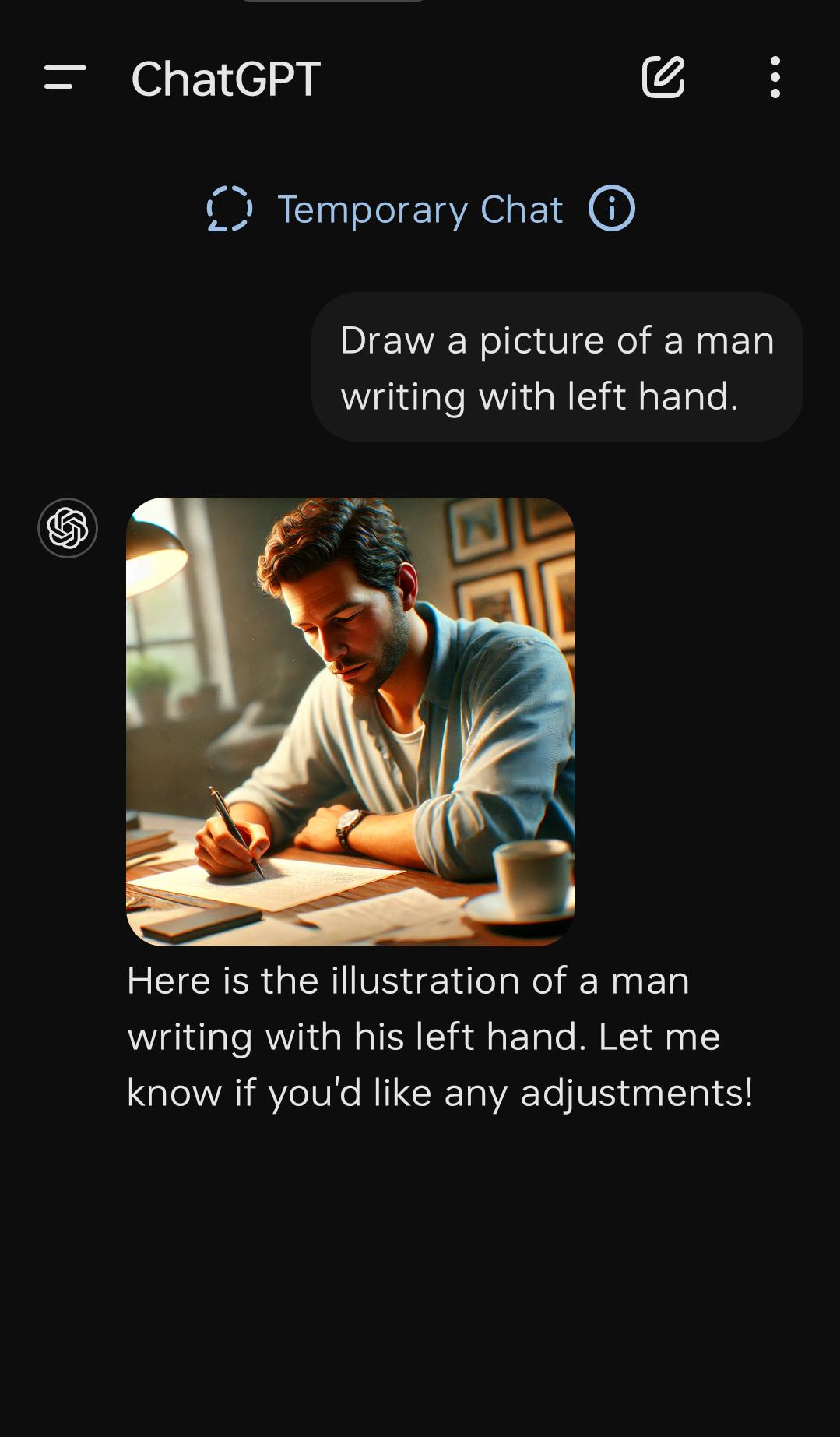
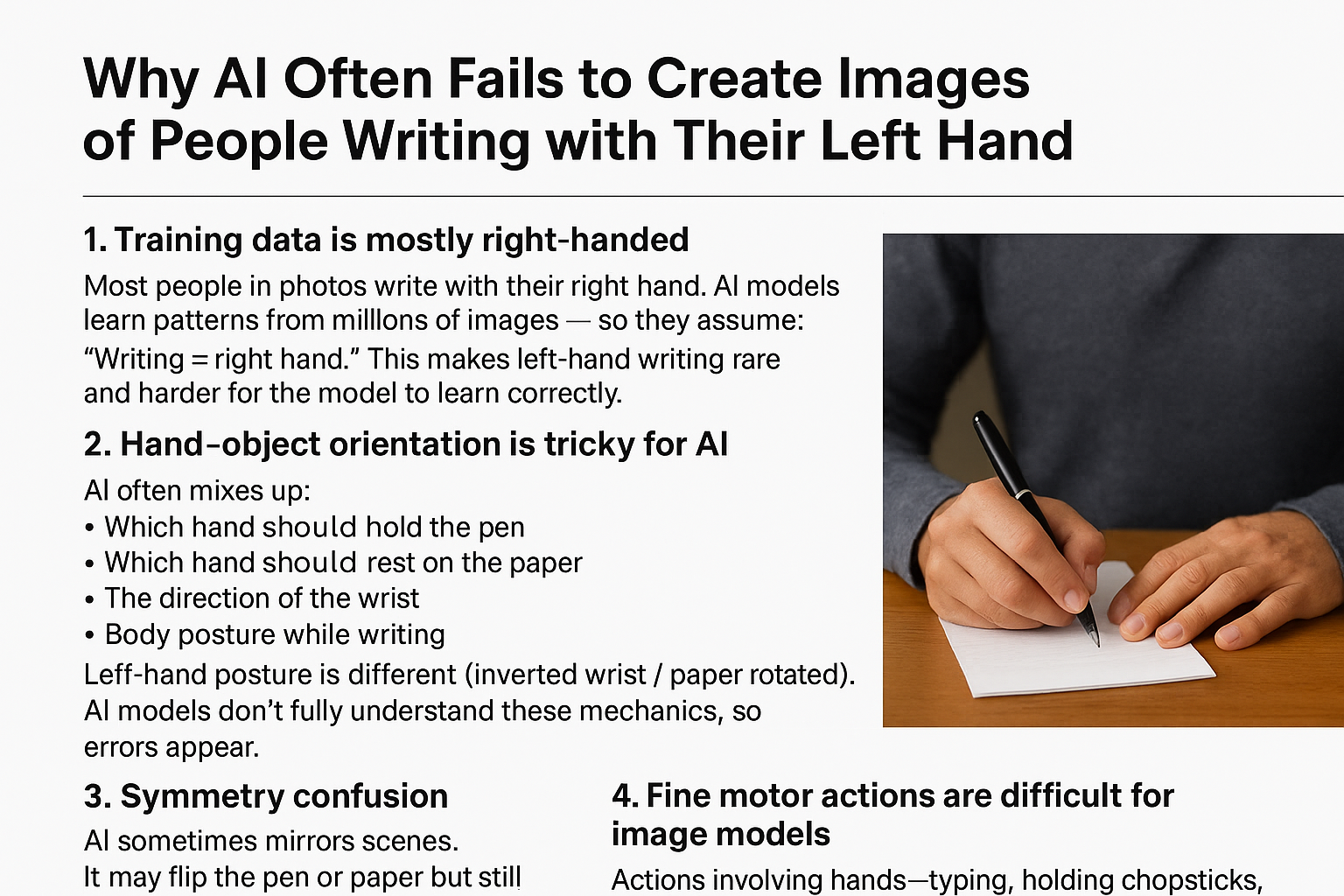
Additionally, AI frequently struggles with symmetry. When attempting to create a left-handed writing person, the model may try to mirror a right-handed pose without adjusting the body posture, pen direction, or hand placement correctly. This leads to images where the pen appears in the left hand but the writing angle or wrist position still resembles a right-handed person, causing the image to look unnatural or incorrect.
The overlap between the hand and the pen also makes generation difficult. In left-handed writing, the hand often covers parts of the writing line or the tip of the pen. Many AI models find it challenging to accurately reproduce overlapping objects, especially when the required pose is uncommon. This results in images where fingers appear fused, the pen floats awkwardly, or the writing position is anatomically impossible.
In summary, AI fails to create perfect left-handed writing images because it learns from patterns, not real logic. Since left-handed writing is uncommon in its training data, the AI has fewer examples to learn from. Combined with the natural complexity of hand movements and the difficulty of generating correct symmetry and object overlap, the AI struggles to produce realistic results. This limitation highlights that while AI is incredibly powerful, it still depends heavily on the data it is trained on and sometimes struggles with scenarios that do not match the majority patterns it has learned.
Please sign in
Login and share