



























October 1582: A Historical Month of Missing Dates

October 1582: The Month That Lost 10 Days
October 1582 is famous for a calendar event that reshaped timekeeping across the world. It was the month when the Gregorian Calendar was first introduced, replacing the older Julian Calendar. This transition caused 10 entire days to disappear from the month.
Why Did This Happen?
1. The Julian Calendar Drift
- The Julian calendar (introduced by Julius Caesar in 45 BCE) miscalculated the length of the solar year by about 11 minutes.
- Over centuries, this small error accumulated.
- By the 16th century, the calendar had drifted 10 days away from the actual solar year.
- This affected important dates like Easter, which depended on the spring equinox.
2. Pope Gregory XIII's Reform
- To fix this drift, Pope Gregory XIII introduced a new calendar — the Gregorian Calendar — through a papal order (the papal bull Inter gravissimas).
- The goal was to realign the calendar with astronomical time.
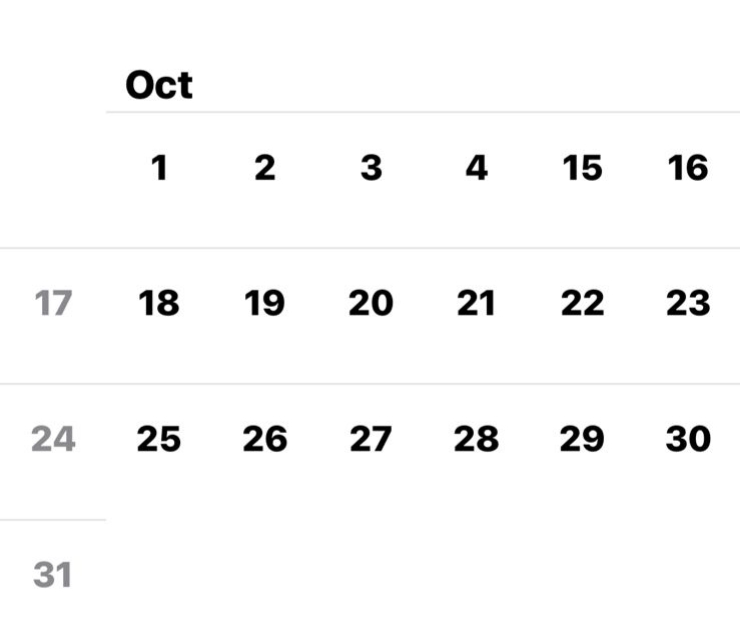
What Actually Happened in October 1582?
The Missing Days
To correct the drift, the reform ordered that 10 days be skipped.
In countries adopting the Gregorian calendar, the date jumped directly from
Thursday, October 4, 1582 → Friday, October 15, 1582.
Meaning:
➡ October 5 to October 14, 1582 NEVER existed in those places.
Countries that Adopted the Change Immediately
- Italy
- Spain
- Portugal
- Poland
- France
- Some Catholic regions of Europe
These were mostly Roman Catholic nations following the Pope’s directive.
The Structure of October 1582 (Gregorian-Adopting Countries)
DateWhat Happened
Oct 1–4, 1582Normal days in the Julian calendar
Oct 5–14, 1582These dates did not exist — removed to correct drift
Oct 15, 1582First day of the Gregorian calendar
This made October 1582 unusually short — only 21 days long.
Reactions and Confusion
1. Public Confusion and Rumors
People thought:
- Their lives were being shortened by 10 days.
- Authorities were cheating them of wages.
- Religious dates changed without understanding why.
2. Protests in Some Places
Some communities resisted the change, believing it was a religious or political manipulation.
Gradual Worldwide Adoption
Not all countries adopted the Gregorian calendar immediately:
- Protestant countries adopted it much later (e.g., Germany in 1700, Britain in 1752).
- Russia adopted it only in 1918 after the Bolshevik Revolution.
- Some countries like Greece switched as late as 1923.
Thus, for centuries, different regions had different dates on the same actual day.
Significance of October 1582
1. The Birth of the Modern Calendar
The same calendar we use today globally began functioning in October 1582.
2. A Rare Calendar Event
It is one of the few times in history where:
- Days were legally removed
- A whole region skipped ahead in time
3. Standarisation of Time
The reform corrected the equinox dates and stabilized the calculation of religious festivals like Easter

Please sign in
Login and share