

























Helmet Certifications

A certified helmet is one that has successfully completed standardized safety testing intended to evaluate its capacity to shield your head in the event of an impact. Certification guarantees that the helmet:
- effectively absorbs shock
- resists being penetrated by sharp objects
- keeps the structure intact in the event of a collision
- provides a dependable, safe strap mechanism.
1.ISI CERTIFIED HELMETS
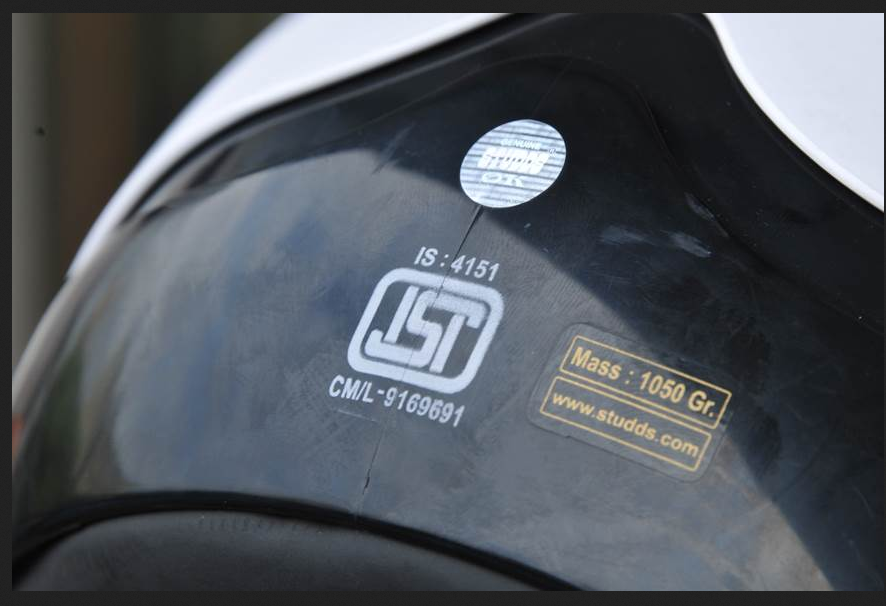
All motorcycle helmets used in India must meet the ISI (Indian Standards Institute) certification, which is governed by the BIS (Bureau of Indian Standards) under code IS 4151:2015.
Important points:
- Legally Required: The ISI mark is required on all helmets sold and used on Indian roadways.
- Safety Assurance: The certification guarantees that the helmet satisfies minimal safety requirements for penetration resistance, impact absorption, and retention system (chin strap) strength.
- Dual Certification: Although international certifications (such as ECE and DOT) are popular and signify better safety requirements, they do not take the place of the ISI mark; helmets must be ISI-certified in order to be used legally on Indian roads.
- Weight: full face helmets weigh about a kilogram, whereas half helmets weigh about 800 grams.
2.DOT HELMETS
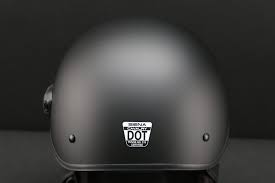
The minimum legal safety requirement for motorcycle helmets supplied for on-road usage in the US is DOT (Department of Transportation) certification (FMVSS No. 218).
Important points:
- Core Tests: Impact absorption, penetration resistance, and retention system (chin strap) strength must all be passed.
- Self-Certification: By affixing the DOT label to the helmet, manufacturers attest to their own compliance; if a product fails, the U.S. government (NHTSA) performs sporadic audits and recalls.
- Indian Status: In India, helmets with merely DOT certification are not permitted for usage on public roads; they additionally need to bear the required ISI mark.
- Full face helmets range in weight from 1300 to 1500 grams, while half face helmets weigh about 1200 grams.
ECE HELMETS
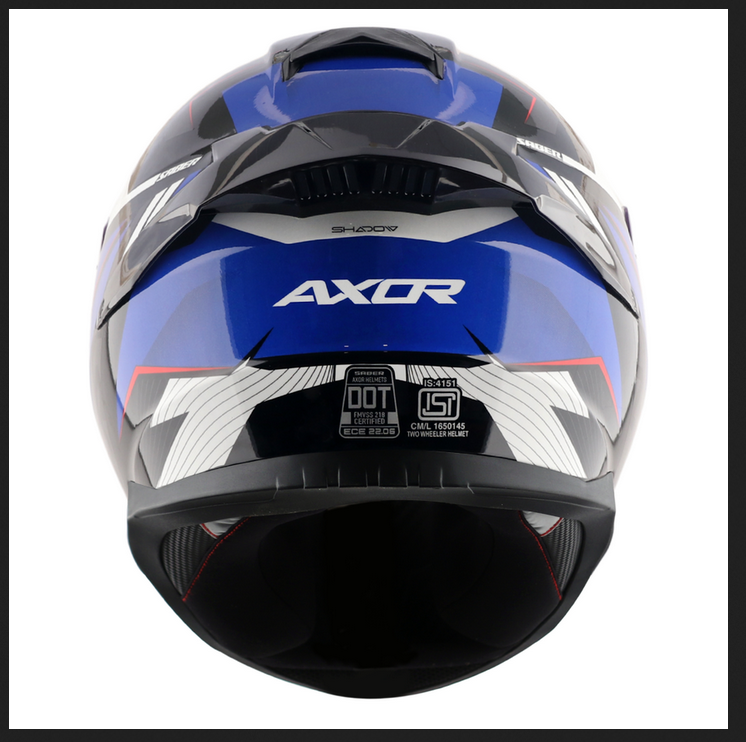

There are two certifications for ece-certified helmets: 22.06, which complies with more recent EU regulations, and 22.05, which is an older certification.
The highly regarded ECE 22.05 certification, which was accepted in more than 50 countries, was the previous European and international safety standard for motorcycle helmets.
Important points:
- Strict and Independent: Before a helmet could be sold, it had to undergo rigorous third-party testing (type approval), which was well-known for being thorough.
- Safety Checks: The standard was examined for visor quality, chin strap strength, impact absorption, and penetration resistance.
- Superseded: Since 2020, the more recent and stringent ECE 22.06 standard has superseded ECE 22.05. The use of helmets made in accordance with the 22.05 standard is still permitted.
The ECE 22.06 certification, which succeeded the ECE 22.05 standard, is the most recent and stringent worldwide safety requirement for motorcycle helmets.
Important enhancements and features include of:
- Rotational Impact Testing: To reduce rotational brain injuries, testing for oblique impacts is the most important addition.
- Expanded Impact Tests: For a more accurate evaluation, testing now includes hits at different speeds (low, medium, and high) and additional impact locations (up to 18).
- Accessory Integration: To make sure they don't jeopardize safety, any integrated or authorized accessories, such as internal sun visors and communication devices, must be tested with the helmet.
- Third-Party Approval: Prior to sale, certification necessitates independent, third-party testing.
- The current global standard, ECE 22.06, provides better protection in a greater variety of accident scenarios.
Other Global certifications ( OUTSIDE BHARAT )
1. RTA approved: Dubai's Department of Transportation has a set of uniform regulations for its two-wheeler, non-motorized /bicycle riders.
2.SNELL:
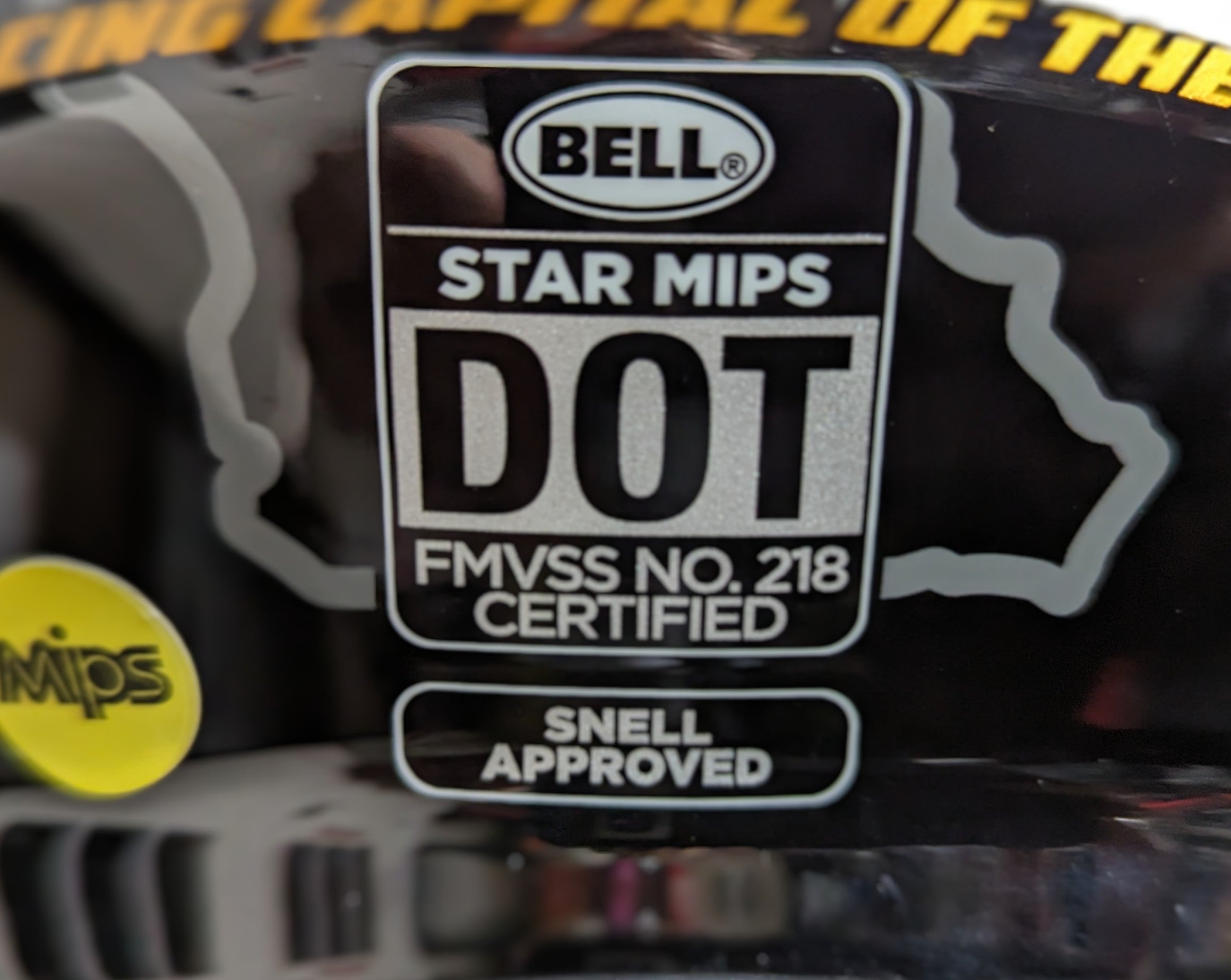
The Snell Memorial Foundation oversees the voluntary, extremely strict Snell accreditation, which is regarded as the "gold standard" for protective headgear, particularly in motorsports.
- Important points:Stricter and Voluntary: Manufacturers opt to take part, and the requirements are typically more demanding than those of government certifications (such as DOT and ECE).
- High-velocity impacts, resistance to numerous impacts, strict penetration resistance, and increasingly rotating impact testing are all included in the testing focus.
- Independent Oversight: The Snell Foundation conducts all testing and conducts sporadic store inspections to guarantee constant quality.
- Status in India: Snell-certified helmets are highly regarded for their safety, but they must also bear the required ISI mark in order to be used on Indian roads.
2.SHARP:
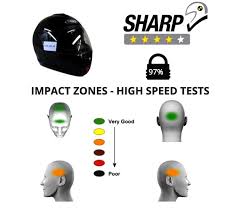
The UK government's voluntary consumer star-rating system, SHARP (Safety Helmet Assessment and Rating Programme), ranges from 1 to 5 stars and is intended to assist riders in comparing the relative safety of helmets that have already complied with regulatory requirements (such as ECE).
Important points:
- Rating, Not Legal Certification: It doesn't make a helmet road-legal; instead, it offers an independent performance assessment.
- Independent Testing: SHARP purchases helmets in secret and puts them through 32 demanding tests, including as oblique/rotational impact testing and hits at low, medium, and high speeds.
- Its objective is to draw attention to variations in protection levels and direct riders toward helmets that provide far more safety than is required by law.
‼️PRECAUTIONS WHILE DRIVING‼️
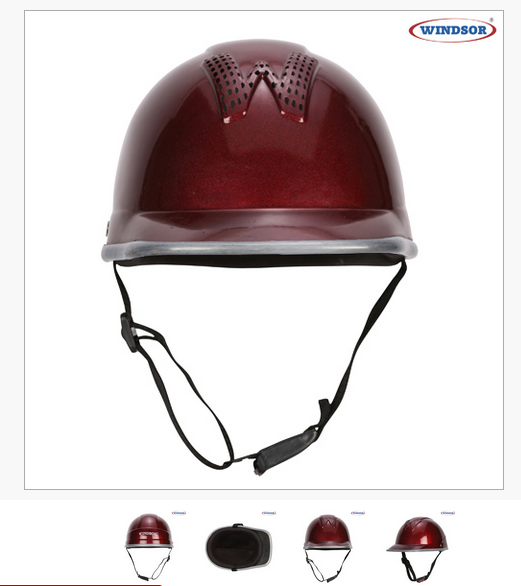
- The cap helmet is unsafe and not certified, therefore never use it.
- Even if it's a cost-effective solution, never wear neckbands or earbuds while driving. Instead, choose a smart headset with built-in headphones that block out all background sounds, including sirens and horns.
- Wearing earbuds or neckbands while driving is dangerous because prolonged use irritates the eardrum and the ear canal, blocks out ambient sounds like horns or ambulance sirens due to the earbud sealing the ear canal completely, and reduces hearing while driving. Lastly, if the helmet is struck in an accident, the earbud inside could damage the ear canal or tear the ear drum due to pressure, and if a portion of the earbud gets inside the ear, it could damage the eardrum and cause more complications.
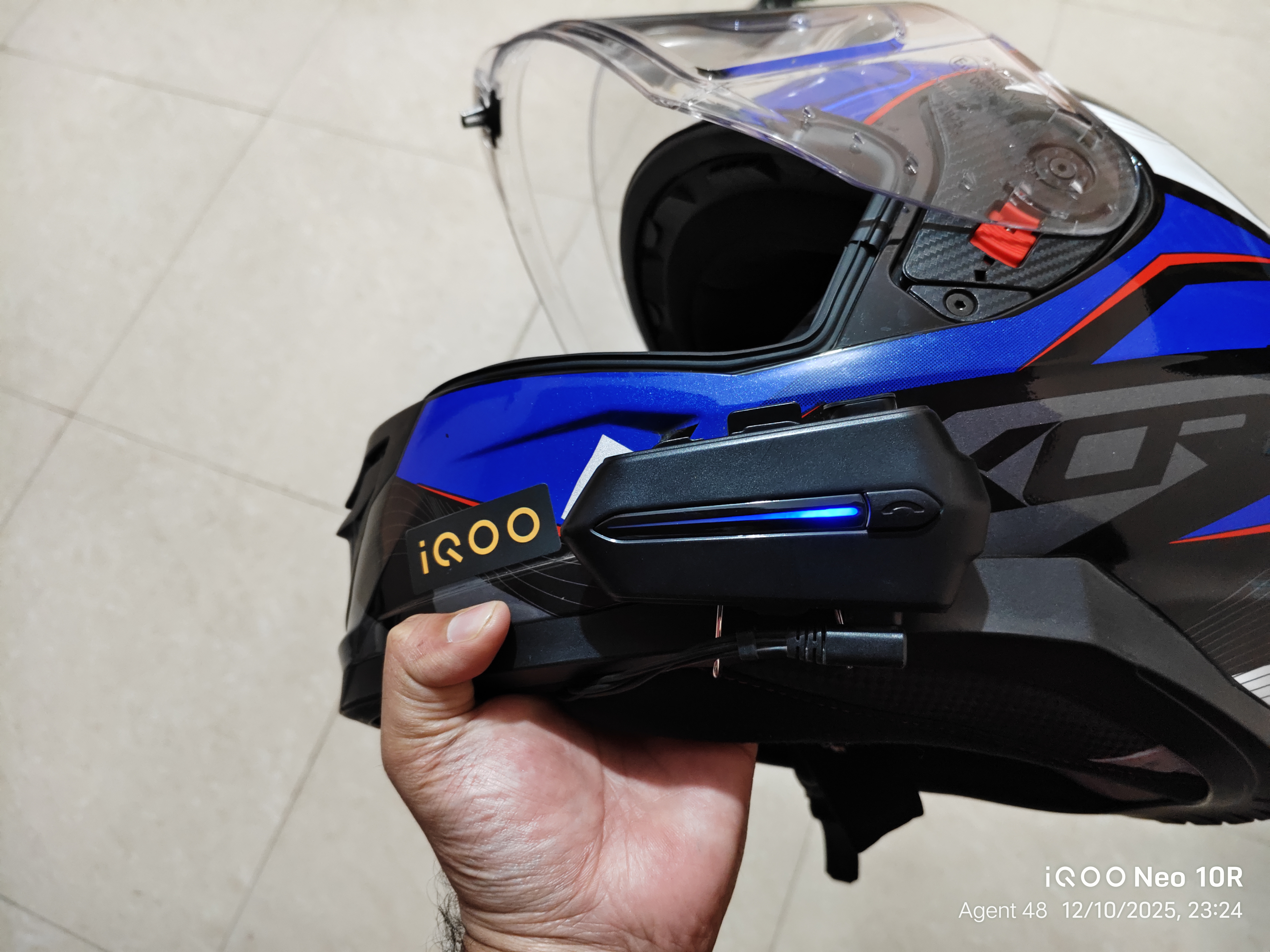
In addition to smart helmets, get an intercom from a reputable brand that fits within your budget. This is attached to the helmet's shell, and the padding is then fitted back in so that there is cushioning between the ear and the speaker unit. Additionally, because there is padding, there is a significant amount of space where background noise, like horns or ambulance sirens, can be heard, and your hearing will remain normal.
In contrast to being struck while wearing earbuds or a neckband, the ear will sustain less harm if the helmet is struck as well because of its padding.
- Professional intercoms that come in sets of 12, 15, etc. can help with easy communications because everyone is on the same channel. Another advantage of intercoms is that if all of your friends have the same intercom or you are riding in a duo, you can communicate with the other rider up to a certain distance.
Riders I hope this article was helpful , ride safe , happy travels ❤️🤘
thats all for this article.

Please sign in
Login and share