



























Sonar Kella: Where Medieval Rajput Valor Meets Satyajit Ray's Cinematic Legend

The legacy of Sonar Kella is unique because it is one of the few historical monuments in the world where the line between medieval history and pop-culture mythology has completely blurred.
Here is a deeper look into the architectural marvels of the fort and the specific impact of Satyajit Ray's cinema.
1. Architectural Brilliance: The "No-Mortar" Wonder
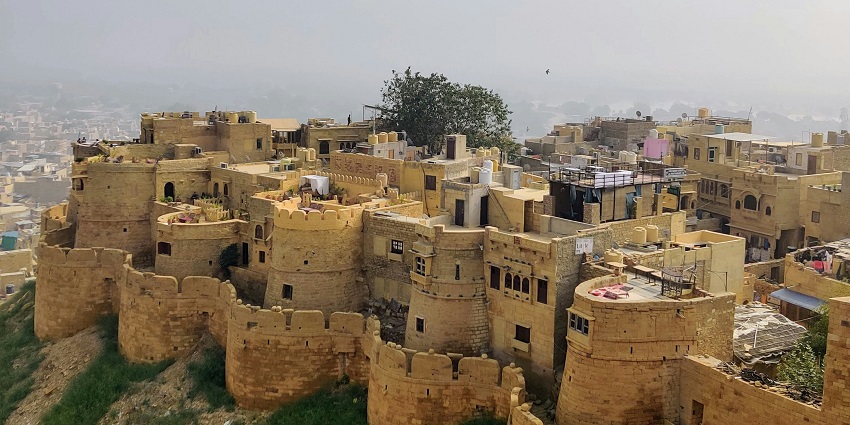
The construction of Jaisalmer Fort is a masterclass in dry-stone masonry. The fort stands on a foundation of "bentonite" clay, which is notoriously unstable. To counter this, the builders used a unique technique:
- Interlocking Stones: The massive yellow sandstone blocks were carved with grooves and protrusions so they could be fitted together like jigsaw puzzles without a single drop of cement or mortar.
- The Triple Wall Defense: The fort is protected by three layers of walls. The lower wall consists of solid stone blocks to keep the loose soil of the Trikuta Hill in place. The middle wall snakes around the fort, and the uppermost wall allowed Rajput warriors to hurl boiling oil or massive rocks at enemies trapped in the narrow lanes below.
2. The "Golden" Optical Illusion
The name "Sonar Kella" isn't just poetic—it's scientific. The local sandstone contains a high percentage of iron ore.
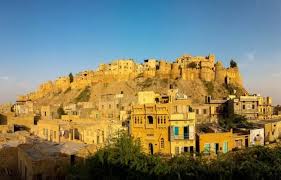
- Daylight Shift: In the harsh morning sun, the fort appears a dull tan.
- The Magic Hour: As the sun sets, the light hits the iron particles at an angle, causing the entire structure to glow with a metallic, honey-gold radiance. This is the "Golden Fortress" that Satyajit Ray captured so beautifully on 35mm film.
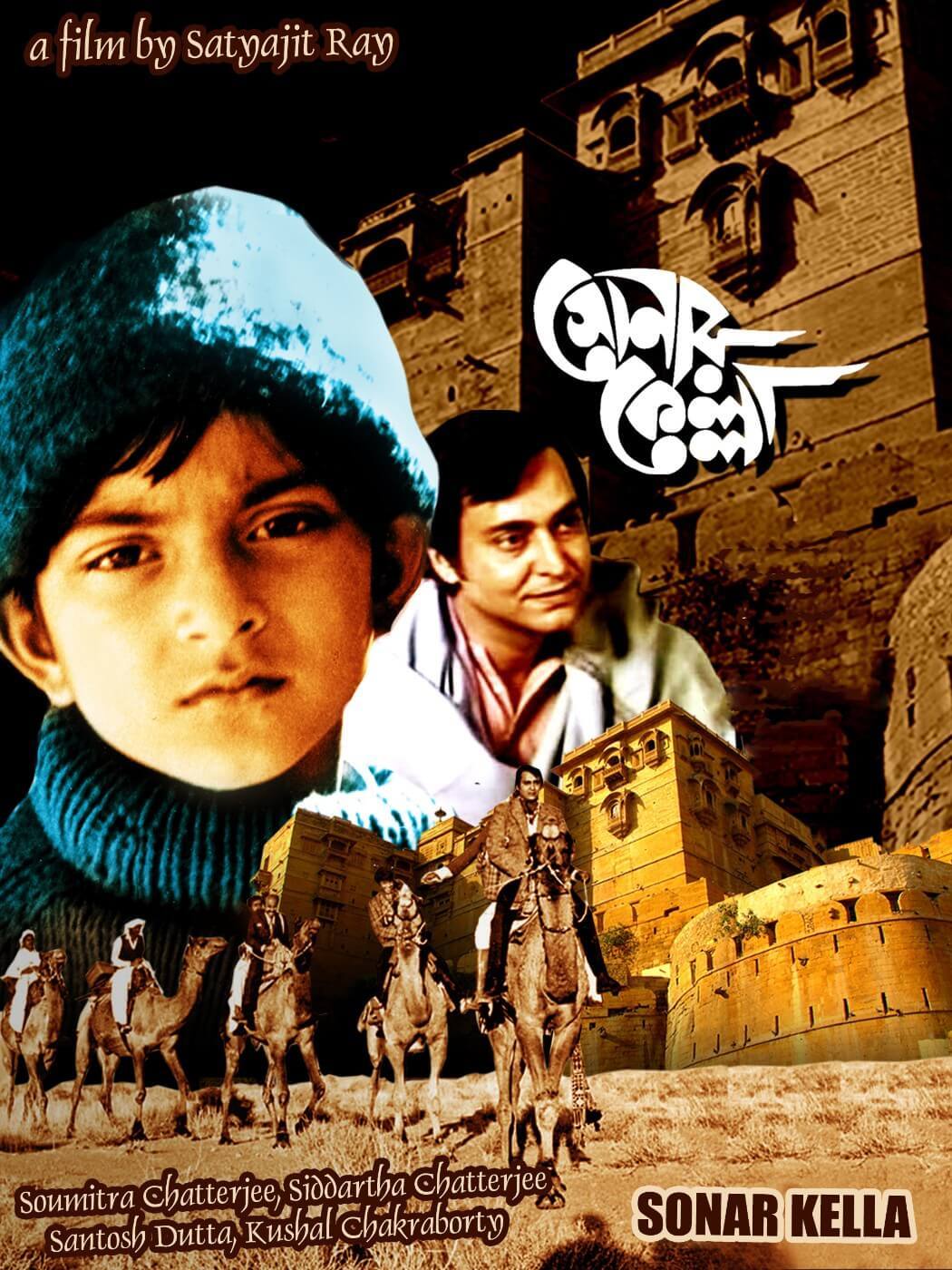
3. The Cinematic Impact of Satyajit Ray's Sonar Kella
Before 1974, Jaisalmer was largely a military outpost near the border. Ray’s film changed its destiny in three major ways:
- The "Mukul" Connection: In the movie, the young boy Mukul describes a place where "gold grows from the ground" and "peacocks dance." This imagery turned Jaisalmer into a place of wonder for millions. The house where the character Mukul supposedly lived in the movie is still pointed out by locals as "Mukul-er Bari" (Mukul’s House).
- The Mystery of the Hidden Treasure: The film's plot involves a search for hidden gems within the fort. This created a sense of "adventure tourism." To this day, the train from Kolkata to Rajasthan is nicknamed the "Sonar Kella Express" by travelers.
- Preserving the Aesthetic: Ray was meticulous about the fort's appearance. His cinematography emphasized the narrow, winding alleys and the intricate Jalis (lattice work) of the merchant havelis like Patwon Ki Haveli. This visual style set the standard for how Rajasthan would be marketed to global tourists for decades.
4. Life Inside the Living Fort
Unlike the Red Fort in Delhi or Amer Fort in Jaipur, Sonar Kella is a functional township.
- The Havelis: Inside, the wealthy merchants built five-story homes with balconies so thin and detailed they look like lace.
- The Jain Temples: The fort houses a complex of seven interconnected Jain temples dating back to the 12th–15th centuries. These temples contain a hidden library (Gyan Bhandar) that holds some of the oldest surviving manuscripts in India.

Please sign in
Login and share