











Snapdragon vs MediaTek: Which chip should you really choose?

Hey iQOO Fans,
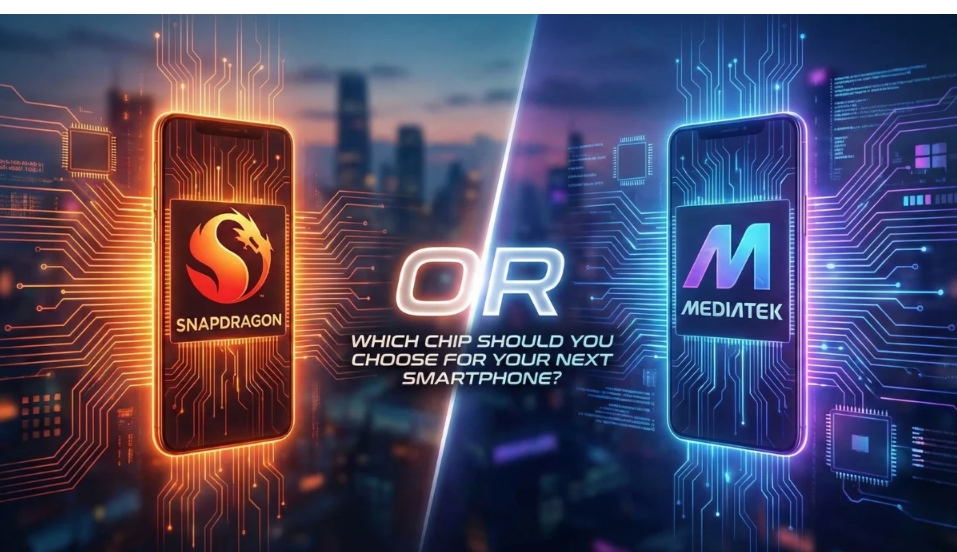
The chipset has always been a crucial part of a smartphone, but today it matters more than ever. From gaming performance and connectivity to battery life, camera processing, and AI features, the processor plays a central role in determining how a phone performs day-to-day — making the right choice increasingly important.
Snapdragon and MediaTek: A quick background
Qualcomm’s Snapdragon chips have dominated the Android flagship market for over a decade. Major brands, including Samsung, Xiaomi, and OnePlus, have heavily relied on Qualcomm to power their high-end smartphones.
MediaTek, on the other hand, was primarily known for entry-level and mid-range chips. That perception has changed significantly with the rise of the Dimensity series.
As a result, the two chipmakers now compete head-to-head across nearly every price segment.
Performance and gaming: where Snapdragon still holds an edge
Snapdragon chips have long been dominating smartphone gaming, and that’s still true. That said, MediaTek has aggressively filled the gap in recent years.
In CPU benchmarks, Snapdragon chips tend to have a slight edge in single-core performance, resulting in marginally faster app launches and smoother UI interactions. MediaTek’s recent Dimensity chips often perform better in multi-core workloads. In real-world use, however, these differences are subtle, and most users won’t notice a meaningful gap during everyday tasks like browsing, social media, or video streaming.
Battery life and efficiency: MediaTek’s quiet strength
MediaTek chips have consistently received praise for their excellent power efficiency, particularly in mid-range and upper mid-range segments. Dimensity chips are often optimized for sustained efficiency, resulting in longer screen-on time and reduced heat buildup.
Snapdragon chips are still efficient, especially recent generations, but MediaTek-powered phones deliver comparable or even better battery life at similar price points.
Camera and imaging: Snapdragon has a slight edge
Camera performance isn’t just about the sensor or megapixel count; the chipset also plays an important role. The image signal processor (ISP) on a chip processes the raw data (captured by the sensor) into usable image data, after which the OEM applies its own processing and tuning.
Snapdragon still holds a slight reliability edge due to years of ISP optimization and broader software support, particularly for video recording. MediaTek’s flagship chips have made major strides, but camera results still depend heavily on how well OEMs tune the imaging pipeline.
Connectivity and network reliability
Both Snapdragon and MediaTek offer modern connectivity features, including advanced 5G support, Wi-Fi standards, and Bluetooth enhancements.
Pricing and value: where MediaTek shines
Pricing is one of MediaTek’s biggest advantages. Smartphones powered by MediaTek chips are typically more affordable than comparable Snapdragon-powered devices — that’s also true for flagship phones.
MediaTek chipsets often offer better specifications on paper for the same price, and this advantage is especially noticeable in the mid-range segment. Snapdragon-powered phones tend to cost more, reflecting brand perception, premium modem technology, and the long-standing maturity of their ecosystem.
Snapdragon vs MediaTek: which one should you choose?
Choose Snapdragon if you prioritize sustained gaming performance, consistent camera results, and reliable connectivity.
Choose MediaTek if you want excellent performance and battery efficiency at a lower price, and you’re comfortable trading a bit of ecosystem maturity for better value.
Both Snapdragon and MediaTek make capable chips. The choice ultimately depends less on the brand name and more on how the phone is optimized and how you plan to use it.
Source:gizmochina
Sumit
Quester
iQOO Community
Please sign in
Login and share