


GPT Image 1.5 vs Google Nano Banana Pro: Which Is Best for Cinematic &Ultra-Real

Hey iQOO Fans,
GPT Image 1.5 vs Google Nano Banana Pro: see which AI image model is best for cinematic portraits, fashion editorials, and ultra-realistic lighting in real-world tests.
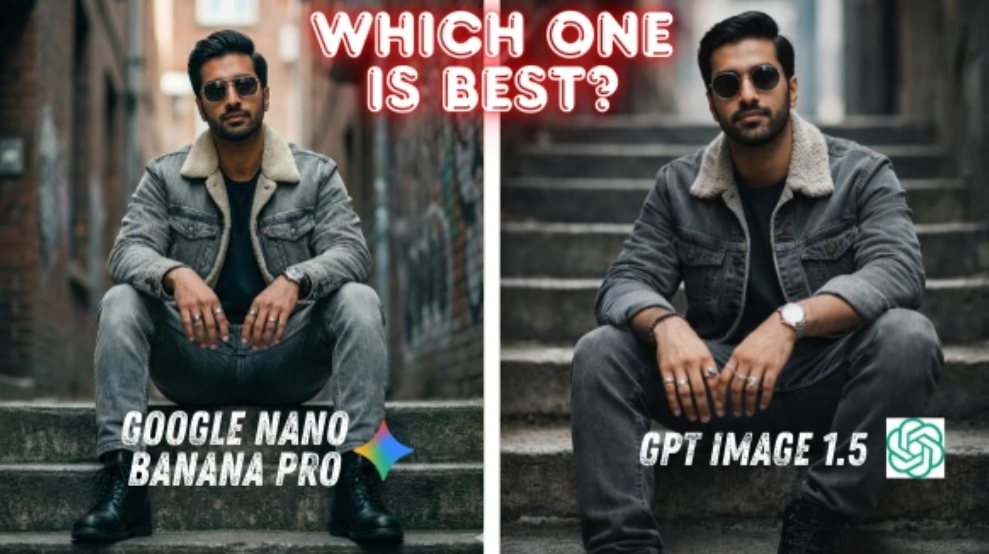
GPT Image 1.5 vs Google Nano Banana Pro: Which Is Best?
When people ask “Which AI image generator is best?” the honest answer is usually “it depends on what you care about.”
This comparison between GPT Image 1.5 and Nano Banana Pro isn’t about benchmarks, specs, or marketing claims. It’s about real-world creative output, how these models perform when pushed with long, demanding prompts that aim for intentional artistry, not just attractive results.
To test this properly, both models were given the exact same prompts, covering cinematic portraits, high-fashion studio setups, clean commercial photography, and gritty urban editorial scenes. No prompt tuning. No adjustments. Same creative brief, same expectations.
What emerged from this head-to-head was more nuanced, and more interesting, than a simple winner/loser verdict.
Prompt Complexity: Where the Test Really Begins
The prompts used here are not lightweight. They include:
▫️Precise lighting setups (gel colors, rim light direction, contrast ratios)
🔸Camera metadata (sensor type, focal length, aperture, shutter speed)
🔹Composition rules (leading lines, asymmetry, framing)
▫️Color grading instructions (neon-noir, teal & orange, commercial high-key)
🔹Texture preservation (skin pores, fabric fibers, tattoos)
🔸Identity constraints (no retouching, no facial alteration)
These prompts are intentionally over-specified. That’s where weaker image models tend to collapse, ignoring half the instructions or producing visually pleasing but creatively generic images.
Why Prompt Design Matters More Than the Model
The prompts used here go far beyond “make a nice portrait.” They include:
🔹Multi-light studio setups with gels
▫️Cinematic color grading instructions
🔹Camera metadata (lens, aperture, ISO, shutter)
🔸Identity preservation and texture realism
🔹Composition theory (leading lines, asymmetry, depth separation)
This is where weaker models usually fail, by flattening lighting, ignoring color theory, or over-smoothing skin. The differences between GPT Image 1.5 and Nano Banana Pro become obvious only when prompts demand precision.
Source:freejobalert
Sumit
Quester
iQOO Community
Please sign in
Login and share