



























🏏 How Technology Works During a Live Cricket Match

Hlo , Everyone
Today I am sharing some interesting technology that use during a live cricket that we watch .
What we see vs what actually works behind the scenes.
A live cricket match looks effortless on screen.
But in reality, dozens of technologies work together every second to keep the game fair, accurate, and entertaining.
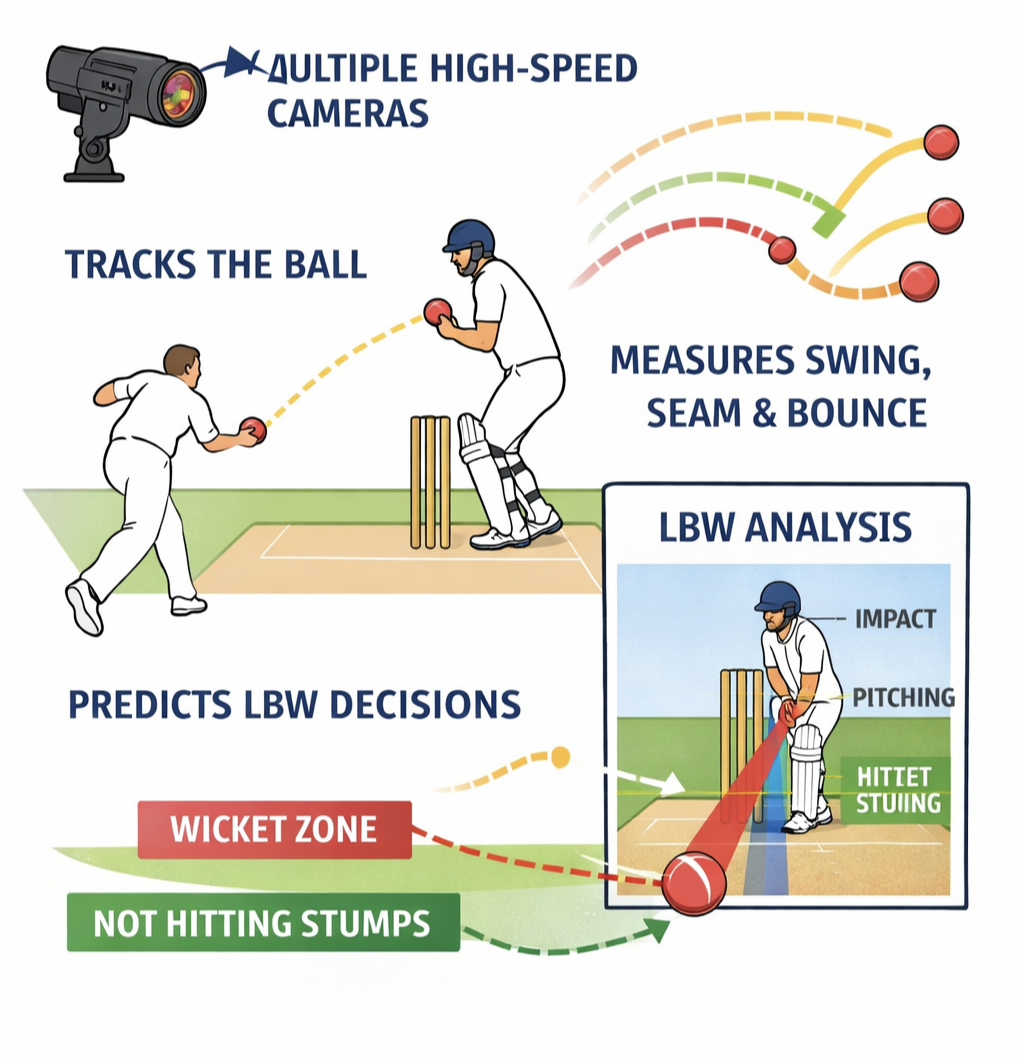
Hawk-Eye (Ball Tracking System)
This is the brain of modern cricket decisions.
It uses multiple high-speed cameras placed around the stadium to:
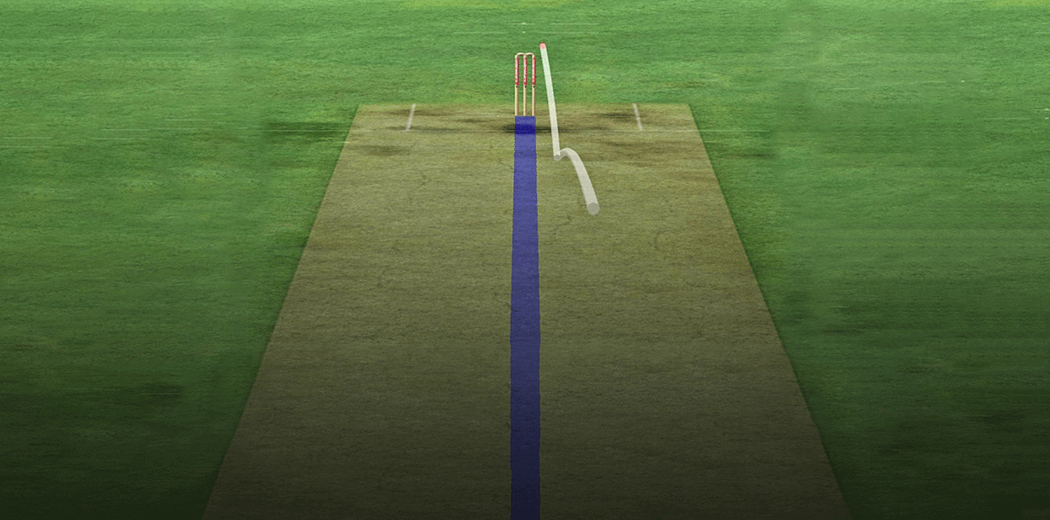
Track the ball from hand to bat/pad
Measure swing, seam & bounce
Predict the ball’s future path (LBW decisions)
Without Hawk-Eye, LBW calls would still be pure guesswork.
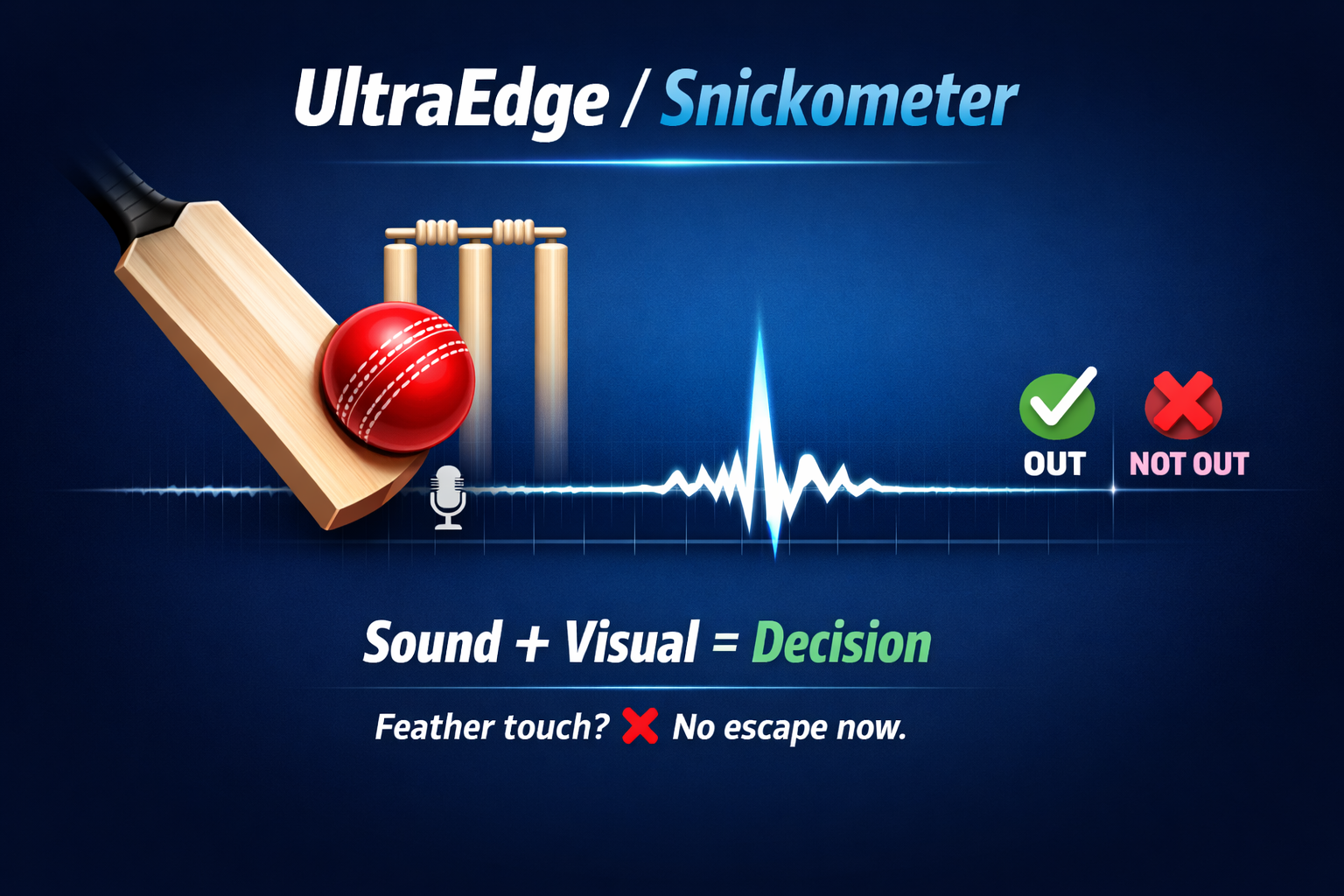
UltraEdge / Snickometer
Used to detect tiny edges between bat and ball.
How it works:
Sensitive stump microphones pick up sound
Software converts sound into wave spikes
If sound + visual contact match → edge confirmed
Even a feather touch can’t hide now.
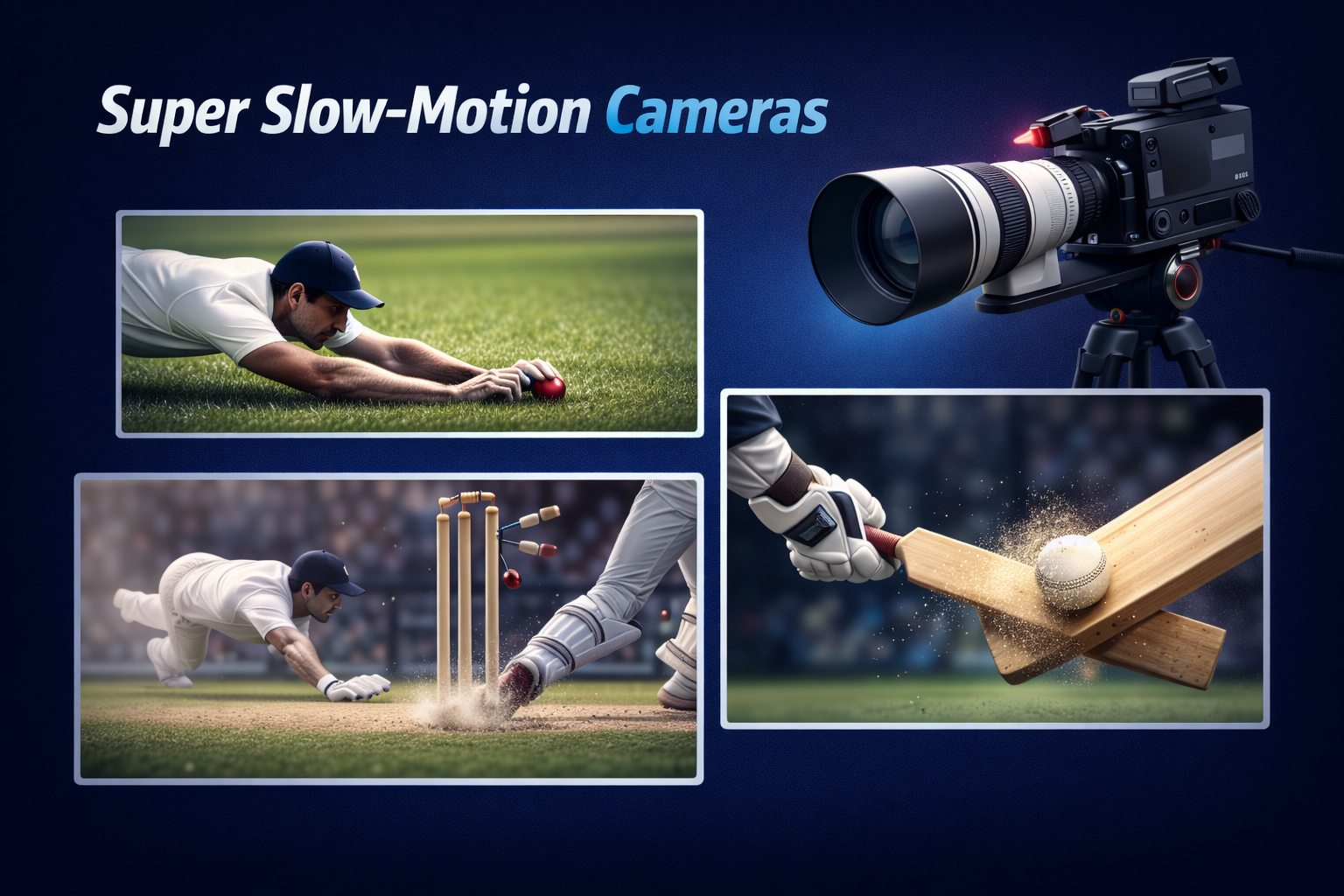
Super Slow-Motion Cameras
These cameras shoot at hundreds or thousands of frames per second.
They help in:
Catch decisions (ball touching grass or not)
Run-out & stumping calls
Bat impact analysis
That cinematic slow motion? That’s pure tech
magic.
DRS (Decision Review System)
DRS is not one technology — it’s a combination:
-Hawk-Eye
-UltraEdge
-Ball-impact visuals
Important thing: 👉 Technology provides data
👉 Umpires still make the final decision
That’s why Umpire’s Call exists.
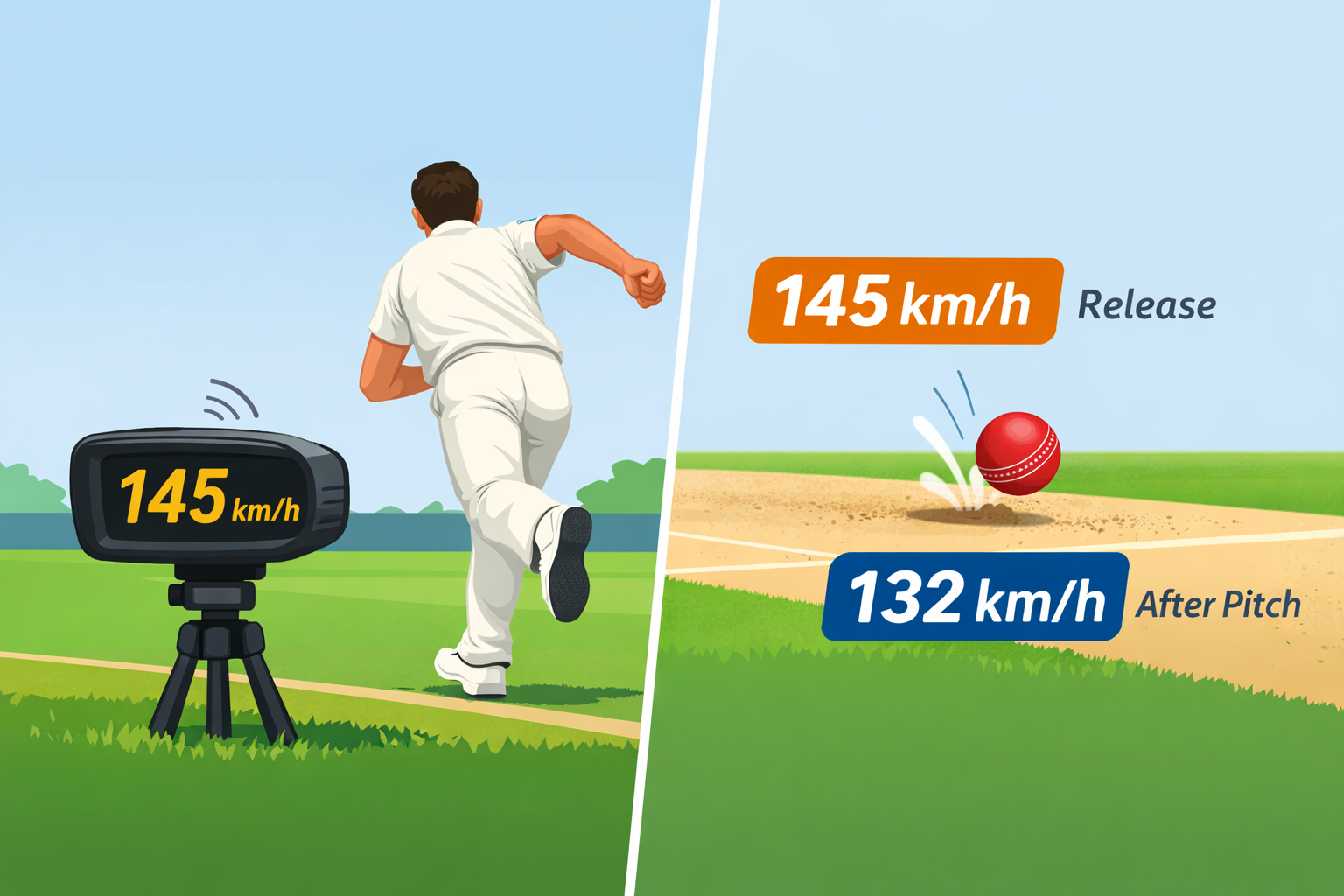
Speed Gun (Ball Speed Measurement)
Ever seen “145 km/h” flash instantly?
Radar guns track:
Speed at release
Speed after pitching
It helps analyze:
Fast bowler intensity
Fatigue over spells
Pitch Map & Wagon Wheel
Used for tactical analysis.
They show:
Where the bowler is pitching
Where the batter is scoring
Patterns, weaknesses & strengths
Teams use this data during the match, not after it.
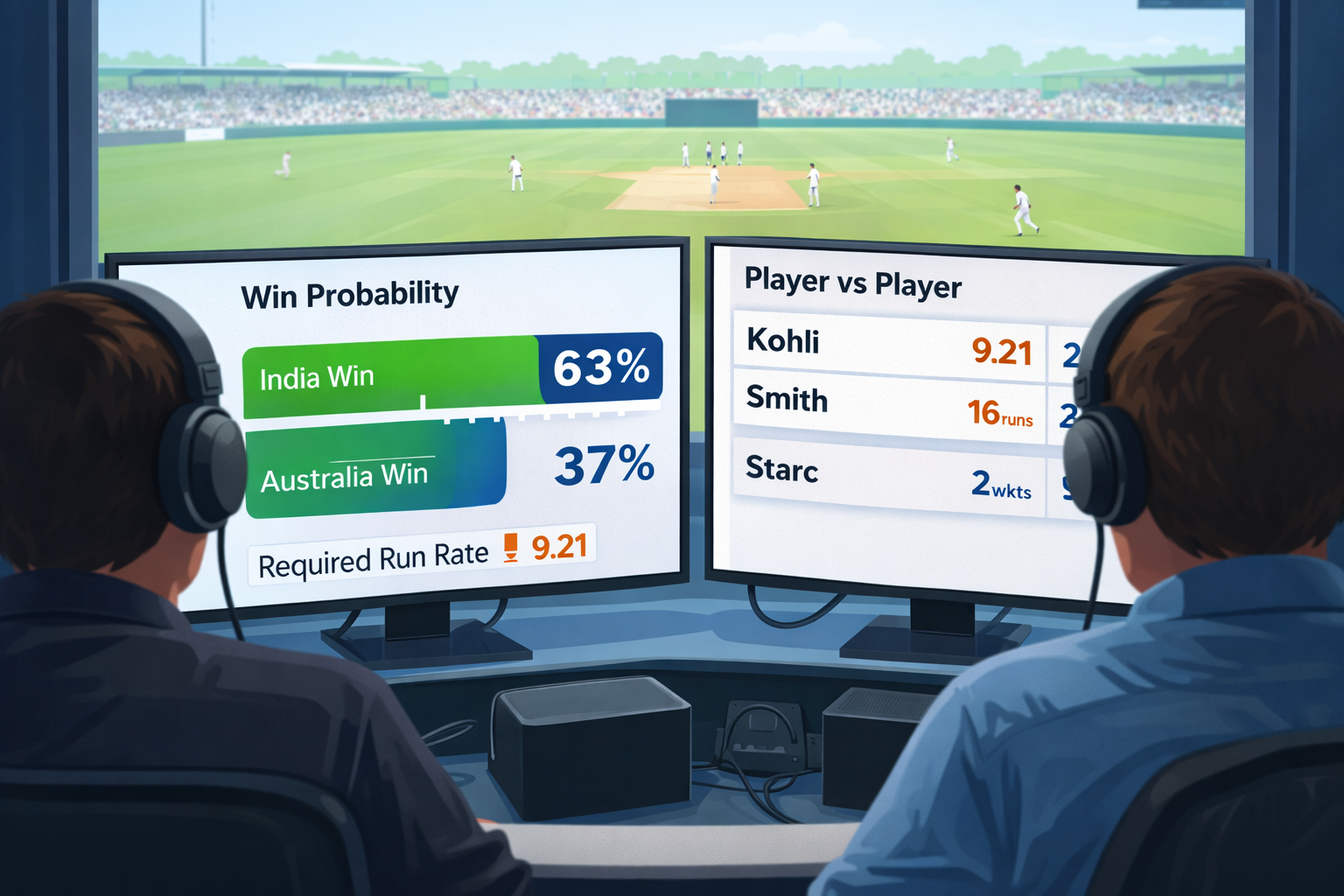
Live Analytics & Win Probability
Behind commentary boxes, computers calculate:
Win percentage after every ball
Required run rate pressure
Player vs player success rate
Commentators get this data in real time.
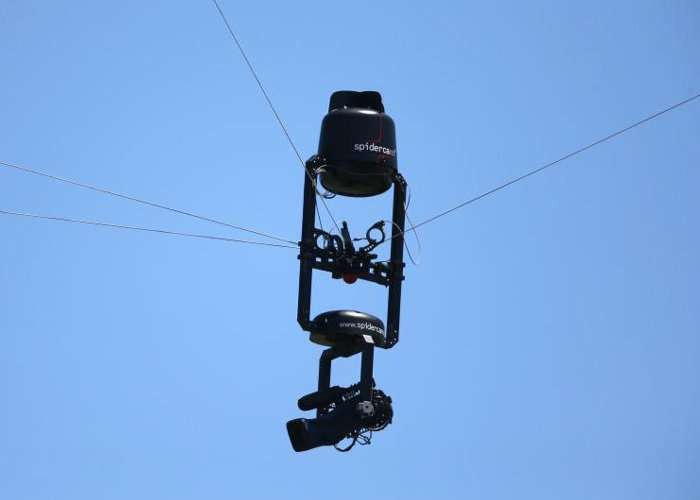
Spidercam & Cable Cameras
Those flying camera shots?
Controlled using:
Computer-guided motors
Laser-measured paths
Pre-programmed movement routes
One mistake and the match stops — that’s how precise it is.
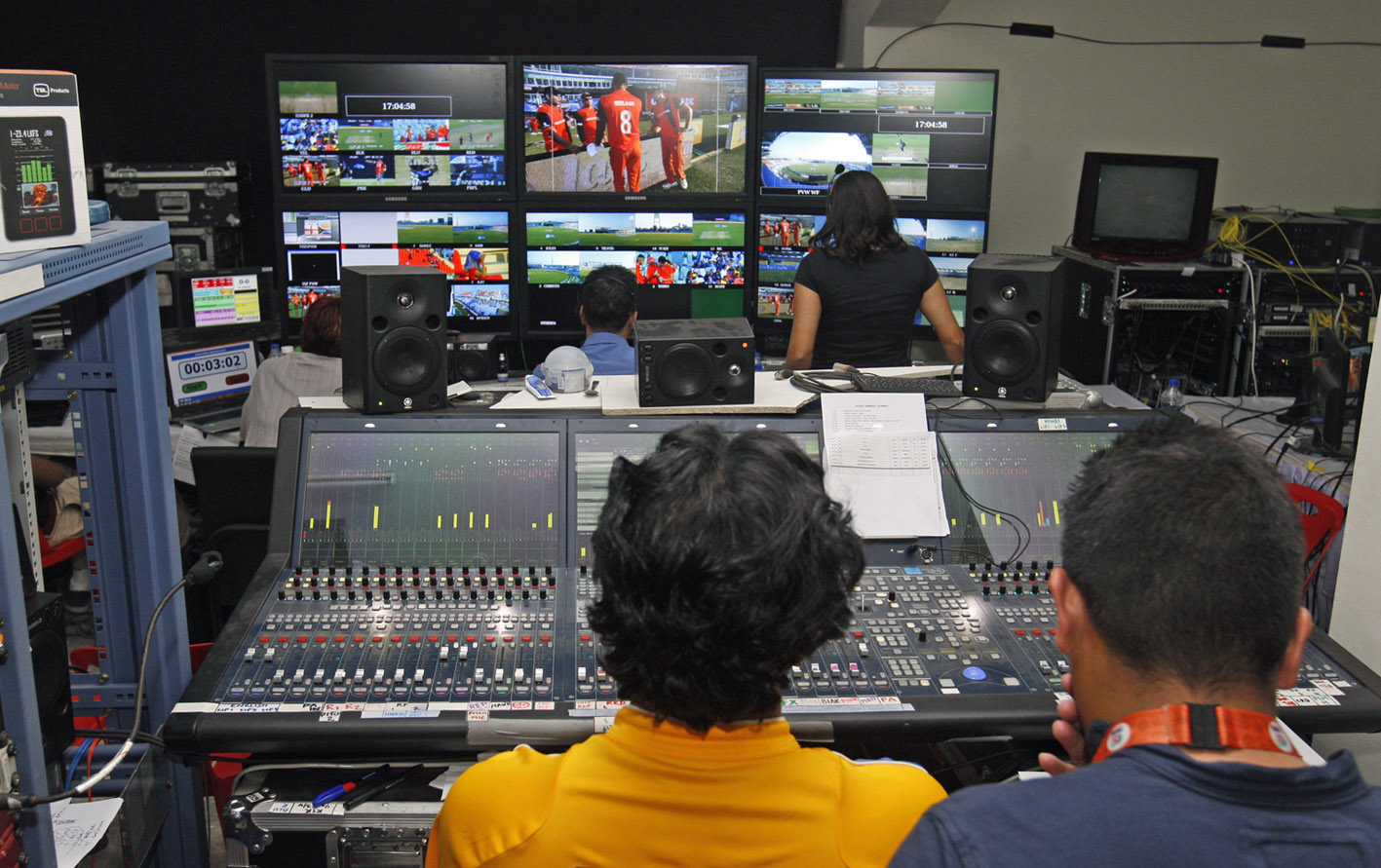
Broadcasting & Signal Technology
A live match involves:
Dozens of cameras
Audio feeds from stumps & field
Satellite & fiber transmission
A central broadcast control room
There is usually a few-second delay to sync everything perfectly.
Player Fitness & Wearable Tech (Limited Use)
In some formats & training sessions:
GPS trackers
Heart-rate monitors
Load & fatigue sensors
This helps teams manage injuries and work
load.
LED Stumps & Bails
They light up instantly when disturbed.
Used mainly for:
Run-outs
Stumpings
No human reaction can beat LED precision.

Match Timers & Over-Rate Systems
Officials track:
Time per over
Break durations
Slow over-rate penalties
Everything is digitally monitored now.
Modern cricket isn’t just played by:
Batsmen
Bowlers
Fielders
It’s also played by:
Cameras
Sensors
Algorithms
Data systems
Technology doesn’t remove human emotion —
it protects fairness and enhances drama.
@iQOO Connect ♥️
@Manab10 @YasirTheJOD @Swagg_rohit @Tutan @ARITRA @VikashYadav @sharon @NITIN @TechSAM009 @JStreetS @ayuu @RZ Nitin @parakram_h @NipunMarya @ParthNirmal @MKJEDI
Thank-you
Signing Off
Please sign in
Login and share