









The BGMI × Royal Enfield Deal That Quietly Hijacked India’s Gen-Z Attention

BGMI isn’t just a mobile game in India. It’s a daily ritual. Over 50 million players don’t log in just to “play” — they log in to compete, flex, and dominate. It’s where college kids become warriors, where squad loyalty matters more than Instagram followers, and where clutch moments create real fame.
Now zoom out. Royal Enfield isn’t just a motorcycle brand — it’s India’s original speed culture. From Himalayan rallies to drag races and cross-country rides, Royal Enfield has spent decades selling one thing: freedom, power, and identity. And that’s exactly what BGMI players chase too. So when these two worlds collided — the largest gaming battlefield and the most iconic Indian riding machine — it wasn’t a collab. It was inevitable.
Now let’s break down why this partnership is far more dangerous than it looks.
🔥 Chapter 1: The Youth Attention War – Why Royal Enfield Entered BGMI
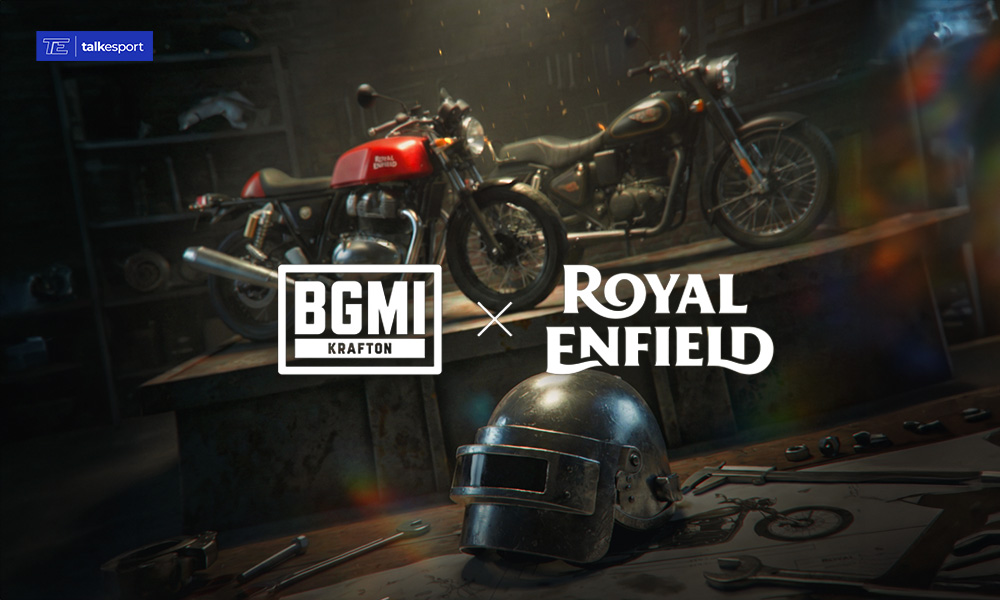
Here’s what nobody in traditional advertising wants to admit: TV, billboards, and celebrity endorsements are dying for Gen-Z. BGMI pulls more than 50 million Indian gamers, and Royal Enfield’s future buyers (18–28) live inside that ecosystem. In 2020, Royal Enfield’s average buyer age was 35+. By 2025, it dropped close to 28.
Why? Because bikes aren’t sold in showrooms anymore — they’re sold through culture. BGMI isn’t a game, it’s a digital hangout where millions of Indian men spend 2–4 hours every day. That’s more attention than Instagram and YouTube. Royal Enfield didn’t want ads. They wanted ownership of attention. So they walked into BGMI.
⚡ Chapter 2: Why Royal Enfield Skipped Esports Teams and Went Straight to BGMI
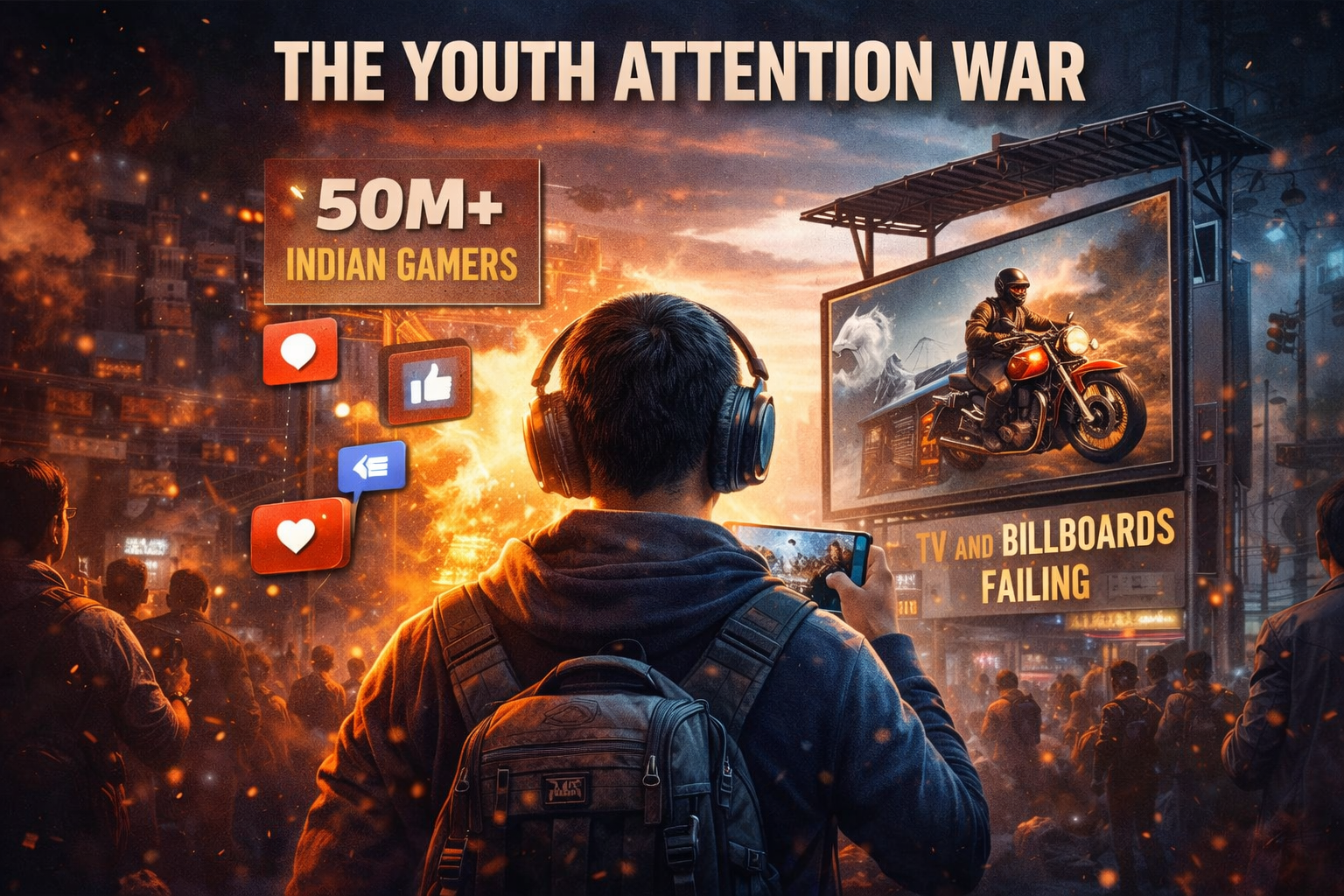
Most brands sponsor esports teams. Royal Enfield didn’t. They partnered directly with KRAFTON — the platform owner. That’s a power move. Teams rise and fall, but BGMI controls the maps, skins, vehicles, events, and the entire player economy.
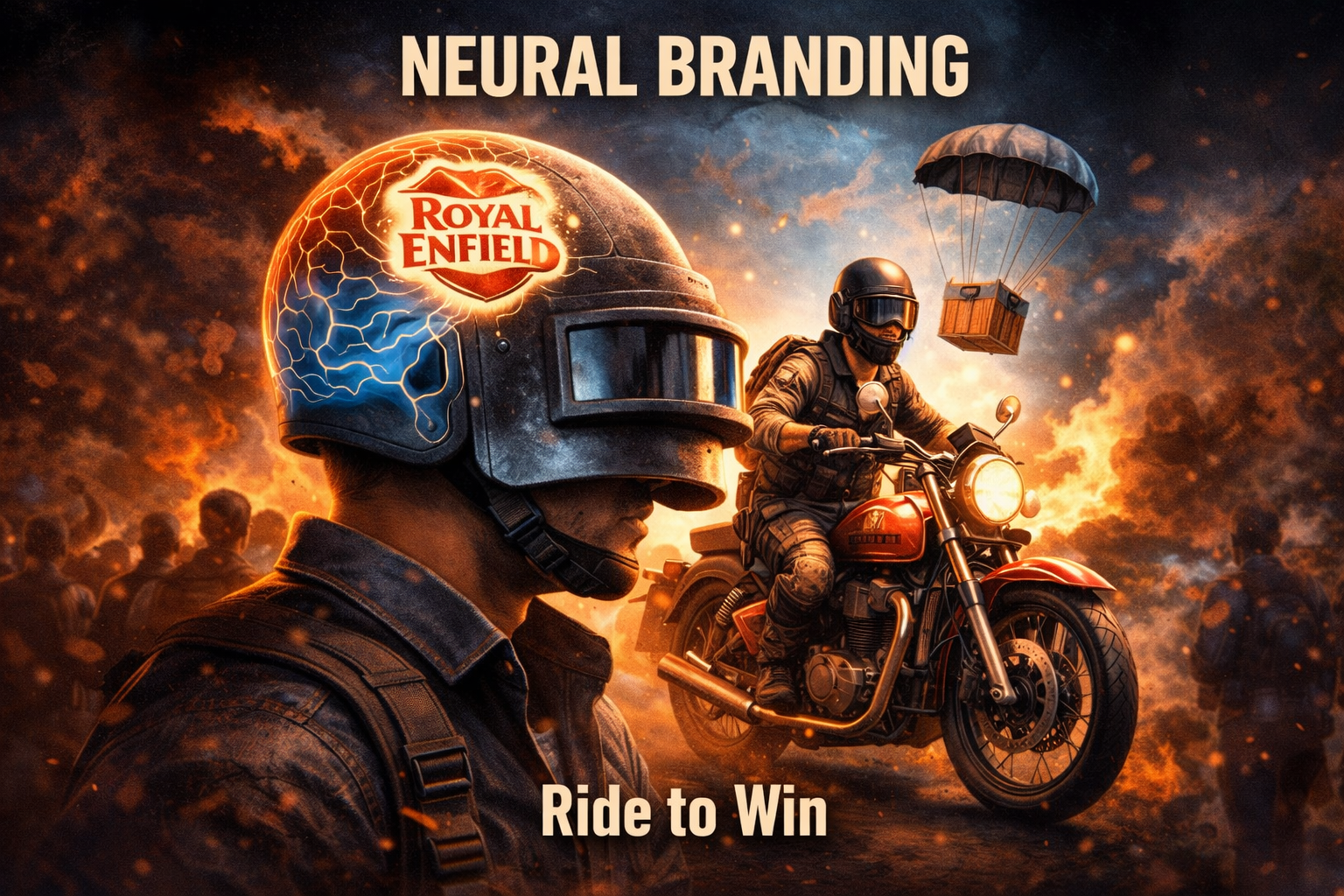
By putting Royal Enfield bikes inside the game, they achieved something insane. Millions of players now ride a Royal Enfield thousands of times before ever touching one in real life. Every drop chase, every escape, every clutch moment slowly trains the brain to associate Royal Enfield with winning. That’s not advertising. That’s neural branding.
🎯 Chapter 3: The Real Money Engine – Digital Bikes, Real Crores
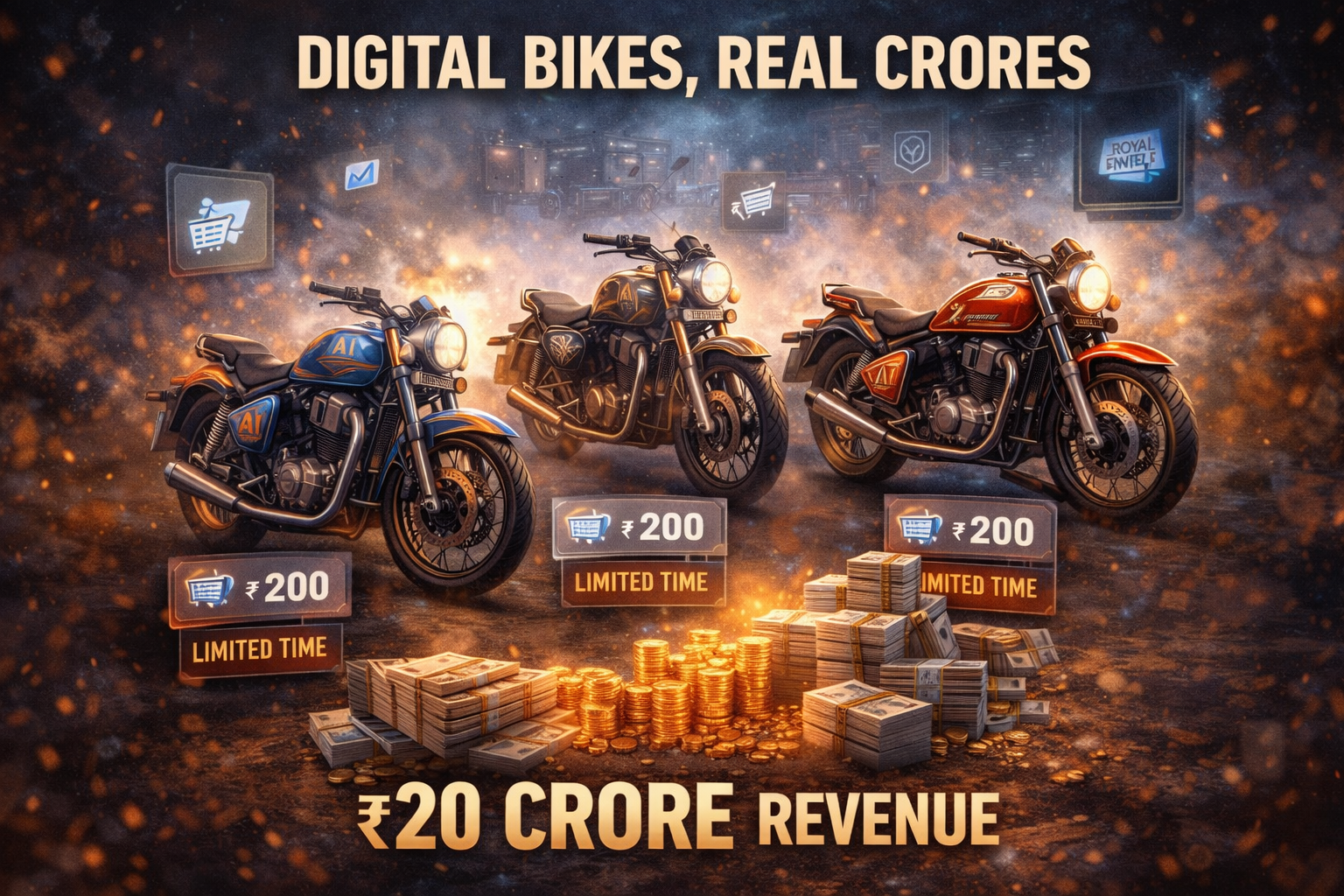
BGMI players spend heavily on cosmetics — skins, outfits, emotes, and vehicle wraps. Now insert Royal Enfield. Limited-edition bikes, event-exclusive models, branded rides. Royal Enfield didn’t just enter gaming, they created a virtual product line.
If just 2% of BGMI’s 50 million players buy a ₹200 Royal Enfield skin, that’s 1 million players × ₹200 = ₹20 crore. No factories. No dealerships. No logistics. Just pure digital margin. They get paid before the customer ever buys a real motorcycle. This is next-gen branding.
💰 Chapter 4: Why This Changes Indian Marketing Forever
This deal just rewrote the rules. Now every brand understands something terrifying — if you’re not inside games, you don’t exist to Gen-Z. Sneakers, energy drinks, smartphones, cars, fashion brands… all of them will fight to become playable inside BGMI.
Royal Enfield didn’t buy ads. They bought cultural territory. BGMI didn’t sell sponsorships. They sold India’s youth attention. This isn’t gaming anymore. This is the future of Indian consumer influence.

🎪 WHAT THIS MEANS
BGMI players now decide where crores get spent. Your in-game behavior is more valuable than TV ratings. Royal Enfield saw it first. The rest of India’s brands are about to follow.
Drop your take 👇 Is this the future of Indian marketing — or just the beginning? 🔥
Please sign in
Login and share