















🇮🇳 What India Just Announced 1. Lower 6 GHz Band Now Licence-Free for Wi-Fi

🇮🇳 What India Just Announced
1. Lower 6 GHz Band Now Licence-Free for Wi-Fi
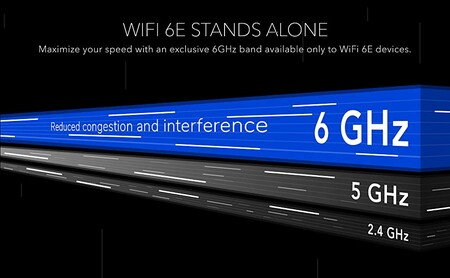
• The government officially opened the 5925–6425 MHz range*
(the “lower 6 GHz” band) for licence-exempt Wi-Fi use under the Low Power and Very Low Power Wireless Access Rules, 2026.
• This means Wi-Fi 6E and Wi-Fi 7 tech can now operate in India on this band without broader licensing, which should significantly boost indoor wireless speeds and capacity.
• Strict technical limits (power caps) and interference rules apply — so devices must play nicely with other spectrum uses (e.g., satellite, backhaul).
📊 2. Rules Aim to Reduce Mobile Congestion
Mobile operators are feeling pressure as Wi-Fi becomes a *formal offload channel* — letting heavy data traffic shift from cellular to high-speed local Wi-Fi. Regulators hope this eases network load and improves broadband experience.
📜 3. Draft Framework Around PM-WANI & Spectrum Upgrades
Telecom authorities see this delicensing move as part of a broader digital infrastructure push — *not just Wi-Fi. The PM-WANI ecosystem and other policy upgrades are expected to drive deeper broadband penetration. ([Telecom Regulatory Authority of Indian
🧠 Behind the Decision — Why It Matters
📡 Faster, Cleaner Wi-Fi at Scale
Before this move, Indian Wi-Fi was mostly on 2.4 GHz and 5 GHz bands, which are crowded and offer limited bandwidth. The 6 GHz band expands capacity and allows wider channels — vital for:
• High-resolution video
• AR/VR
• Cloud gaming
• Dense enterprise or campus networks
All of these demand low-latency, multi-gigabit speeds that 6 GHz makes feasible. ([The New Indian Express][4])
🏠 Consumer & Enterprise Boost
Users in homes, offices, campuses and public spaces should see much better performance and less congestion on home networks with compatible Wi-Fi 6E/7 gear.
---
⚖️ The Big Industry Debate
📌 Tech Industry 📍
Big tech and broadband bodies loudly supported opening the 6 GHz band:
• Argued the delay was costing India in digital productivity.
• Called for full delicensing (not just the lower portion), to maximize Wi-Fi innovation. ([Telecom Regulatory Authority of India][3])
📌 Telecom Operators 📍
Mobile carriers (e.g., Jio, Airtel, Vodafone Idea through COAI) opposed largescale delicensing, saying:
• It could erase future value of spectrum if auctioned for cellular/5G/6G use.
• It risks exchequer revenue and might benefit global OTT and device firms disproportionately.
📌 Regulatory Balance 📍
The Department of Telecommunications (DoT) took a *careful balanced approach*:
• Opened only the lower 6 GHz band licence-free with power limits.
• Retained the upper 6 GHz band for licensed services (like mobile or critical infrastructure) — maybe pending future policy decisions.
🚦 Practical Impacts & What’s Next
🧩 Device Ecosystem
Even though the rules are out, device manufacturers:
• Must enable 6 GHz operation for Indian devices.
• Firmware updates are likely needed for phones, laptops, routers to support the new band in India.
🚀 Wi-Fi 7 Deployment
The policy change should unlock broader Wi-Fi 6E/7 adoption, bringing speeds up to multi-Gbps in real-world Wi-Fi networks.
📍 Future Spectrum Allocation
The upper 6 GHz band (6425–7125 MHz) is still under consideration. Stakeholders are pushing for further delicensing or clear allocation — this debate will shape mid-band spectrum use for years.
---
🧠 TL;DR
✔ India has opened the lower 6 GHz band (5925–6425 MHz) for licence-free Wi-Fi, enabling Wi-Fi 6E/7 and better wireless connectivity.
✔ The decision aims to reduce mobile data congestion and improve broadband quality.
✔ There’s industry push-pull between tech companies (want full unlicensed use) and telecom operators (want licensed spectrum for mobile).
✔ Next steps include device enablement and possible future opening of the rest of the 6 GHz band.
Thank you
Aaryaman Nigam
iQOO Clan Members
Follow me @AaryamanNigam
Follow me on Instagram aaryamannigam

Please sign in
Login and share