



























User Reports Ryzen 7 9800X3D And 9850X3D Failures Within A Few Weeks

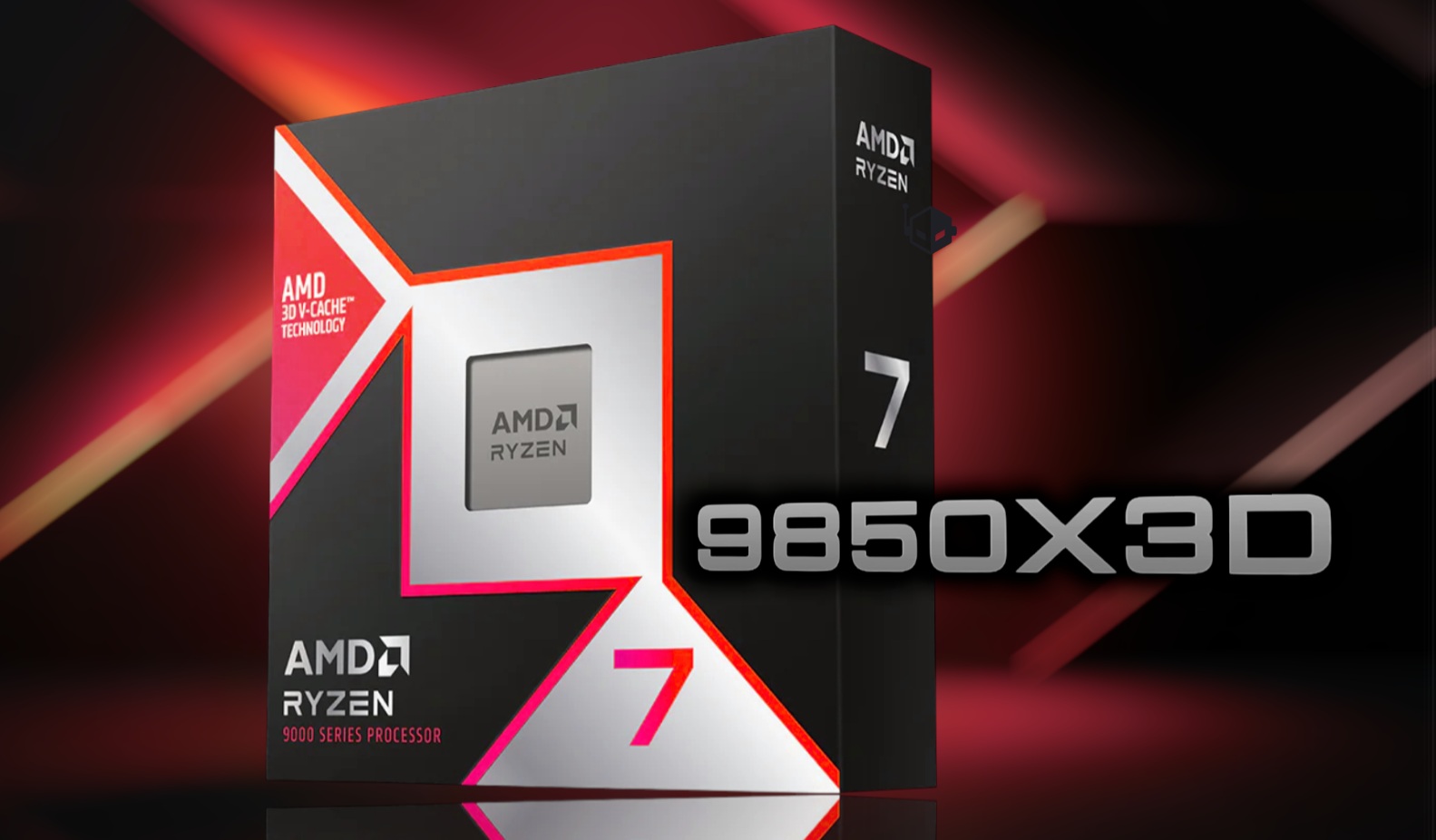
We have the first Ryzen 7 9850X3D failure report from Reddit, and this one failed in less than three weeks.
Redditor Says Ryzen 7 9800X3D Became Unstable on ASUS X870 Motherboard; Returns it and Buys Ryzen 7 9850X3D, Which Failed As Well
It has been less than three weeks since AMD launched its fastest gaming processor yet. The Ryzen 7 9850X3D, which launched at the end of last month, quickly gained a lot of attention as it dethroned the Ryzen 7 9800X3D through higher clocks. However, being identical to 9800X3D in almost every area, it's as prone to failures as the 9800X3D. Not surprisingly, the first failure case has been reported on Reddit.
Keep in mind that this is a "failure" report and not a "Death" report, as one would expect. With that being said, the user u/UniversewillDecide says he recently bought the AMD Ryzen 7 9800X3D and paired it with the ASUS TUF X870P WiFi motherboard. It worked fine for a week, but started introducing issues such as system freezes and even refusing to boot. The user says he investigated for any memory issues, but the OCCT memory test passed without any problems.
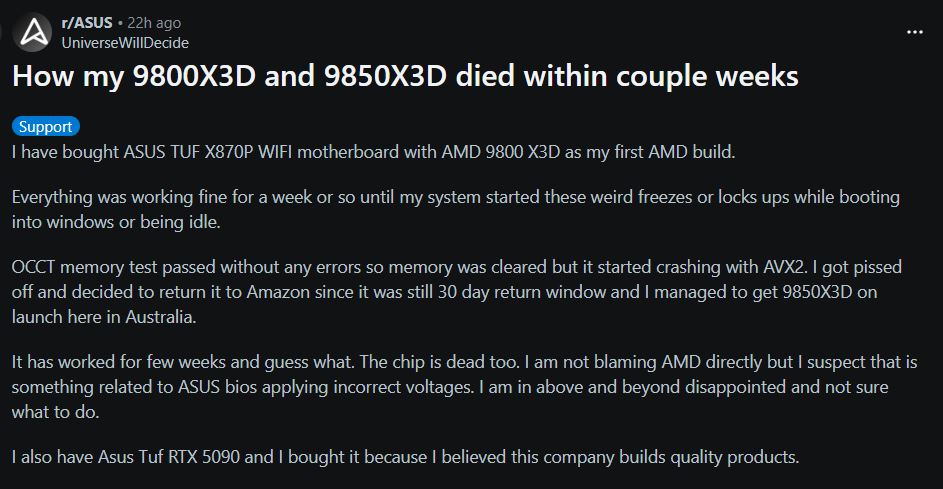
The system continued to freeze and crash, which forced him to return it to Amazon. Since the Ryzen 7 9850X3D was available at that time, he bought the newer chip. A few weeks later, he began experiencing the same issue on the newer processor as well. He reports the system won't boot many times with the newer chip, and it's more frequent than with the 9800X3D. However, his CPU doesn't seem to be dead completely as per his comments on the thread.
It's simply failing and is showing odd behaviors, which point towards CPU degradation. He believes his ASUS TUF X870P WiFi BIOS may have been applying incorrect voltage settings and has already ordered a new MSI motherboard. The user also confirmed that there are no signs of physical damage on the CPU, but since it was unbearable, he had no choice but to switch his motherboard. The user says he didn't apply any overclocking and has tried turning EXPO on and off to see if this helps.
However, he was unable to eliminate the freezes and lockups. He also ran several stress tests using OCCT, during which the system repeatedly triggered WHEA errors. These errors typically indicate hardware instability, often linked to voltage, memory controller, or CPU-related issues, which led him to believe that his processor may have begun degrading.

Please sign in
Login and share