



























Know the Unknown | The Dancing Plague of 1518

When the Streets of Strasbourg Became a Deadly Dance Floor
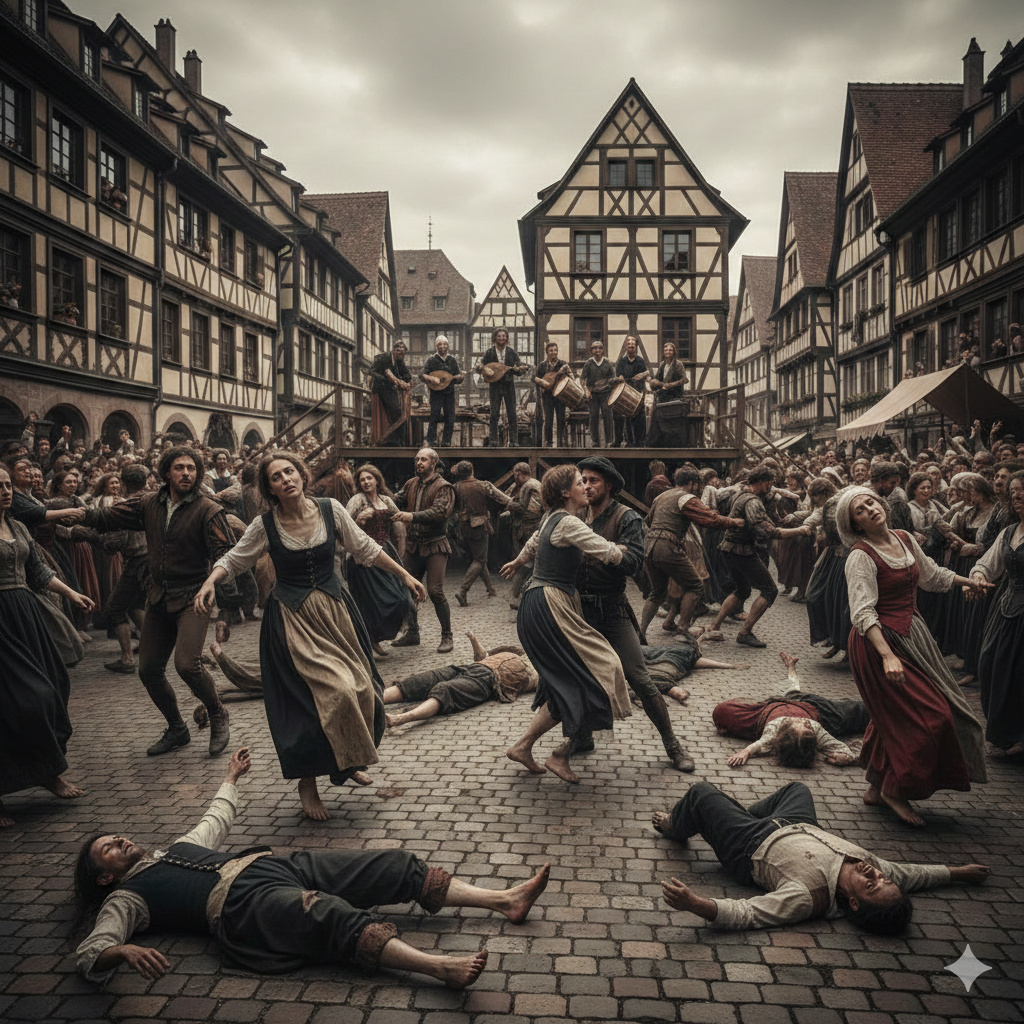
Imagine walking down a cobblestone street in 16th-century France and seeing a woman dancing. Not a joyful jig, but a silent, rhythmic, and relentless trance. Within a month, 400 people had joined her—dancing until their feet bled, their bones broke, and their hearts eventually stopped.
This isn't the plot of a folk-horror movie; it is a meticulously documented historical event known as the Dancing Plague of 1518.
The Fever Begins
It started with one woman, Frau Troffea. In July 1518, she stepped into a narrow street in Strasbourg and began to dance. She didn't stop for food. She didn't stop for sleep. Even as her shoes soaked through with blood, she kept moving.
Within a week, 34 others had joined the "choreomania." By August, the crowd had swelled to hundreds. The local authorities, terrified and confused, made a fatal mistake: they believed the victims had "hot blood" and needed to "dance it out." They built stages and hired musicians, which only fueled the frenzy and led to more deaths from sheer exhaustion.
The Three Dark Possibilities
Modern science has tried to explain this madness, and the answers are just as unsettling as the event itself:
- The Poisoned Harvest: Some believe the city was suffering from Ergot Poisoning. This is a mold that grows on damp rye—the main food source at the time. It contains chemicals similar to LSD that can cause violent spasms, hallucinations, and tremors.
- Mass Psychogenic Illness: This is the "brain over body" theory. Strasbourg was at a breaking point with famine, smallpox, and syphilis. Historians argue the population suffered a collective mental breakdown, where the extreme stress manifested as a physical, contagious trance.
- The Curse of St. Vitus: In the 1500s, people lived in fear of St. Vitus, a saint believed to have the power to curse sinners with uncontrollable dancing. If you believed the curse was real, the mere sight of Frau Troffea dancing could have triggered a psychological "domino effect" across the city.
"The dancers were not seeking pleasure; they were screaming for help with their bodies, trapped in a rhythm they couldn't break."
The Dancing Plague remains one of history’s most haunting reminders of how little we truly understand about the human mind under pressure. It wasn't just a dance; it was a desperate, collective cry from a society pushed to its absolute limit.
Keep questing, keep exploring!🏴☠️
With pride and excitement, @QuestR_Hasibul
Please sign in
Login and share