



























Executive Information Systems (EIS) — Strategic Insight for Top-Level Management

Hello Everyone,
In large organizations, top executives must make strategic decisions that shape the future of the company. These decisions require access to accurate, summarized, and real-time information.
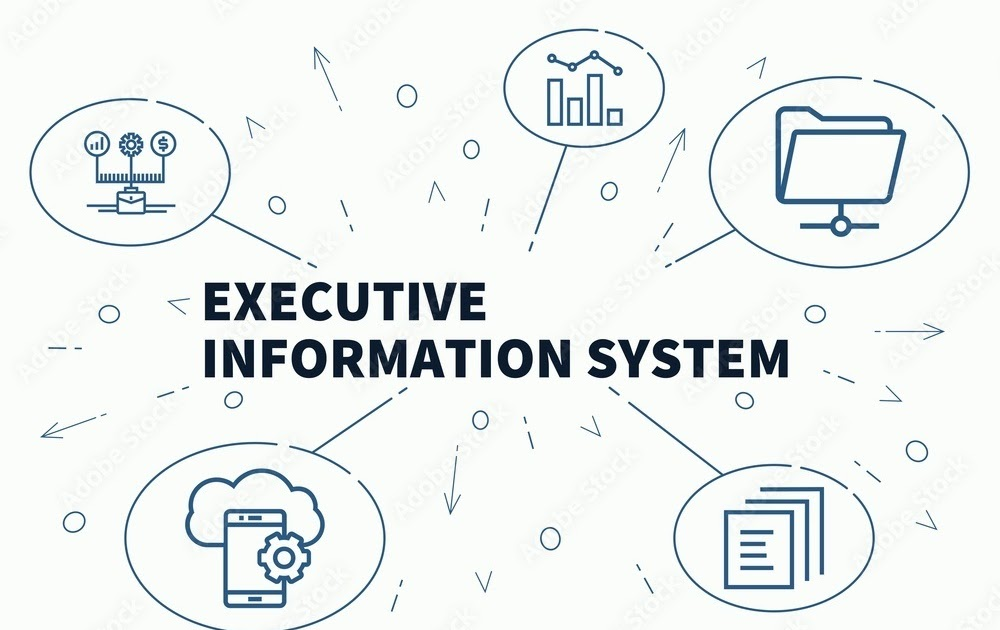
To support this need, organisations use Executive Information Systems (EIS).
An Executive Information System is a specialised management system designed to provide senior executives with easy access to critical business data, reports, and performance indicators.
It helps leaders quickly understand organisational performance and make informed strategic decisions.
💡 What is an Executive Information System?
An Executive Information System is a computer-based system that provides high-level executives with summarised information from multiple organisational sources.
Unlike operational systems, EIS focuses on strategic decision-making by presenting information in a clear and concise format.
Executives use EIS to monitor:
- Company performance
- Market trends
- Financial indicators
- Competitor activities
- Organisational goals
This system allows leaders to view the big picture of the organisation without needing to analyse complex raw data.
⚙️ Key Features of EIS
Executive Information Systems offer several powerful features designed for senior management.
📈 Dashboard-Based Reporting
EIS uses visual dashboards to display key metrics such as:
- Sales performance
- Revenue growth
- Operational efficiency
These dashboards make information easier to interpret.
📊 Data Integration
EIS collects and integrates data from various sources such as:
- Internal company databases
- Financial systems
- Market research reports
- External business data
This ensures executives receive comprehensive insights.
🔍 Drill-Down Analysis
Executives can move from summary-level information to detailed reports when needed.
For example, a CEO may view total sales and then drill down to analyze sales by region.
⏱️ Real-Time Information
Modern EIS systems provide real-time updates, allowing executives to monitor business performance continuously.
The Future of Executive Information Systems
With the rise of emerging technologies, EIS is becoming more advanced.
Future systems are expected to integrate:
- Artificial Intelligence (AI)
- Predictive analytics
- Big data platforms
- Cloud-based business intelligence tools
These technologies will transform EIS into intelligent strategic platforms that can provide predictive insights and automated recommendations.
In modern organisations, strategic leadership depends on access to accurate and timely information.
An Executive Information System (EIS) helps top-level executives transform complex data into meaningful insights that guide long-term business strategies.
By providing clear dashboards, integrated data, and powerful analytical tools, EIS plays a crucial role in helping organisations stay competitive in the global marketplace. 📊
Signing off,
iQOO Community Ranger
Please sign in
Login and share