



























Circular Railway - An Alternate Connectivity of Kolkata

Transportation Challenges in Kolkata
Traffic congestion is a regular part of life for anyone living in the city of Kolkata. Despite multiple metro services partially operational, a long bypass road system, train and ferry-based connectivity and a variety of public transport systems such as government and private buses, autorickshaws, e-rickshaws, cycle rickshaws and even the nostalgic hand-pulled rickshaws - Kolkata is still considered as the slowest moving city for commutation due to several challenges as high population density, busy business district being the geographical gateway of North-East India, Nepal and Bhutan, under-construction projects and a multi century-old road infrastructure. However, it is the spirit of Kolkata and it's citizens that keep the city operational, even after bearing all its adversities.
Railway Network in the City
Amidst all the chaos, Kolkata is well-equipped with a railway network from multiple ends - especially hosting two of busiest terminal stations of Howrah and Sealdah. Apart from these, there are Kolkata (Chitpur) and Shalimar terminuses also operating in the vicinity of the city to reduce load on the former two terminals. The local EMU based trains operating from Howrah and Sealdah majorly connects Kolkata to its nearby suburban hubs, with millions of passengers travelling everyday through these.
The Alternative Network
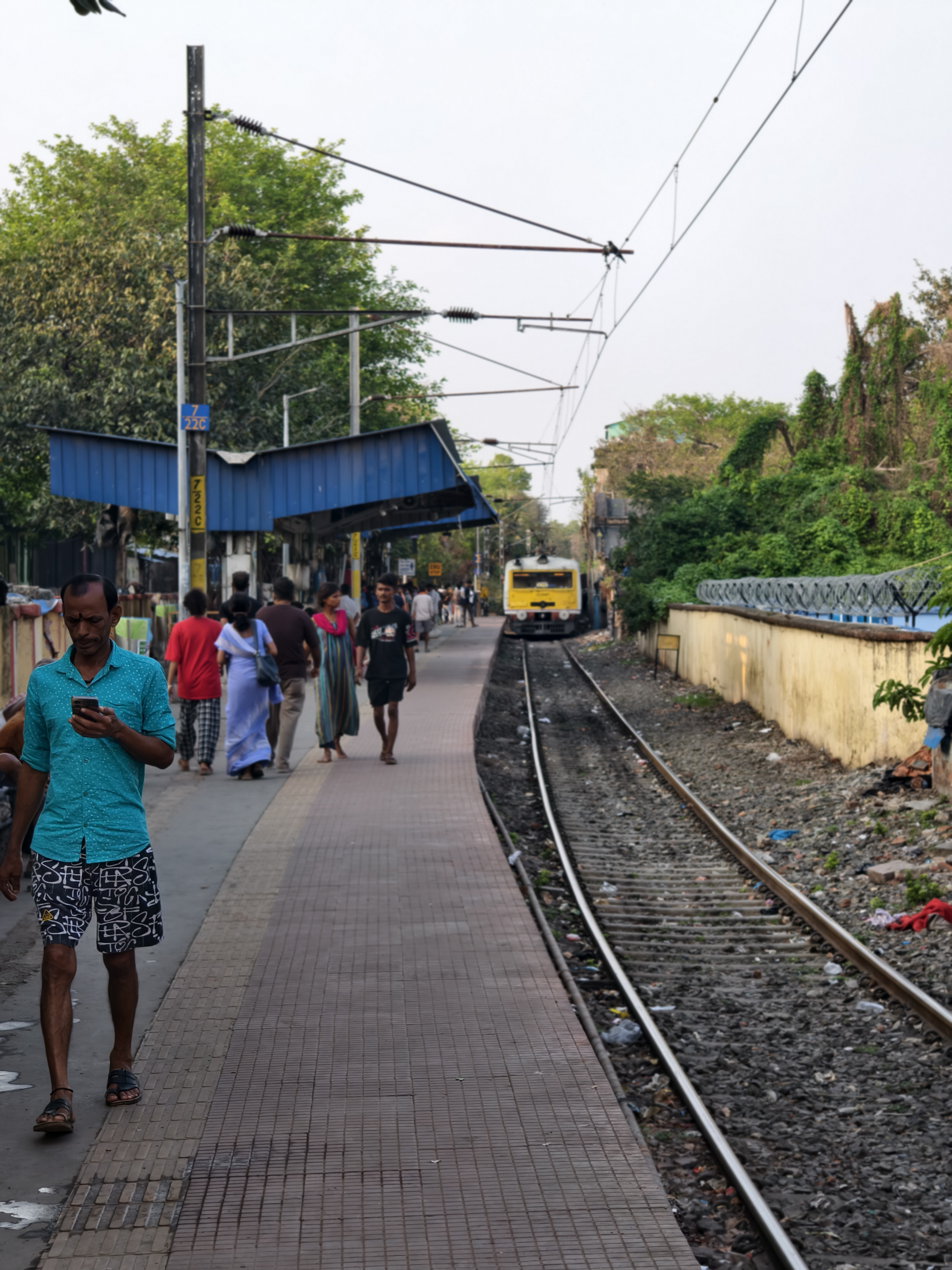
Apart from these, there exists also another railway service in the city that connects it's northern section to the southern part via an alternative, scenic route that has the potential to reduce the congestion and load on the traditional routes of transportation in the city. Yes, I am talking about the Circular Railway system of Kolkata, colloquially known as the 'Chakra Rail' in Bengali language, which is a 36 km long loop line that encircles the city. Operated by the Sealdah division of Eastern Railway, this network consists of about 20 stations and serves an average of 65,000 passengers daily on a weekday.
The Chakra Rail
The line begins at the Dumdum Junction, then it travels through Kolkata Railway Terminus (Chitpur), Tala, and then through the scenic route by the edge of the Hooghly river separating Kolkata with Howrah, as the passengers may enjoy the wonderful ambience of the riverside while commuting in a circular railway train. Through the ambient ghats of Bagbazar, Sovabazar, Ahiritola, Burra Bazar, Mullick Ghat, Babughat, Millennium Park, Princep Ghat - the train travels at a modest speed peaking upto 65 kmph, before moving towards southeast by the Khidirpur Dockyard, before terminating at Majerhat railway station.
The Loop
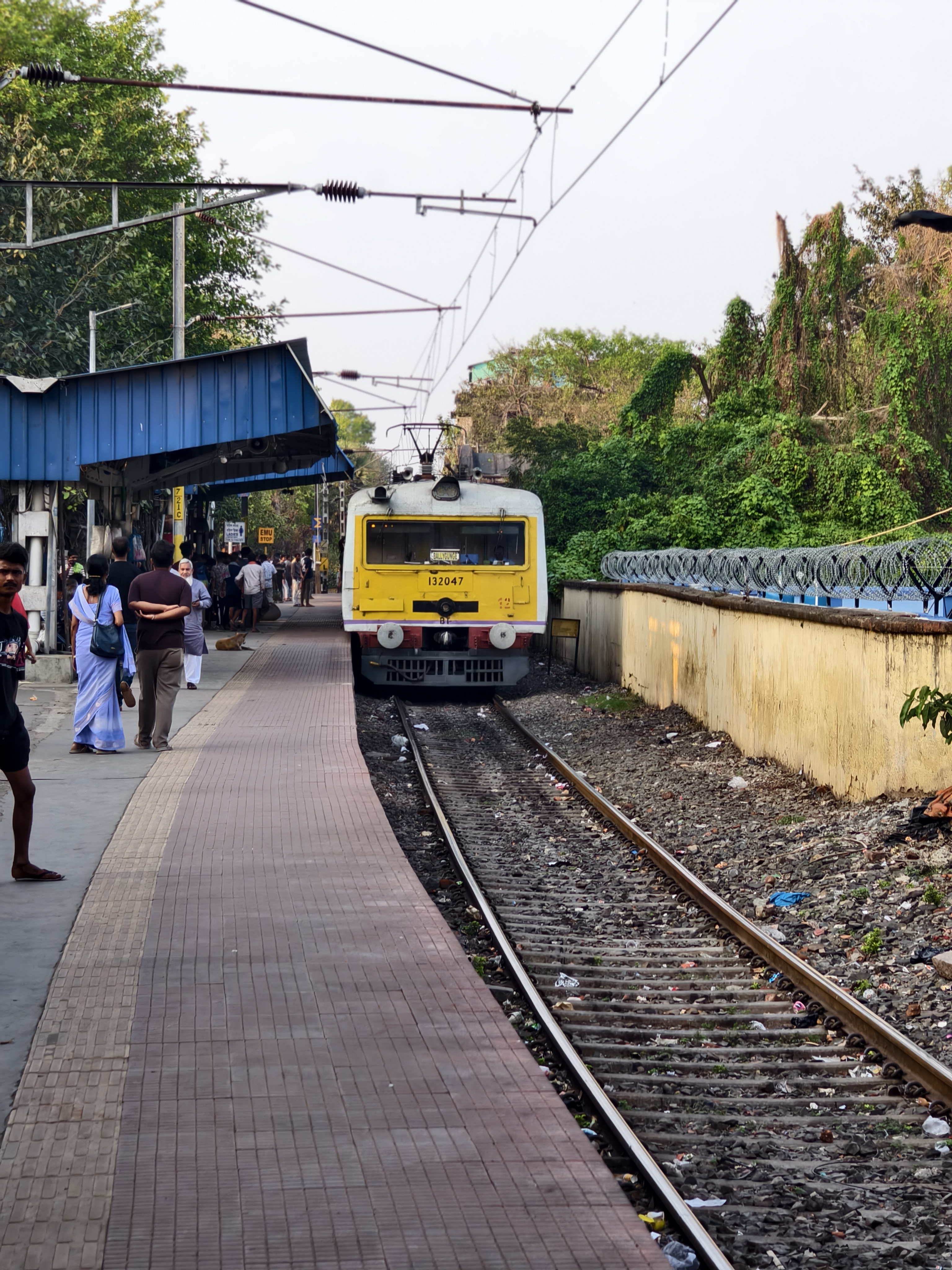
From Majerhat, the train doesn't use the same single line system to return, instead it uses the existing broadgauge multi-line network of Sealdah division, and returns to Dumdum via New Alipore, Tollygunge, Lake Gardens, Ballygunge junction, Park Circus, Sealdah terminus, Bidhan Nagar junction. When it is time for a journey in reverse order, the train might travel from Dumdum to Majerhat via Sealdah, before using the same Circular Railway riverside single-line system to loop back to Dumdum.
Positives and Negatives
This circular railway system has brought an unique option for the daily commuters in the city, especially operating in the central business district around Burra Bazar, Dalhousie - for being an alternate convenient option than the crowded metro railway or buses during the peak hours. For people desiring a unique view of the city's landscape and the ghats - they may also use this option to land around Princep Ghat, Millennium Park or Eden Gardens Cricket Stadium. As per my personal experience, commuting from my ancestral house in Jorabagan, North Kolkata to my own flat in Behala, South Kolkata takes 2+ hours via bus route, where multiple interchanges requires to be availed due to no direct connectivity, however, a 30-minute ride connecting Burra Bazar at north and Majerhat at south cuts down a significant amount of time.
But again, you need to consider that this Circular Railway system is a single-line, hence the operation is lesser than the principal railway network serving Howrah and Sealdah in the city. Often, a train needs to wait for 15-20 minutes at double-lined stations such as Bagbazar, Princep Ghat, to let another train from the opposite side pass. This makes the rides in this line quite irregular, and often trains face delay than scheduled timings.
A Touch of History
Although operational in 1984, and fully electrified in 2004, allowing EMU trains from Sealdah division travel through this circular railway network, the roots of this line goes back to as past as 1875! During the British Raj in India, a broadgauge railway line was built to connect the Kolkata port with the national rail network, to move goods across the Hooghly river, especially originating from the bustling riverside factories that used to produce jute, cotton, tea, coal and even ammunition produced at the Cossipore Shell Factory. There was even a ferry system near Khidirpur that would transport these wooden wagons over the river to Shalimar at the Howrah division. Called the Calcutta Port Commissioner's Railway (CPCR), this system was later transitioned for passenger carriage and that's how today's Circular Railway system came into existence!
Share Your Experience
Have you ever tried the Circular Railway network in Kolkata? Is there any such loop rail network in another Indian city which serves as a Bypass railway service? Let me know in the comments section.
Please sign in
Login and share