



























Snapdragon 8 Elite Gen 6 Pro May Offer Record-Breaking Shared L2 Cache

The Snapdragon 8 Elite Gen 5 was already a significant upgrade over the Snapdragon 8 Elite, offering 12MB of shared L2 cache between the two CPU clusters. Now, the Snapdragon 8 Elite Gen 6 Pro is expected to kick it up a notch, with a tipster hinting that the triple ‘2 + 2 + 3’ cluster will allow the upcoming flagship chipset to flaunt the highest L2 cache for any smartphone silicon out there.
Thanks to the Snapdragon 8 Elite Gen 6 Pro’s new triple CPU cluster, the shared 16MB L2 cache could become the chipset’s highest configuration
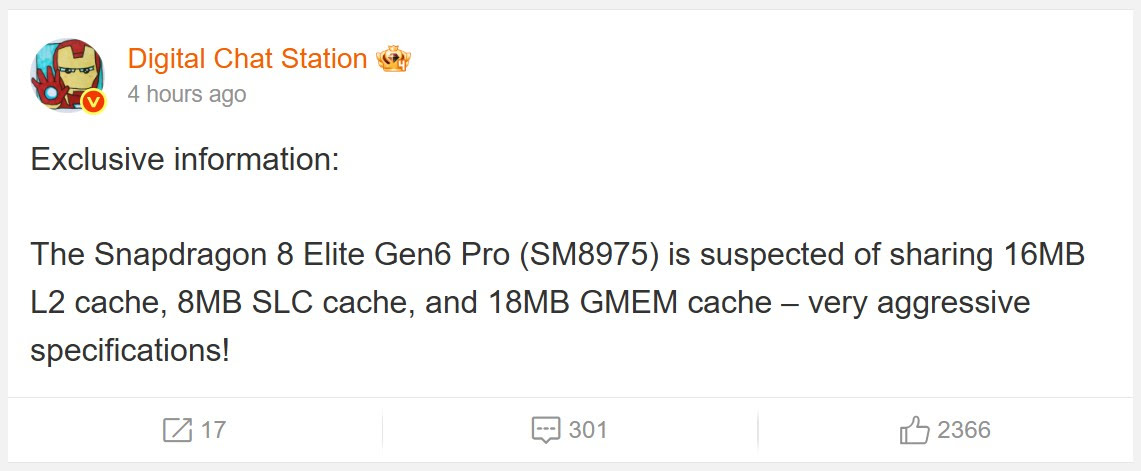
Some extra specifications shared by Weibo tipster Digital Chat Station share several cache details surrounding the Snapdragon 8 Elite Gen 6 Pro. Where the latter will share some similarities with the Snapdragon 8 Elite Gen 5, such as 8MB of SLC (System-Level Cache) and 18MB of GPU memory, it’s the L2 cache that will set its successor apart. With two CPU clusters on the Snapdragon 8 Elite Gen 5, the 12MB L2 cache is shared between this configuration.
Since the Snapdragon 8 Elite Gen 6 Pro is rumored to feature a triple CPU cluster as mentioned above, the shared 16MB L2 cache could result in lowered latency, improved performance, and greater efficiency. With the increased memory readily available to access, the Snapdragon 8 Elite Gen 6 Pro’s cores won’t have to remain active for longer periods, reducing power consumption.
Additionally, the entire smartphone is expected to become snappier since apps can also access the higher L2 cache, substantially reducing loading times. The lowered latency also means that games with rich textures can maintain smoother framerates and faster response times. All of these details highlighted about the Snapdragon 8 Elite Gen 6 Pro’s L2 cache upgrade, and we haven’t even touched upon the subject of LPDDR6 RAM support, granting the SoC a boost in memory bandwidth.
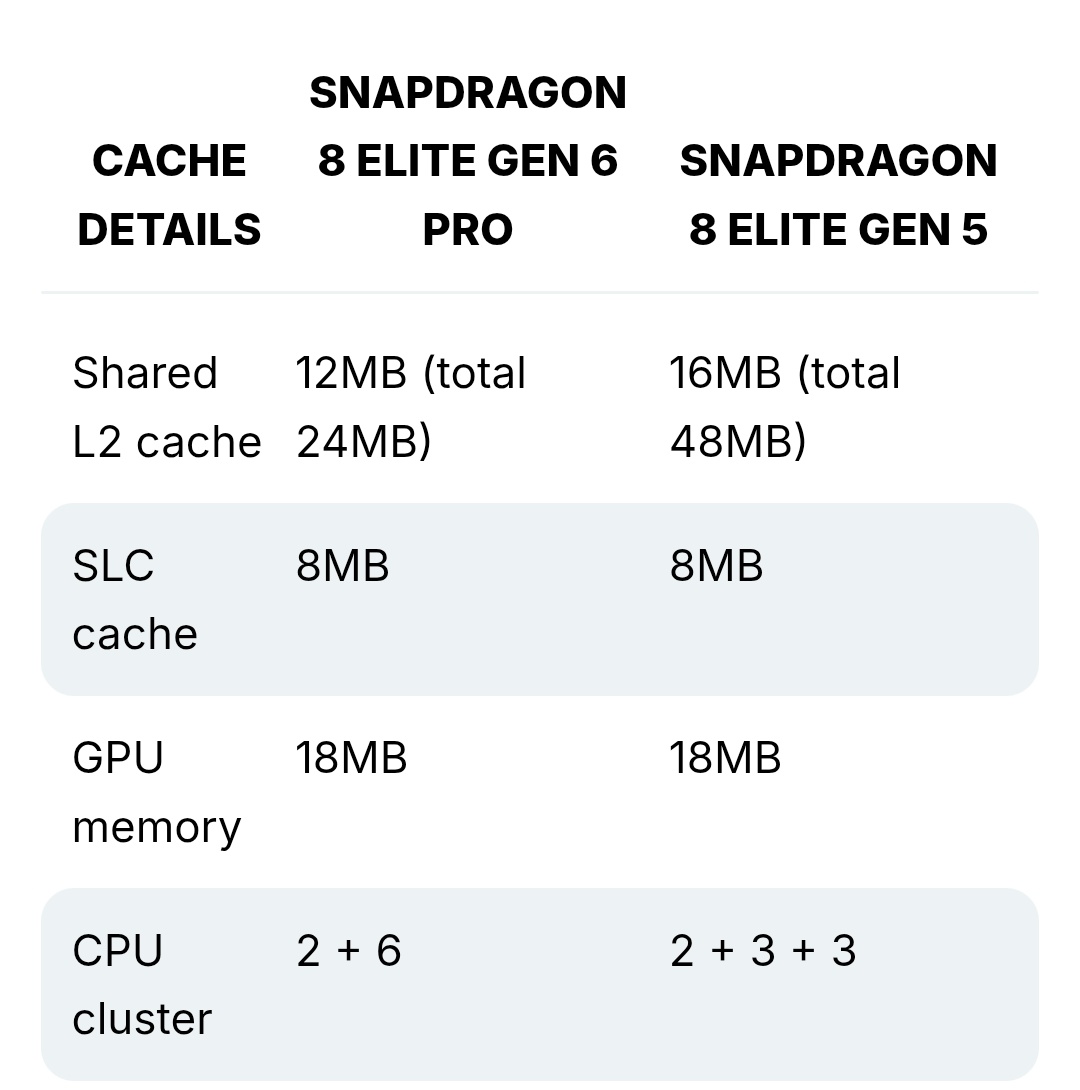
It’s possible that Qualcomm isn’t increasing the SLC cache and GPU memory because the primary bottleneck was the L2 cache, but we’ll find out once the first benchmarks are in. Now, let us keep our fingers crossed that the company doesn’t go overboard with power draw, because the last thing we want is the Snapdragon 8 Elite Gen 6 Pro adopting the same aggressive clock speed approach as the Snapdragon 8 Elite Gen 5.
Source: wccftech
Please sign in
Login and share