



























Nvidia shows neural compression can cut VRAM usage from 6.5GB to 970MB

New AI texture and material systems aim to shrink assets, speed up shading, and free up GPU resources
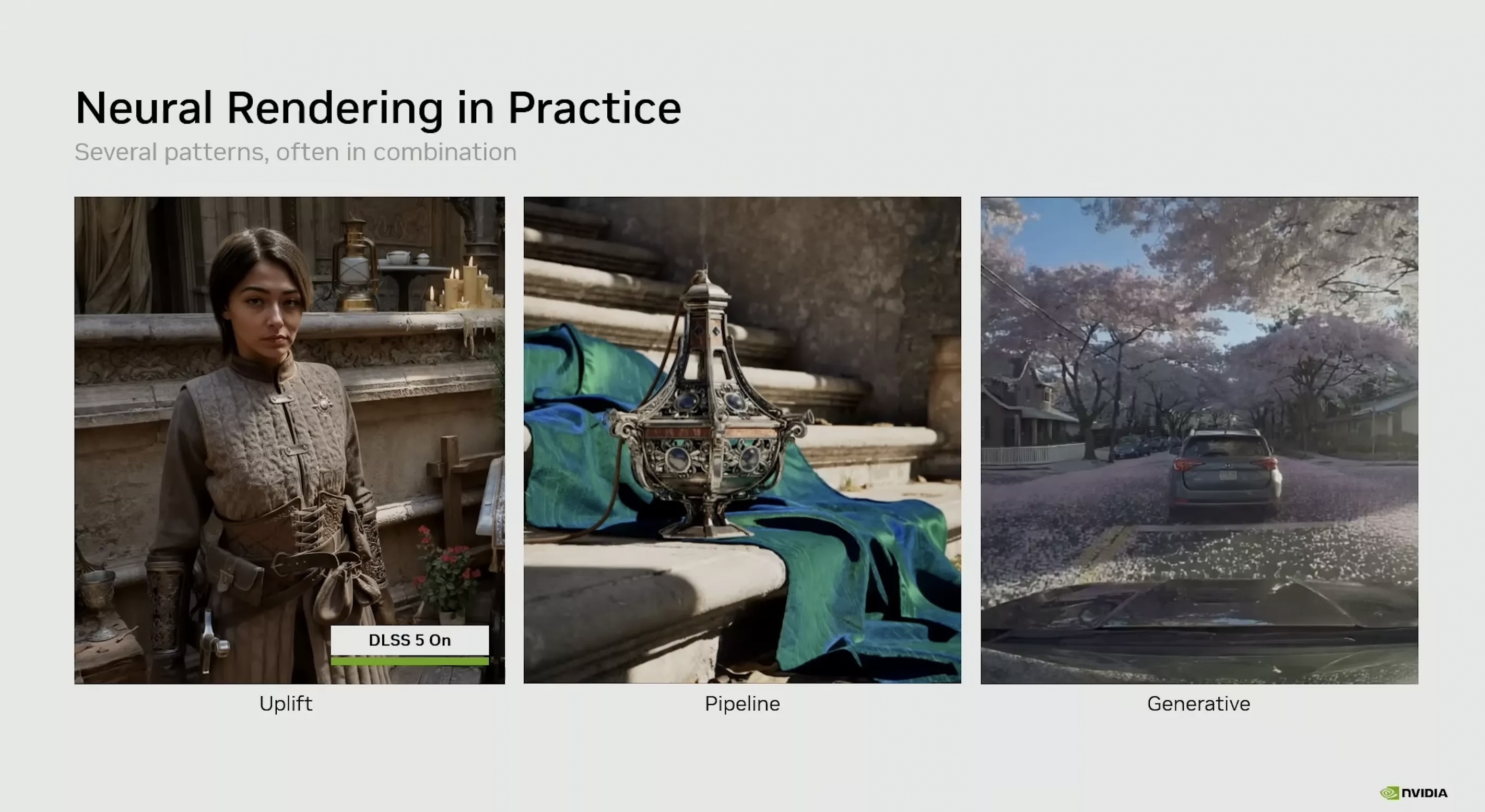
Nvidia's latest push into neural rendering is not just unfolding on keynote stages, but also in follow-up technical briefings. A recent video released days after the DLSS 5 presentation takes a closer look at how these systems are intended to work inside real engines. The breakdown points to a quieter but potentially more consequential shift for developers: moving texture and material data into compact neural representations to reduce memory use and improve performance, rather than relying primarily on an end-of-pipeline upscaler.
Consider Nvidia's work on Neural Texture Compression (NTC). In its "Tuscan Wheels" demo, the company showed VRAM usage dropping from roughly 6.5GB with traditional BCN-compressed textures to 970MB using NTC, while keeping image quality close to the original.
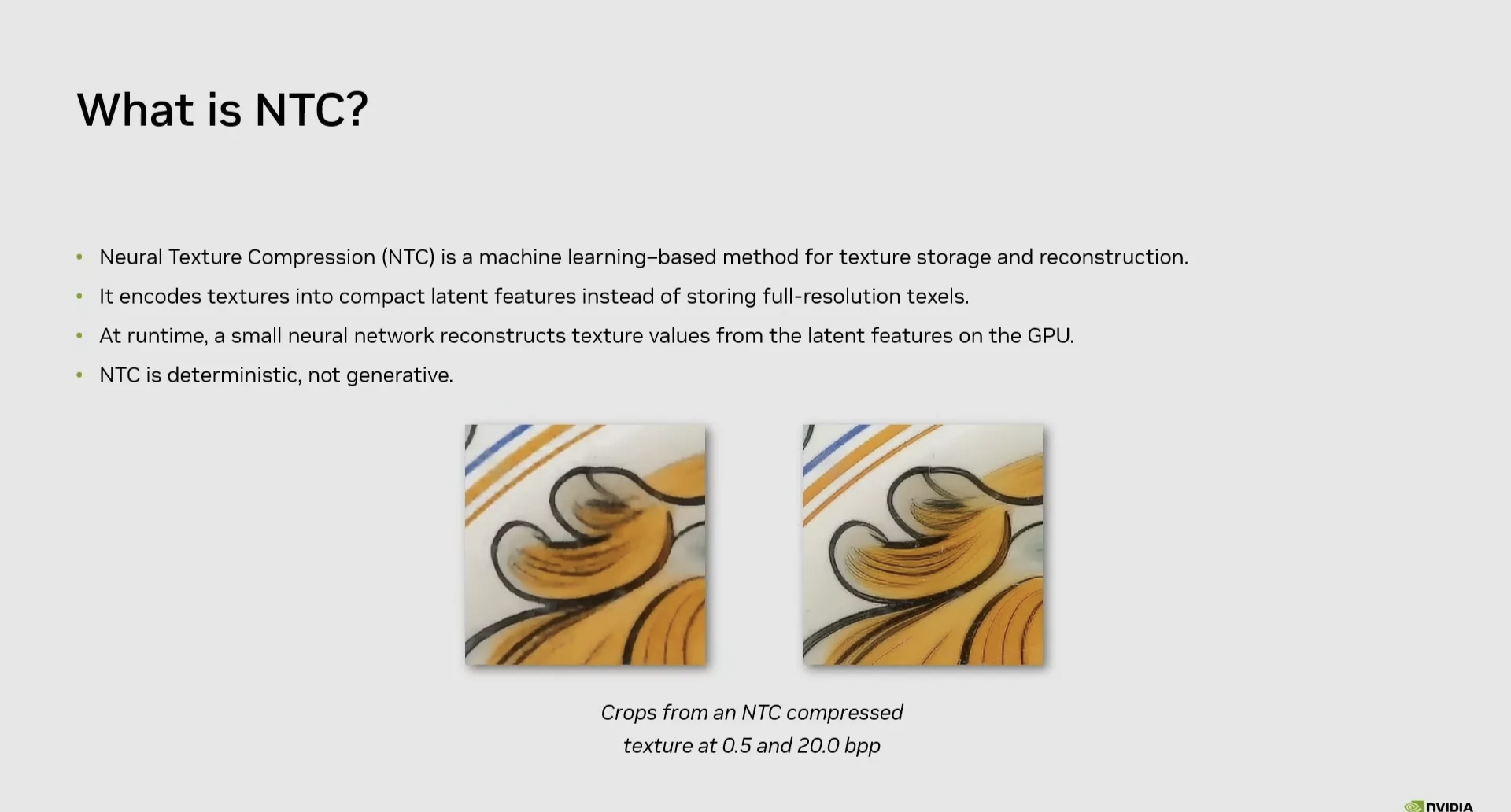
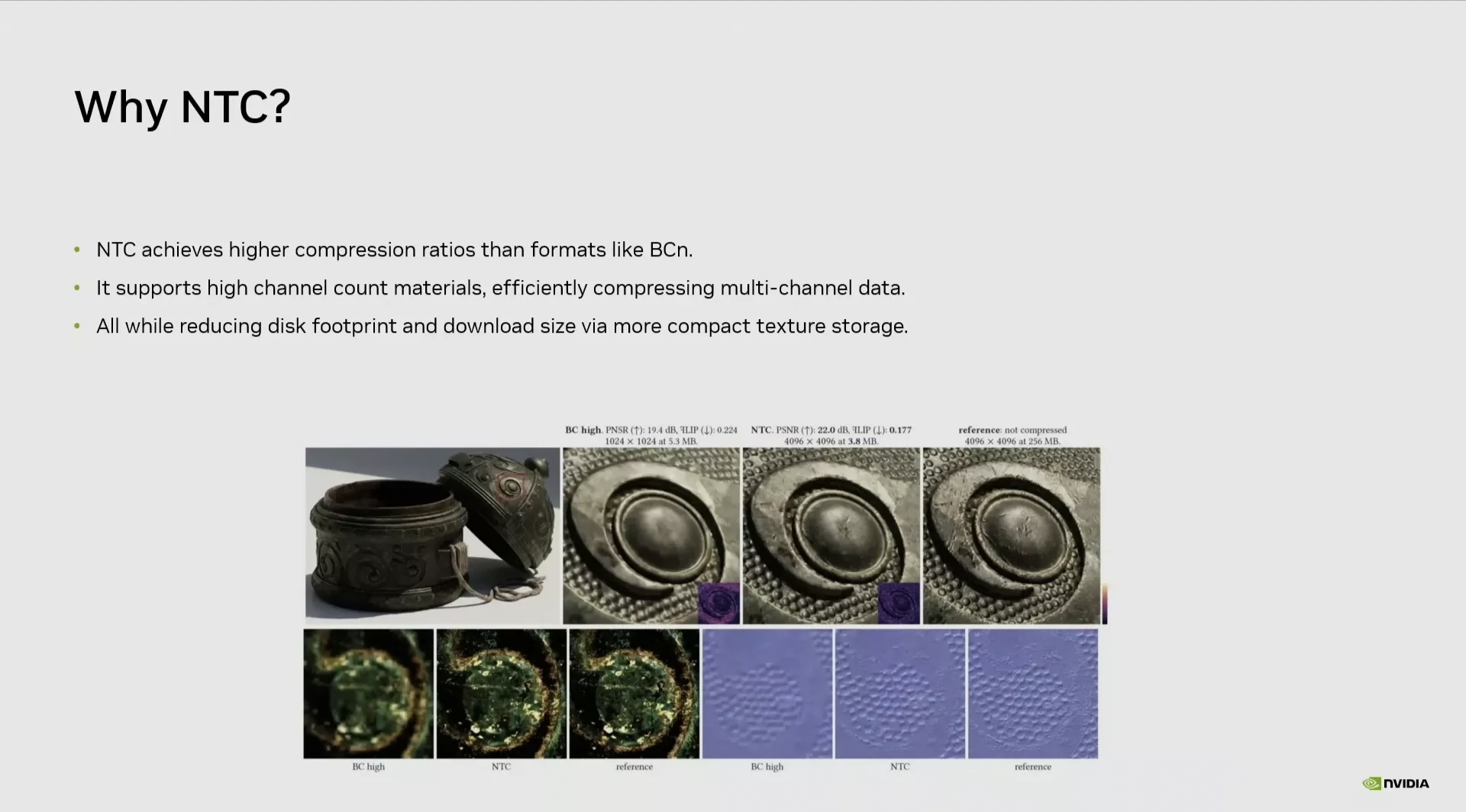
At that same 970MB memory budget, NTC preserved more detail than standard block compression. The result is smaller game installs, lighter patches, reduced download bandwidth, and more headroom for higher-quality assets on a given GPU.
For studios dealing with texture bloat, that kind of reduction offers a practical advantage in a way that another layer of image reconstruction does not.
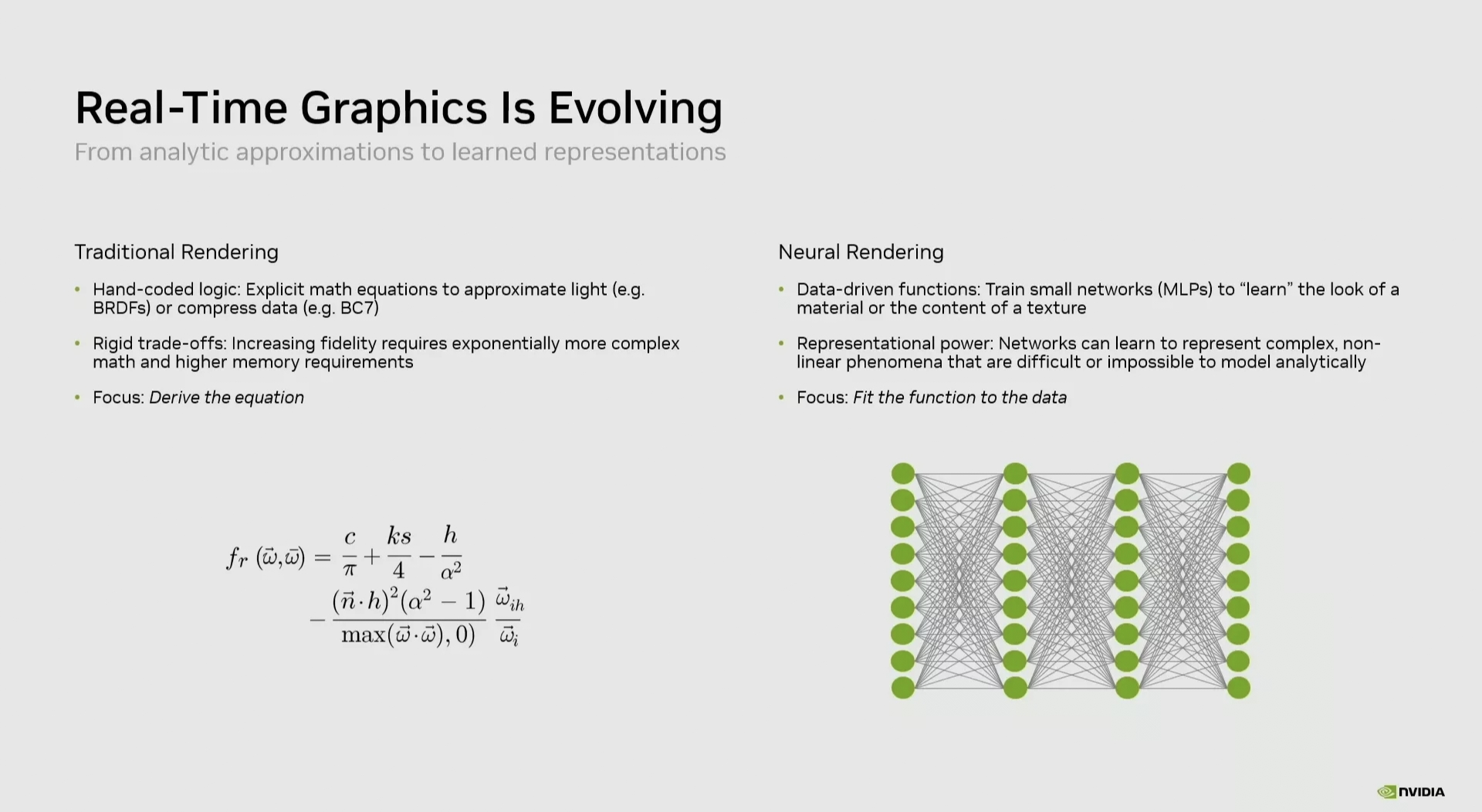
Neural Materials (NM) applies a similar idea within the shading pipeline. Instead of storing a large set of texture channels and running heavier BRDF (Bidirectional Reflectance Distribution Function) math, Nvidia encodes material behavior into a compact latent representation that a small neural network decodes at render time.
In one example, a material setup with 19 channels was reduced to eight, with Nvidia reporting 1.4x to 7.7x faster 1080p render times in that scene. The company frames this work less as a way to invent new visuals and more as a method for storing and evaluating existing material data more efficiently, allowing for greater scene complexity within the same hardware budget.
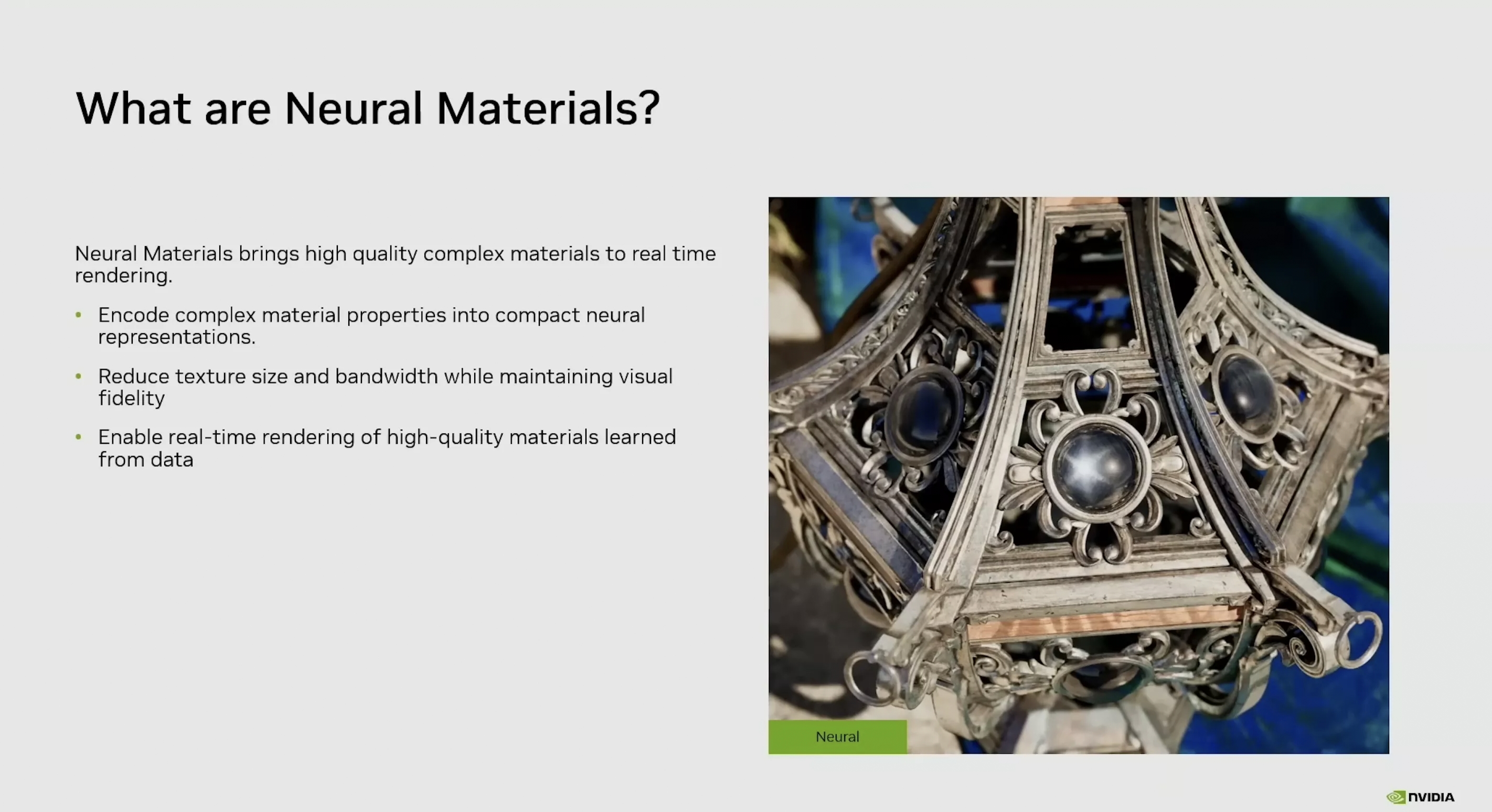

These techniques are part of a broader "neural rendering" roadmap that extends beyond DLSS 5. While DLSS 5 operates at the end of the pipeline, applying machine learning to the final image, Nvidia's more recent technical discussion focuses on embedding smaller neural networks deeper inside the engine.
The goal is to assign compact models to specific tasks such as decoding textures, evaluating materials, and reducing memory traffic, rather than relying on a single, monolithic filter at the end of the frame.
This approach also reflects a growing divide since DLSS 5 was introduced. Some developers and players remain wary of AI-driven reconstruction potentially overriding artistic intent, and would prefer AI to be used for optimization, image quality, and performance without reshaping a game's visual identity.
With its emphasis on NTC and NM, Nvidia is making the case that AI could also provide meaningful advances for games from invisible parts of the pipeline: systems that shrink assets, accelerate shading, and free up resources, while leaving the look of a game in the hands of its creators.
Please sign in
Login and share