













What is a plasma electric stove? The gas-free flame tech explained

A new electric flame plasma stove is grabbing attention for creating real flame-like cooking without LPG. Here's what this technology is, how it works, and whether it could change the way Indian kitchens cook.
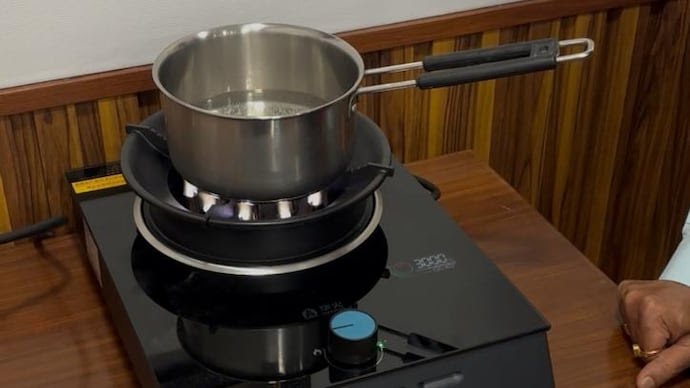
Imagine cooking your daily meals on a stove that looks and feels like LPG but doesn’t use gas at all. That’s exactly what a new plasma-based electric stove promises. Recently highlighted by Pralhad Joshi, this innovation could redefine how Indian households cook.
With rising LPG costs and a push for cleaner energy, this technology might just be the future of kitchens.
WHAT IS A PLASMA ELECTRIC STOVE?
The APAPL Electric Flame Plasma Stove is a next-generation cooking appliance that uses electricity instead of LPG or PNG. But unlike induction cooktops, it produces a real flame-like heat.
It works using plasma arc technology, where electricity ionises air to create an ultra-hot flame without burning any fuel.
In simple terms:
- No gas
- No combustion
- Just electricity creating a powerful cooking flame
HOW DOES THIS TECHNOLOGY WORK?
The stove generates a plasma flame by ionising air using electricity. This creates extremely high temperatures—similar to or even higher than traditional gas burners.
- Temperature can reach up to 1200–1300°C
- Instant heating, just like LPG
- No waiting time like induction
This makes it ideal for Indian cooking styles like roti, tadka, frying, and wok cooking.
WHY IT FEELS LIKE LPG BUT ISN’T
One of the biggest advantages is that it mimics traditional gas stoves:
- Visible flame-like heating
- Works with all utensils (steel, aluminium, iron, brass)
- Knob-based control in many models
This solves a major limitation of induction cooktops, which require specific utensils and don’t give a “real flame” experience.
HOW IT IS DIFFERENT FROM LPG AND INDUCTION
LPG / PNG STOVE
- Uses gas fuel
- Risk of leakage
- Lower efficiency
- Produces soot and emissions
INDUCTION COOKTOP
- Uses electricity
- No flame
- Limited utensil compatibility
- Slower for certain Indian cooking methods
PLASMA ELECTRIC STOVE
- Uses only electricity
- Creates flame-like heat
- Works with all utensils
- High efficiency (80–90%+)
- No emissions or soot
KEY FEATURES THAT MAKE IT STAND OUT
- NO LPG OR PNG REQUIRED—Fully electric operation
- REAL FLAME EFFECT—Gas-like cooking experience
- ALL UTENSIL COMPATIBILITY—No restrictions
- HIGH EFFICIENCY – Faster cooking, less energy loss
ADVANCED SAFETY SYSTEMS
- No gas leakage
- Overheat protection
- Auto shut-off
PREMIUM BUILD
- Toughened glass top
- Metal alloy burners
- Easy Cleaning - No residue or soot
POWER, PRICE AND SPECIFICATIONS
- Power options: 2500W to 6000W
- Voltage: 220V AC
- Temperature: Up to 1300°C
- Weight: Around 10 kg
- Price: Around 35,000 (approx.)
Available in single and double burner options, suitable for both homes and commercial kitchens.
WHERE CAN IT BE USED?
This technology isn’t limited to homes. It can be used in:
- Residential kitchens
- Restaurants and hotels
- Cloud kitchens
- Food trucks
- Industrial food processing units
WHY THIS COULD BE A GAME CHANGER FOR INDIA
When combined with schemes like PM Surya Ghar Yojana, which promotes solar power generation, this stove could:
- Reduce dependence on LPG cylinders
- Lower household energy costs
- Promote clean, renewable cooking
- Cut carbon emissions
Imagine cooking entirely on solar-powered electricity no gas cylinders needed.
ARE THERE ANY CHALLENGES?
While promising, there are a few considerations
- Higher upfront cost compared to gas stoves
- Dependence on electricity supply
- Awareness and adoption still low
However, with scaling and local manufacturing, prices could drop significantly.
THE FUTURE OF COOKING?
The plasma electric stove blends the comfort of LPG with the efficiency of electricity. If adopted widely and manufactured locally, it could transform kitchens across India.
From cleaner energy to safer homes, this innovation might soon move from a niche product to a mainstream cooking solution.
Quester,
Please sign in
Login and share