



























The Nightingale’s Metamorphosis: The Timeless Evolution of Asha Bhosle

When we speak of Asha Bhosle, we aren't just discussing a singer; we are discussing a phenomenon of endurance. While her sister, the late Lata Mangeshkar, was often cast as the ethereal, "divine" voice of Indian cinema, Asha became the voice of the human experience—raw, versatile, and perpetually modern.
Her life is a masterclass in how to pivot when the world tries to box you in.

To understand the legendary life of Asha Bhosle, we must look at her journey as a series of resilient transformations. From her early days in a musical household to becoming a global icon, her story is as much about family as it is about her voice.
Early Life & Schooling
Birth: Born on September 8, 1933, in Sangli, Maharashtra, as Asha Mangeshkar.
Family Roots: She was the third of five children born to Pandit Deenanath Mangeshkar, a renowned classical singer and theater actor.
Her siblings are all musicians: Lata, Meena, Usha, and Hridaynath.
Education: Her formal "schooling" was primarily in music. Her father began training her in classical music from a very young age. However, her childhood was cut short when her father passed away in 1942. The family moved from Pune to Kolhapur and finally to Mumbai, where Asha and her sister Lata began singing and acting in films to support the family.
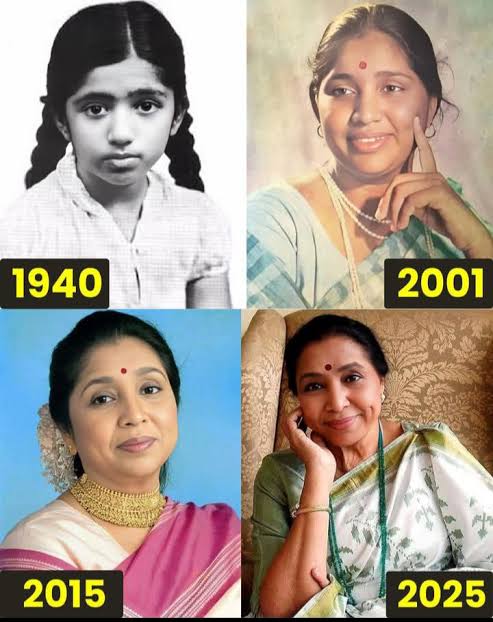
Family Life & Personal Challenges
Asha’s personal life was marked by both bold choices and profound loss:
First Marriage: At age 16, she eloped with Ganpatrao Bhosle, Lata Mangeshkar’s personal secretary. The marriage was troubled, and she eventually returned to her mother's home with two children, while pregnant with her third.
Children: She had three children: Hemant, Varsha, and Anand. Sadly, her daughter Varsha passed away in 2012, and her son Hemant in 2015.
Second Marriage: In 1980, she married the legendary composer R.D. Burman (Pancham Da). They remained together until his death in 1994, forming one of the most creatively potent duos in music history.
Collaborations with Other Singers
Asha Bhosle’s versatility allowed her to harmonize with every major voice in the industry:
The Golden Duets: Her most famous collaborations were with Mohammed Rafi and Kishore Kumar. With Rafi, she delivered playful tracks like "Uden Jab Jab Zulfen Teri", and with Kishore, she mastered the "cool" sound of the 70s.
The Sibling Bond: While the media often painted a picture of rivalry, Asha recorded several iconic duets with her sister, Lata Mangeshkar, such as "Main Chali Main Chali" and "Chap Tilak Sab Chini".
Global Reach: She wasn't limited to Bollywood. She collaborated with international artists like Boy George, Michael Stipe, and the Kronos Quartet, proving her voice had no borders.
The Evolution: From Shadow to Spotlight
Asha’s journey wasn't a paved road; it was a climb. In the 1950s, she was often relegated to the "leftover" songs—the ones deemed too earthy or cabaret-adjacent for the reigning playback queens.
The Early Struggles: Entering the industry as a young mother in need of a livelihood, she took every assignment with a grit that eventually defined her sound.
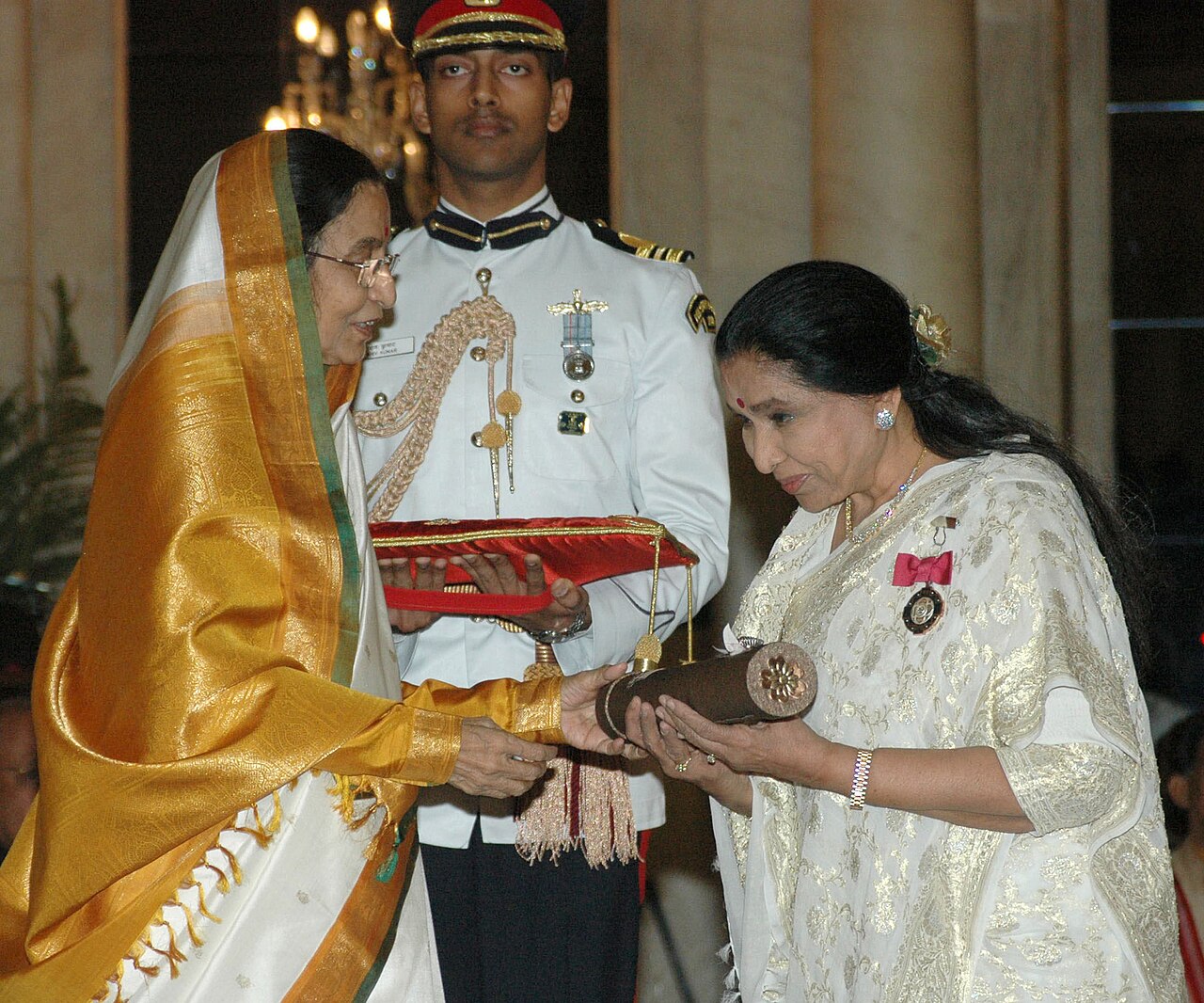
The S.D. Burman Era: It was under the tutelage of S.D. Burman that she began to find her "soul." She moved away from imitating her sister’s thin, high-register style to embracing her own robust, mezzo-soprano warmth.
The R.D. Burman Revolution: This was the definitive turning point. Together with "Pancham," Asha broke the mold of Indian playback. She integrated jazz, rock, and Latin beats, proving that a playback singer could be a rockstar.
The Best Moments: A Career of Versatility
Asha Bhosle’s career is less a timeline and more a kaleidoscope. Here are the moments that defined her legend:
Era; Landmark; Achievement; Why it Matters
The 1960s
Aaye Meherbaan (Howrah Bridge)
She mastered the art of the "sultry tease" without ever losing musical precision.
The 1970s
Dum Maro Dum (Hare Rama Hare Krishna)
She became the voice of the hippie movement and rebellion, a sharp pivot from traditional film music.
The 1980s
Umrao Jaan
Just as critics labeled her a "pop singer," she dropped her scale by two notes and delivered the most haunting, classical Ghazals in cinematic history.
The 1990s
Rangeela Re
At age 62, she voiced an 18-year-old Urmila Matondkar, sounding more youthful and energetic than singers half her age.
Why She Remains Inimitable
What makes Asha "Asha" isn't just the 12,000+ songs or the Guinness World Record. It’s her intellectual curiosity. While others rested on their laurels, Asha was collaborating with Boy George, Kronos Quartet, and Michael Stipe. She embraced the digital age, became a restaurateur, and maintained a wit that is as sharp as her taans.
"I have a fire in my stomach. I have always felt that if I don’t sing better today than I did yesterday, I am failing." — Asha Bhosle

A Recent Loss
It is with great sadness that we note Asha Bhosle passed away on April 12, 2026, at the age of 92. She died at Breach Candy Hospital in Mumbai following cardiac complications. Her passing marks the end of an era, but her voice remains etched in over 12,000 recorded songs, ensuring she will live on through every note she ever sang.

The Legacy of the "Last Empress"
Today, Asha Bhosle stands as the bridge between the golden era of Bollywood and the hyper-digital present. Her evolution teaches us that versatility is the ultimate form of survival. She didn't just adapt to the changing times; she often drove the change herself.
She remains a reminder that age is a mere technicality when you possess a voice that refuses to grow old.
Please sign in
Login and share