




























ISGL sets out to build India’s first real eSports pathway for 500M Gamers

The franchise-led league looks to organise a fragmented market, unlocking new opportunities for brands, investors, stakeholders and, most importantly, Indian gamers.
There is scale. There is appetite. There is, increasingly, legitimacy.
What India’s esports ecosystem has not always had is structure.
That absence shows up in small ways and large. One-off tournaments that generate momentary buzz, then fade. Talented players without a clear pathway forward. Brands circling the space, but hesitating. The pieces have been there for years, just not quite fitting together.
The Indian Super Gaming League, or ISGL, arrives at precisely this intersection. Not as a tentative experiment, but as a more deliberate attempt to organise what has, until now, remained loosely assembled.
Launched in March 2026 and running through June, the league introduces a franchise-based model, eight teams with permanent ownership and a Rs 50 lakh prize pool. It spans multiple titles, from chess and FC 26 to Call of Duty Mobile and FAU-G, pulling together audiences that are often treated separately.
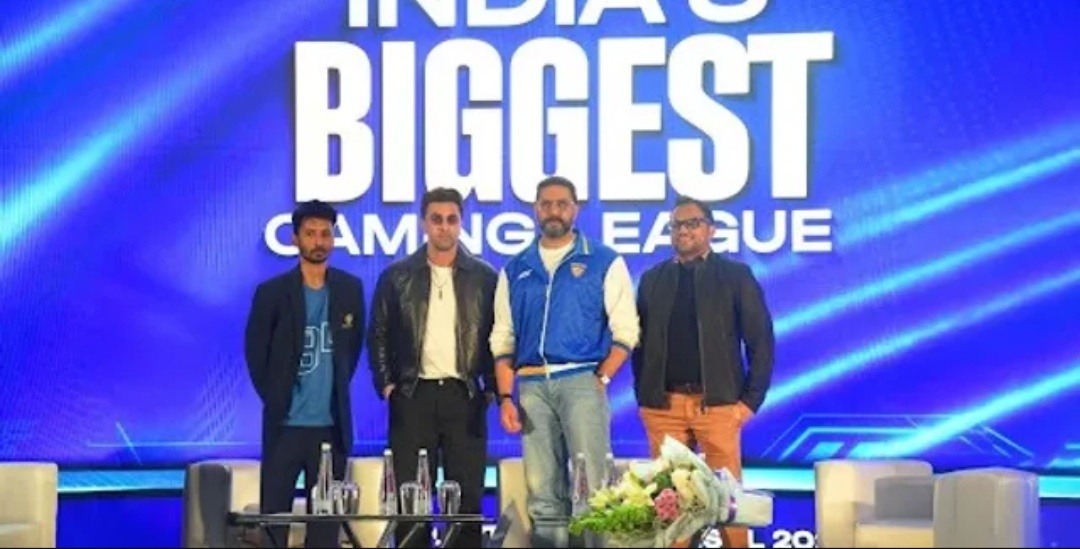
And then comes the visibility layer. Teams backed by Ranbir Kapoor and Abhishek Bachchan. A curtain raiser that blends creators, gamers and celebrities. It is not subtle. Nor is it meant to be.
Policy shifts clear the runway
Timing, here, is doing more than supporting the narrative. It is shaping it.
In August 2025, the Promotion and Regulation of Online Gaming Bill drew a decisive line. Esports was formally separated from real money gaming. The latter was banned. The former was recognised as a legitimate competitive sport.
For an industry long caught in definitional ambiguity, this was more than regulatory housekeeping. It was a reset.
The Ministry of Youth Affairs and Sports has since been tasked with building frameworks around tournaments, academies and integration into national sports policy. Slowly but steadily, the knock-on effects are becoming visible. Investment conversations are shifting. Brand participation feels less tentative, more considered.
ISGL is among the first large-scale properties attempting to translate this policy clarity into something tangible. A working model. A live league. A system that can be tested, stretched and, inevitably, refined.
“India doesn’t lack gamers. It lacks systems.”
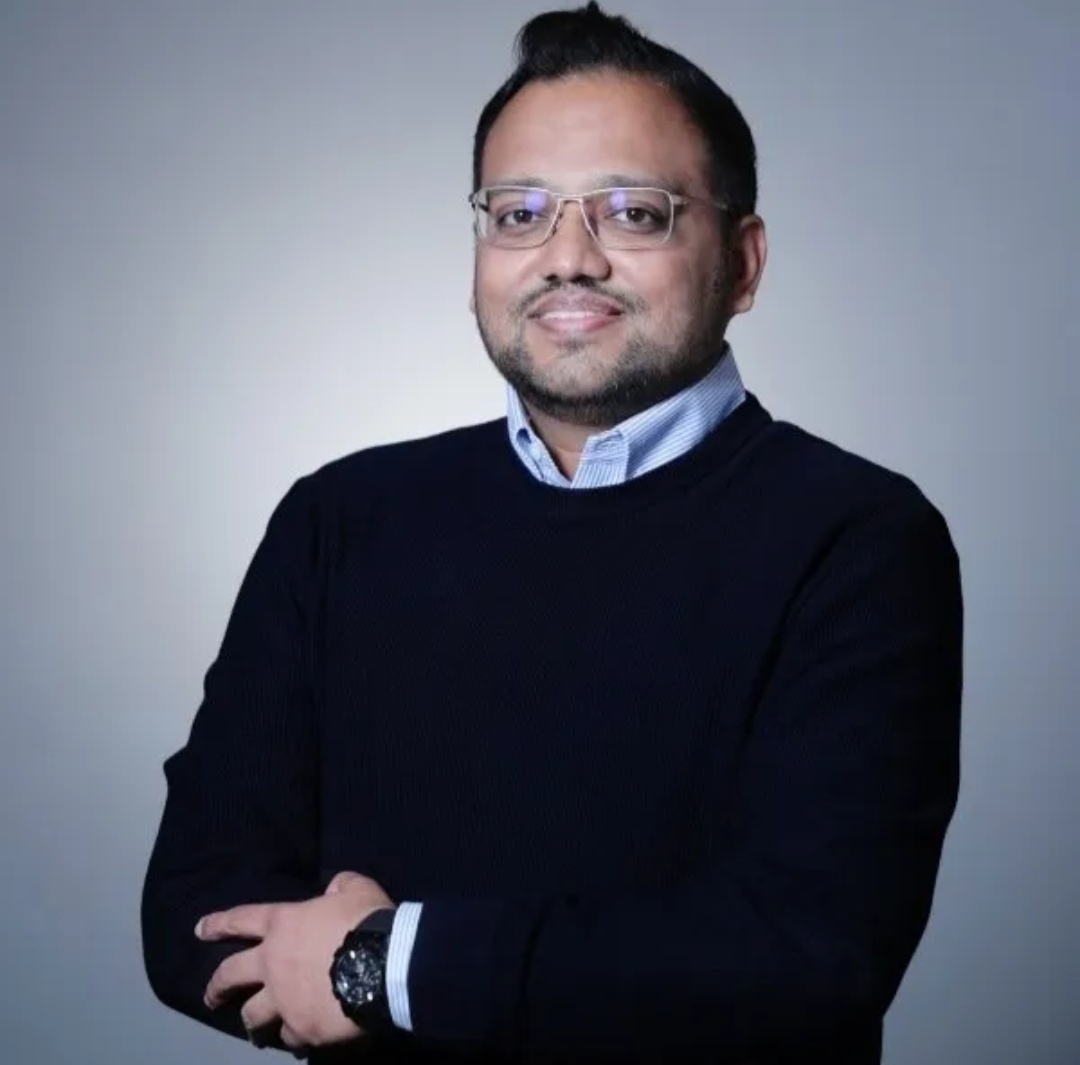
At the centre of this effort is Gautam Badalia, co-founder of ISGL, who frames the gap with a clarity that cuts through the noise.
“India doesn’t lack gamers. It lacks systems. ISGL is designed to bridge that gap, creating a clear pathway from grassroots participation to professional competition. In many ways, our vision is similar to what the IPL achieved for cricket. The opportunity is already here… what will define the next phase is execution.”
It is a sharp diagnosis. For years, India’s esports story has been one of participation without progression. Talent has surfaced, often in bursts, but without a consistent ladder to climb. ISGL’s structure, in that sense, is less about invention and more about organisation.
Badalia then turns to another layer that has grown rapidly, but unevenly: creators.
“Creators today have massive followings, sometimes comparable to film celebrities, but they were looking for a more structured platform. ISGL is designed to create that organised framework while building a larger ecosystem for the industry.”
The point lands. Creator culture has outpaced infrastructure. Audiences have scaled faster than the systems meant to support them. ISGL’s attempt is to formalise that influence, to give it continuity and a clearer role within the broader esports economy.
There is also a commercial argument underpinning the league’s design.
“Gaming offers access to a much larger base… India today has over 500 million gamers. By combining esports with traditional sports, brands can reach a wider and more engaged audience. ISGL is designed to bring that structure and scale.”
For brands, this is where the proposition sharpens. Not just reach, but relevance. Not just impressions, but engagement. The integration of traditional sports franchises is not incidental. It is a calculated bridge between familiarity and new-age consumption.
And then, almost as a refrain, the idea returns to execution.
“The opportunity is already here. The ecosystem, audience and infrastructure are already in place. What will define the next phase is execution.”
It is both a statement and a caution. The pieces exist. The momentum is visible. What happens next depends on how effectively they are brought together.
From scattered tournaments to a season-led format
Historically, Indian esports has leaned heavily on standalone tournaments. They arrive quickly, generate excitement, and disappear just as fast. Continuity is rare. Career pathways, even rarer.
ISGL attempts to rework that rhythm. Quietly, but decisively.
Its franchise-based model introduces permanence. Teams are not assembled and dissolved in cycles. They are owned, built and, ideally, nurtured. The season-led format adds another layer of predictability, something that players, brands and audiences can begin to rely on.
Qualifiers began on March 15 in Mumbai and extend across multiple cities including Chennai, Goa and Lucknow. The structure blends online access with offline LAN events, culminating in a national finale. It is a hybrid approach, designed to widen participation while tightening governance.
There is also a subtle but important shift here. The move towards offline finals is not just about spectacle. It is about credibility. Anti-cheat mechanisms. Competitive integrity. Trust.
Small details, perhaps. But foundational.
Where sports, gaming and culture intersect
If the format feels familiar, the positioning deliberately does not.
ISGL is not presenting itself purely as a competitive league. It is leaning, quite consciously, into culture.
Its curtain raiser in Mumbai on March 1 set the tone. An invite-only gathering. A mix of celebrities, creators and gamers. Names like Ranbir Kapoor, Abhishek Bachchan, Tanmay Bhat and Scout moving through the same space.
The signal is clear. Esports, in this telling, is not a niche. It is an intersection.
The league describes itself as a “franchise-based youth performance league where esports meets culture, creators, music and live energy.” It is expansive, perhaps intentionally so. Because the ambition is not to fit into an existing box, but to redraw the edges.
Expect exhibition matches. Creator-led moments. Music integrations. Not as afterthoughts, but as core elements of the experience.
A new canvas for brands
For brands, this convergence opens up a different kind of opportunity. Less linear. More layered.
Traditional sports marketing in India has largely revolved around a handful of high-visibility properties. Esports, by contrast, has often felt fragmented and difficult to navigate. ISGL’s model attempts to simplify that entry point without diluting its complexity.
By integrating established sports franchises such as Mumbai City FC, Kerala Blasters FC and Puneri Paltan, the league inherits existing fan bases and sponsorship relationships. It also creates familiar structures for marketers who are more accustomed to traditional sports ecosystems.
Early participation from brands like Too Yumm suggests cautious optimism. The approach, notably, is not aggressive. ISGL is experimenting with integrations that feel contextual rather than intrusive. Gaming zones in stadiums, thematic activations, cross-platform storytelling, and more.
It is still early. The playbook is still being written. But the intent is becoming clearer with each iteration.
Creators move from the sidelines to the centre
If there is one layer that feels particularly current, it is the role of creators.
Gaming creators today command audiences that rival, and sometimes exceed, those of mainstream celebrities. Yet, for all their reach, they have often operated without structured platforms that allow for sustained growth.
ISGL attempts to shift that dynamic.
By bringing creators into the league ecosystem, not just as amplifiers but as participants, it creates a dual influence model. Celebrities bring visibility. Creators bring community. Together, they expand both reach and engagement.
For Gen Z audiences, this matters. Community is not a byproduct. It is the product.
Digital-first, by design
Distribution follows the same logic. Meet the audience where it already is.
ISGL is leaning into OTT platforms and YouTube for broadcasting, aligning with how younger audiences consume content. This is less about replacing traditional broadcast and more about sidestepping its limitations.
Esports, after all, is inherently borderless. It scales through screens, not stadiums. It thrives on interactivity, not just viewership.
The multi-title format further amplifies this. Different games attract different cohorts. Different cohorts attract different brands. The ecosystem becomes more modular, more flexible.
And, potentially, more scalable.
Credibility as the foundation
Amid all the experimentation, one theme remains constant. Credibility.
The historical overlap between gaming and real money gaming has left lingering perception challenges. ISGL’s stance is unequivocal. No wagering. No ambiguity.
Its hybrid format, combining online play with offline finals, reinforces this positioning.
Governance mechanisms, anti-cheat protocols, structured competition. These are not headline-grabbing features, but they are essential.
Without credibility, scale does not hold. It fractures.
The longer game
Step back, and the contours begin to settle.
India has the audience. Over 500 million gamers. It has the growth trajectory. It has, now, regulatory clarity. What it has lacked is a cohesive system that can tie these elements together.
ISGL is attempting to build that system.
Not perfectly. Not completely. Not yet.
But in a way that feels deliberate.
There is a certain unpredictability to emerging industries. They surge, stall, pivot. Indian esports has done all three, sometimes in quick succession. It has felt, at times, like a roller coaster without a defined track.
ISGL does not slow that ride down. If anything, it leans into the momentum.
The difference lies in the design. The rails. The loops. The sense that, beneath the velocity, there is a structure holding it all together.
What happens next will depend, as Badalia points out, on execution.
Because the opportunity, by most accounts, is already here.
Source: afaqs.com
Quester,
Please sign in
Login and share