








Earth Day | Best Out of Waste

The Mission: Why Plastic?
Plastic is an engineering marvel, but it is also our Earth's greatest challenge. My purpose is to reveal the "art" within the "waste." By upcycling these materials, I aim to show that we can save the Earth from plastic by giving these non-biodegradable materials a permanent, beautiful purpose.
The Power of the 'Q': Reimagining Plastic as Art
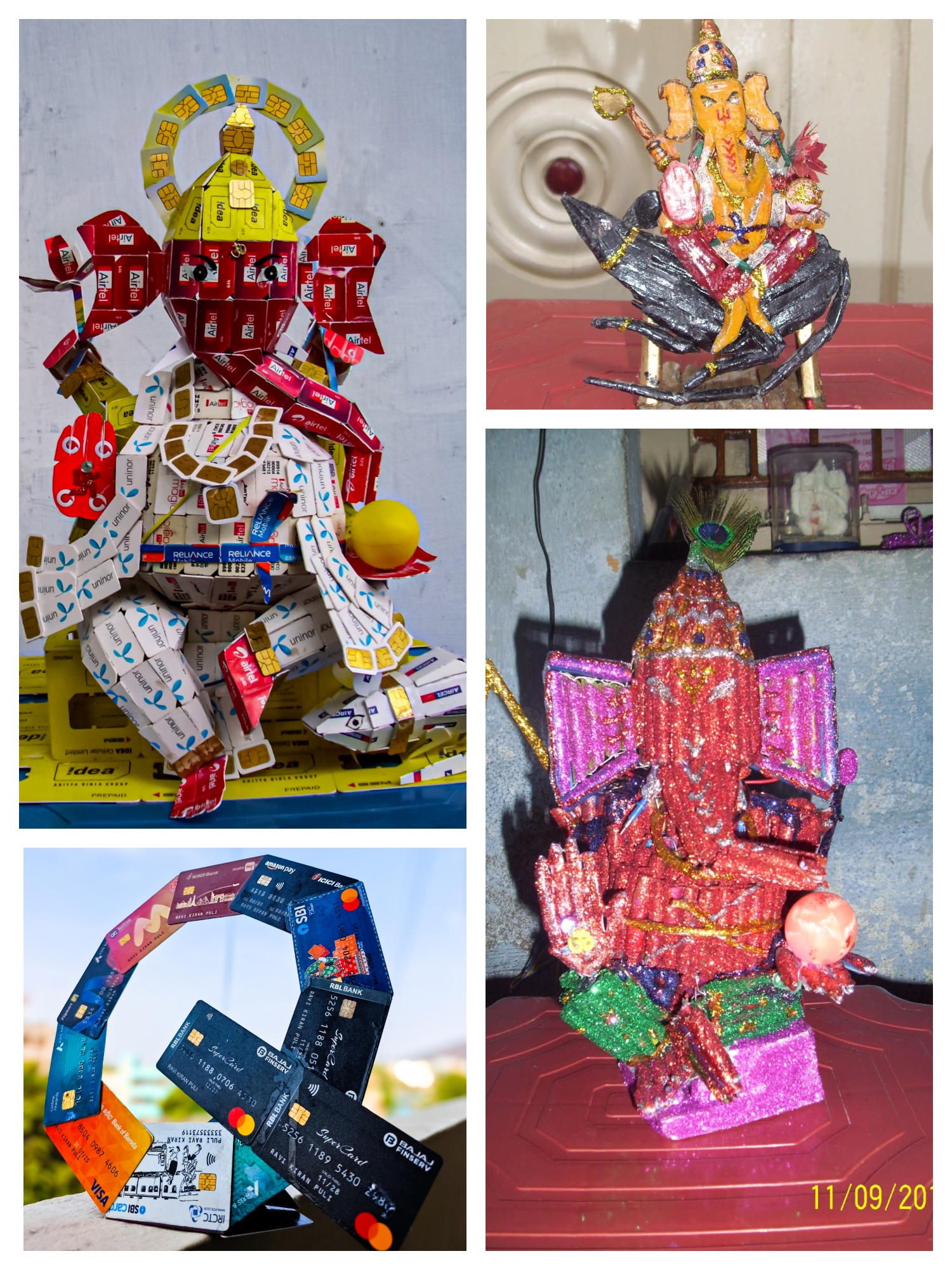
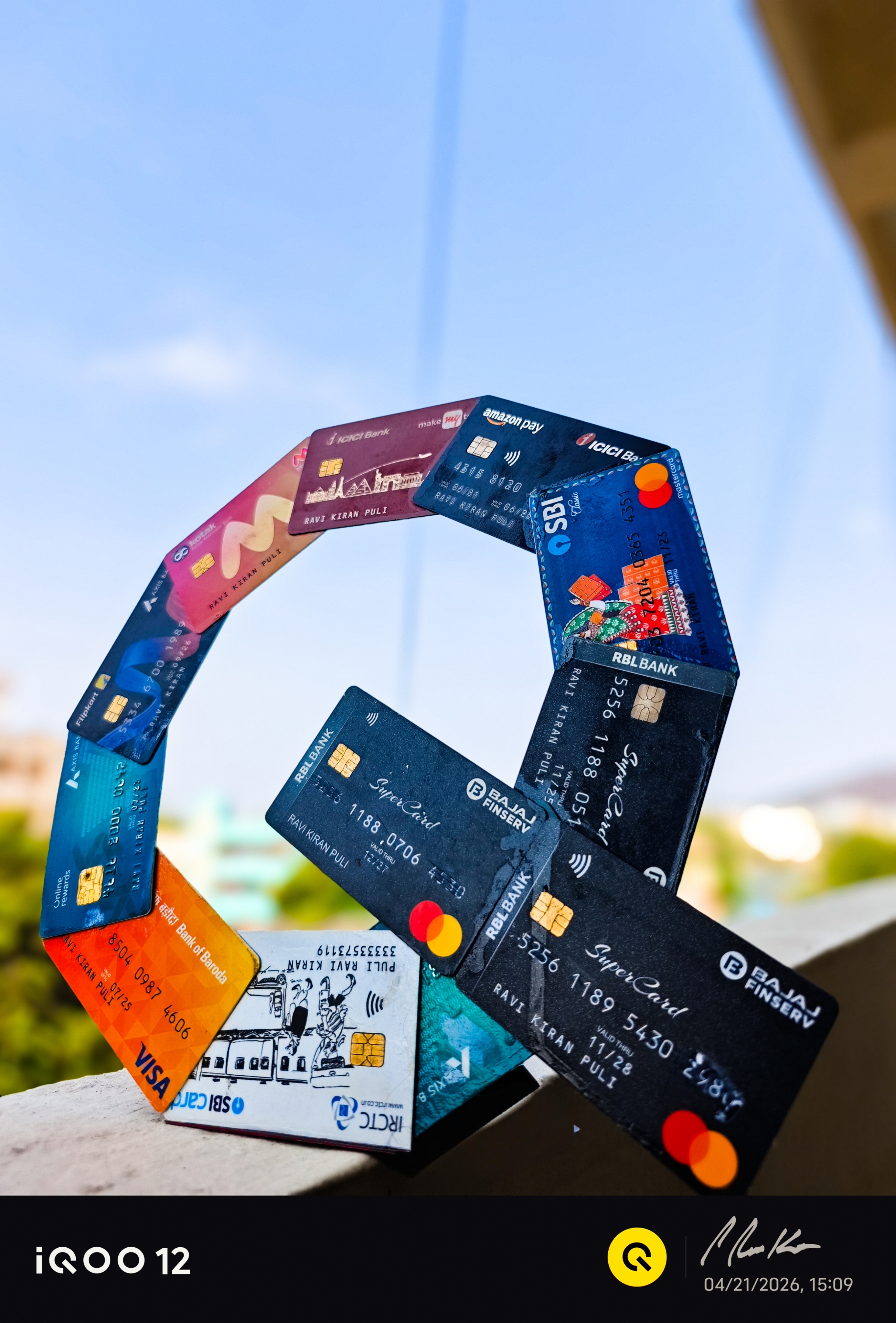
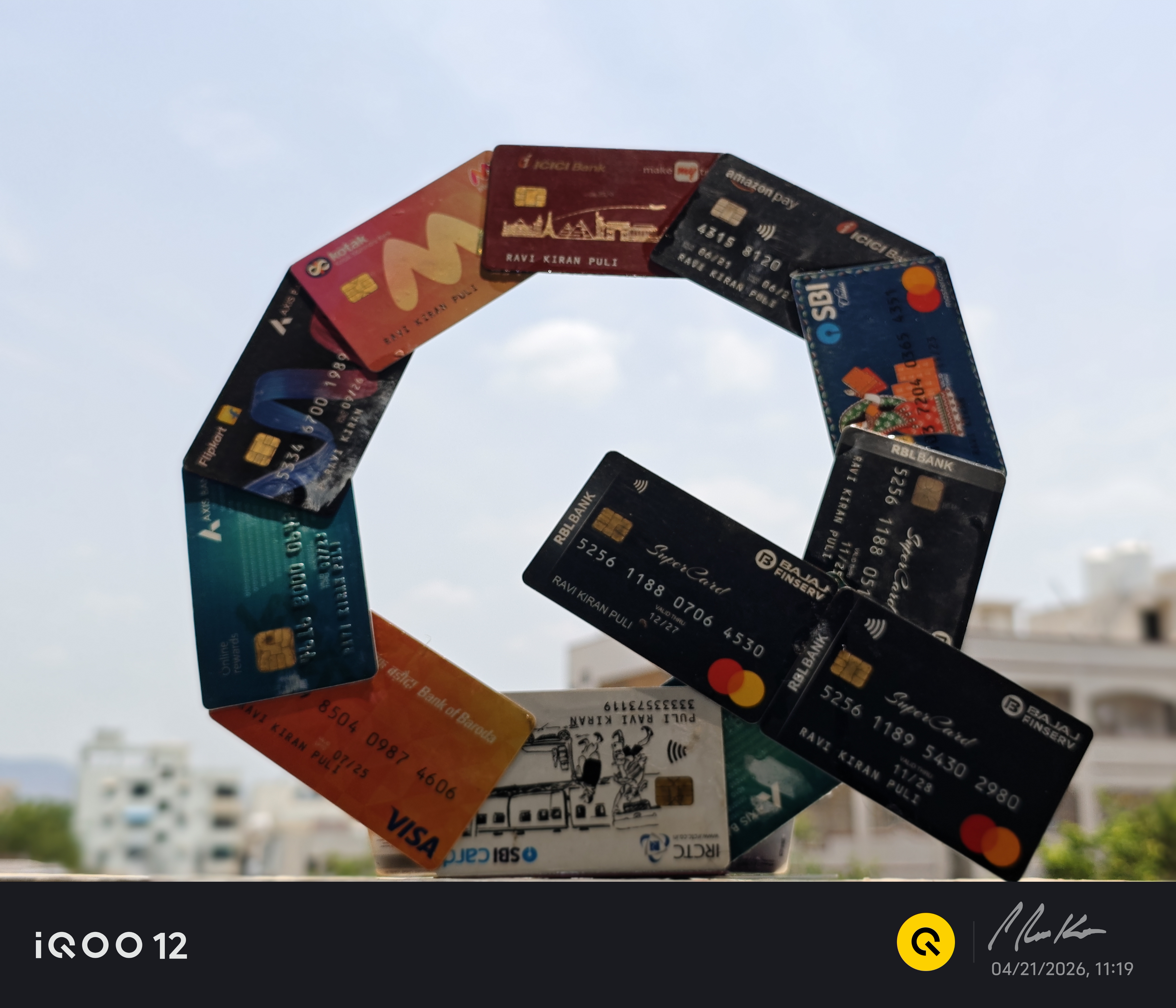
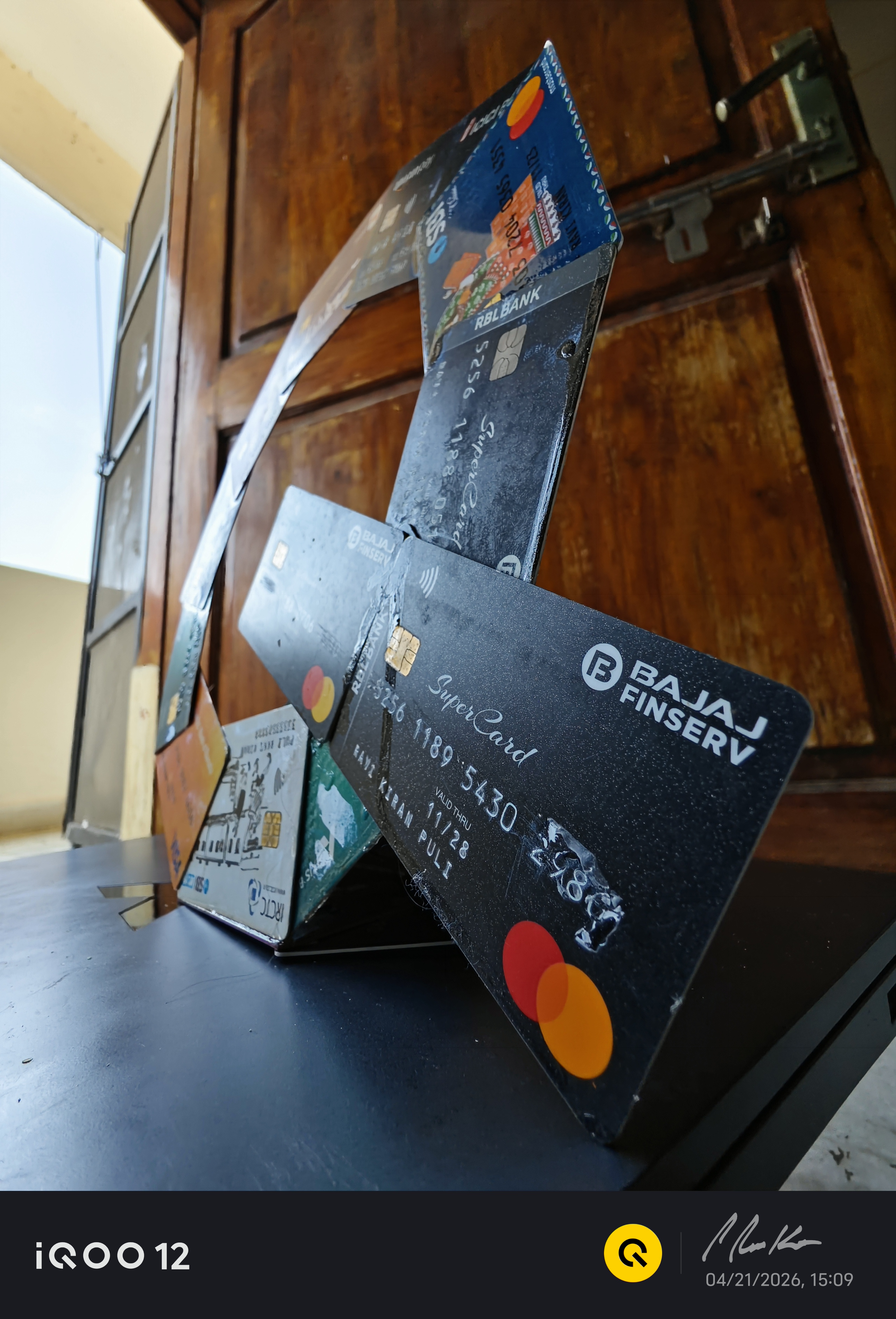
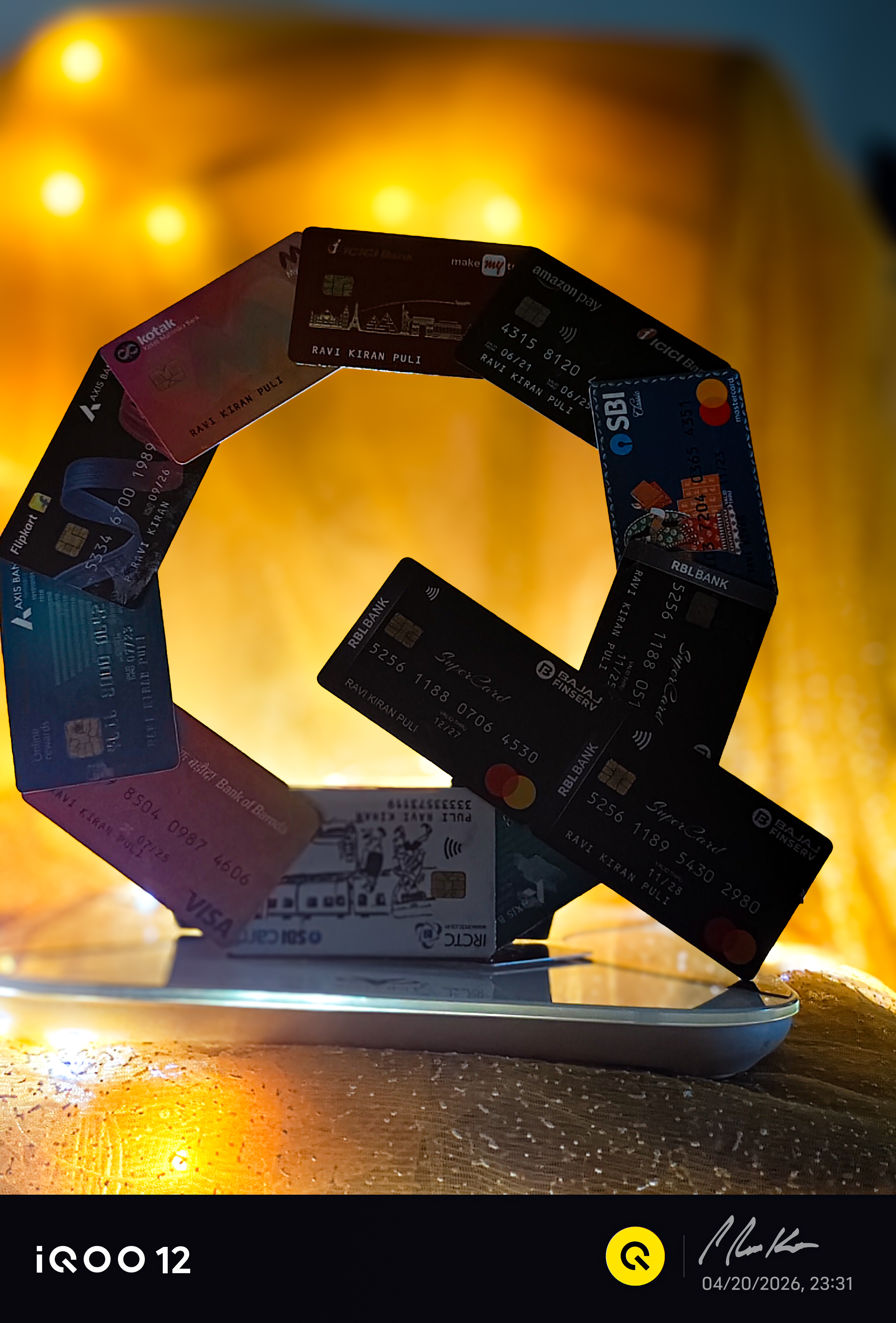
Building on the journey of creative engineering, this latest project takes a turn toward sustainable branding. By using expired credit cards—often a source of non-biodegradable waste—this installation reconstructs the iconic iQOO "Q" logo into a vibrant, multi-layered sculpture.
It’s a visual representation of how we can transition from a "spending" mindset to a "saving" mindset—saving not just money, but the environment.

The Design Concept
1. Material with Meaning
Each card used in this sculpture has a story, but once expired, they become "dead plastic." By interlocking these cards, the project highlights upcycling—transforming functional waste into a structural piece of art.
2. Geometry & Balance
The "Q" is formed through a precise arrangement of cards from various banks (ICICI, SBI, Axis, and more). The challenge was maintaining the perfect circular curve of the logo while ensuring the "tail" remained stable. The result is a colorful mosaic of financial history turned into a tech-inspired icon.
A 18-Year Odyssey: The Evolution of the Eco-Ganesha
The Mission: Giving Waste a Second Life
My mission has always been focused on "Plastic & Material Reusing." By taking everyday objects that have reached the end of their functional life—pencils, pens, SIM cards, or credit cards—and transforming them into sacred art, I hope to inspire a future where we protect the Earth by reimagining its waste.
2008: The Pencil Era (The Beginning)
This is where it all started. During my college days, I collected used pencils to create my first eco-friendly Ganesha.
The Detail: The base was engineered as a raft made of pencil segments, proving that even a simple tool can have a monumental second life.
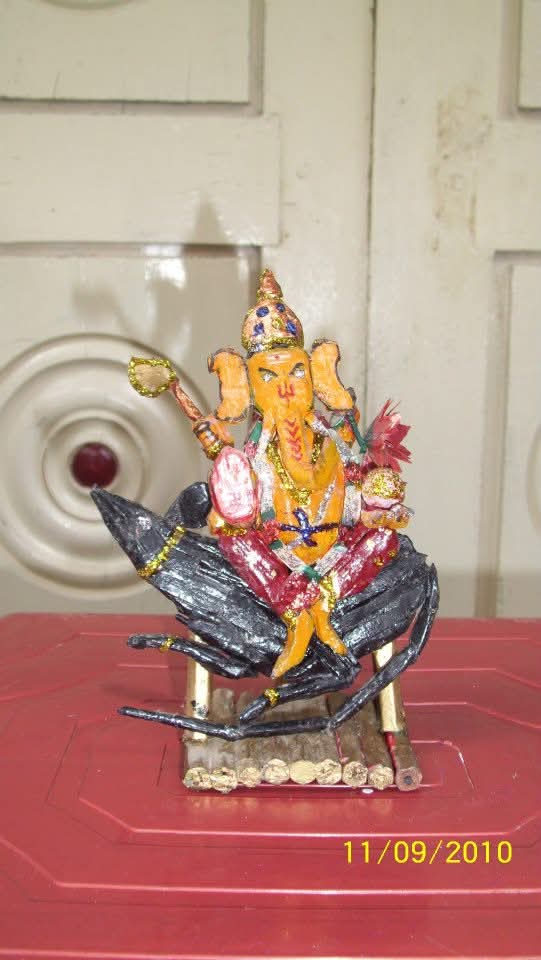
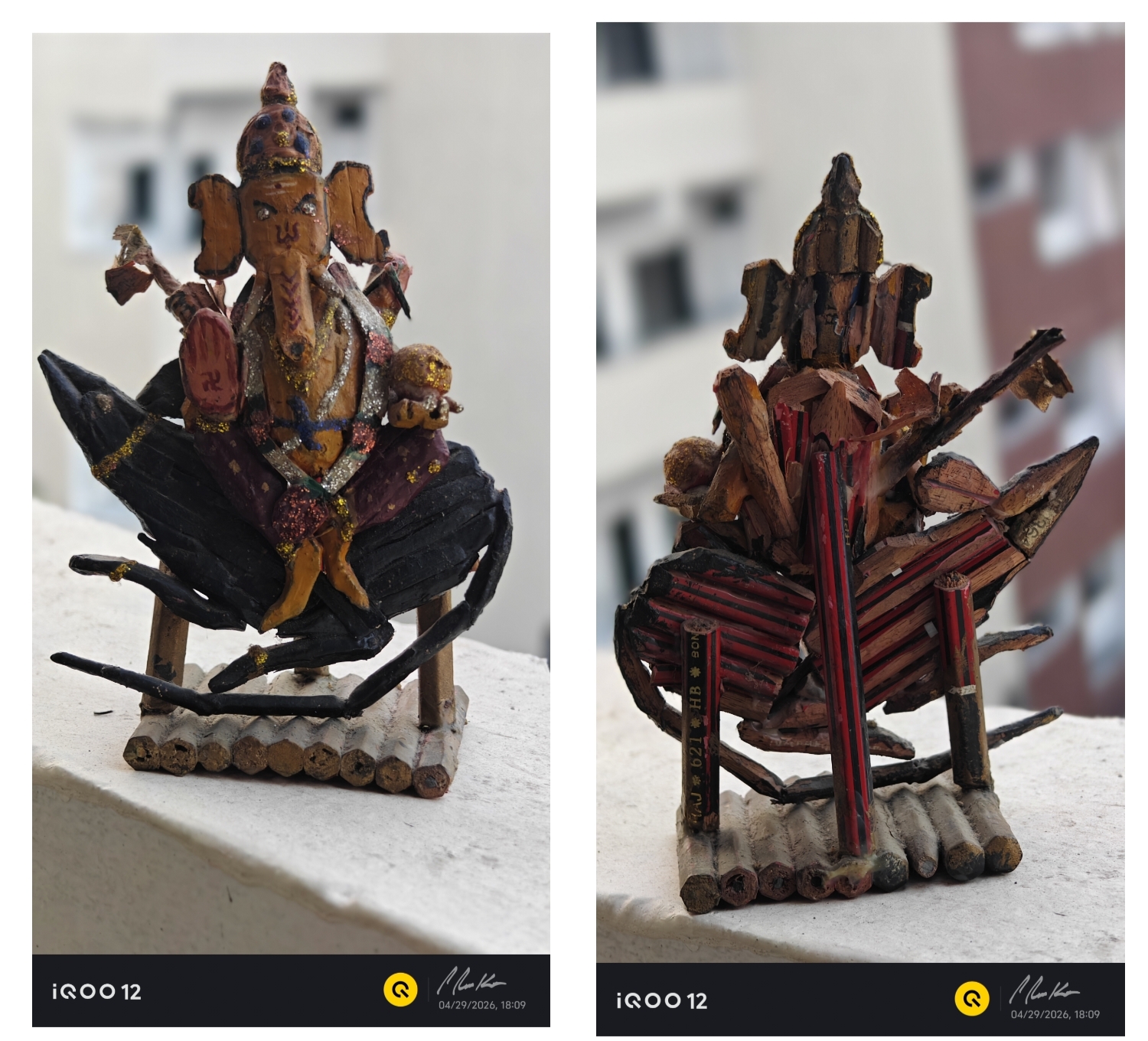
2009: The Pen-Ink Era (200 Ballpoint Pens)
A year later, I transitioned to high-volume plastic waste. I utilized 200 used pens to build a larger, more structural idol.
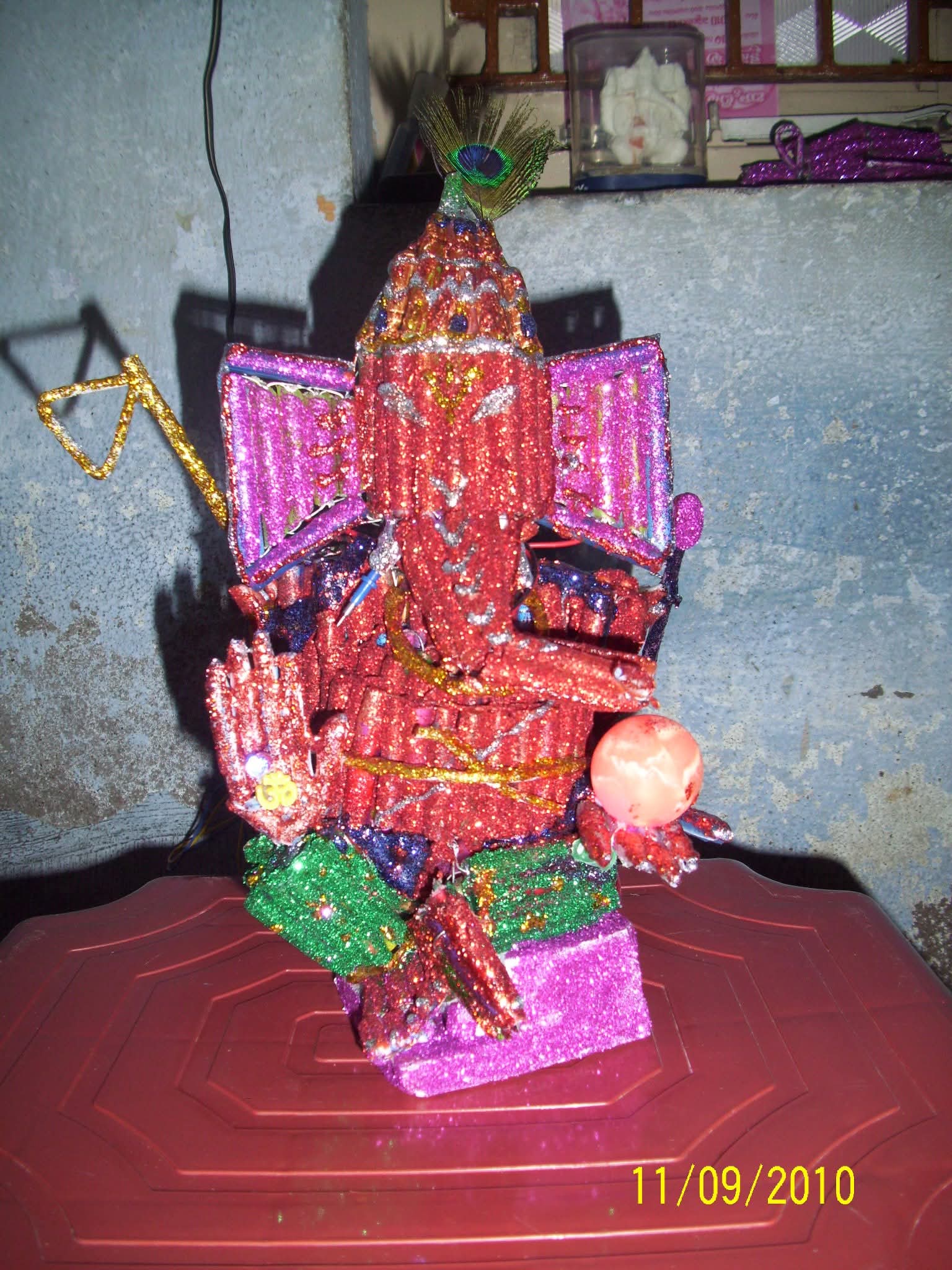
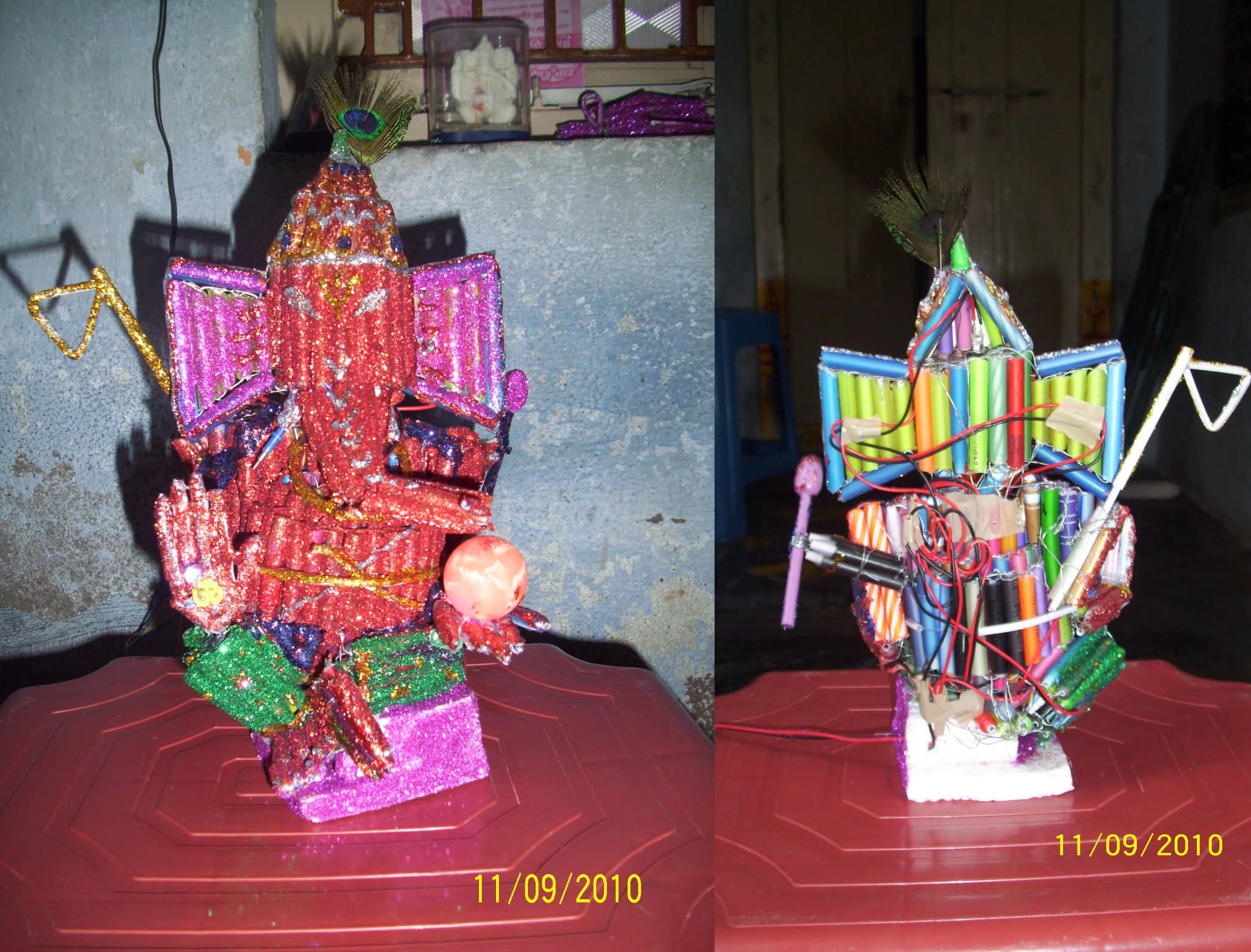
Building a stable sculpture from smooth plastic casings required a new level of technical patience and structural engineering.
2010: The Digital Era (500 SIM Cards)
As India’s mobile revolution grew, so did the electronic waste. I created a mosaic Ganesha using 500 expired 2G SIM cards.
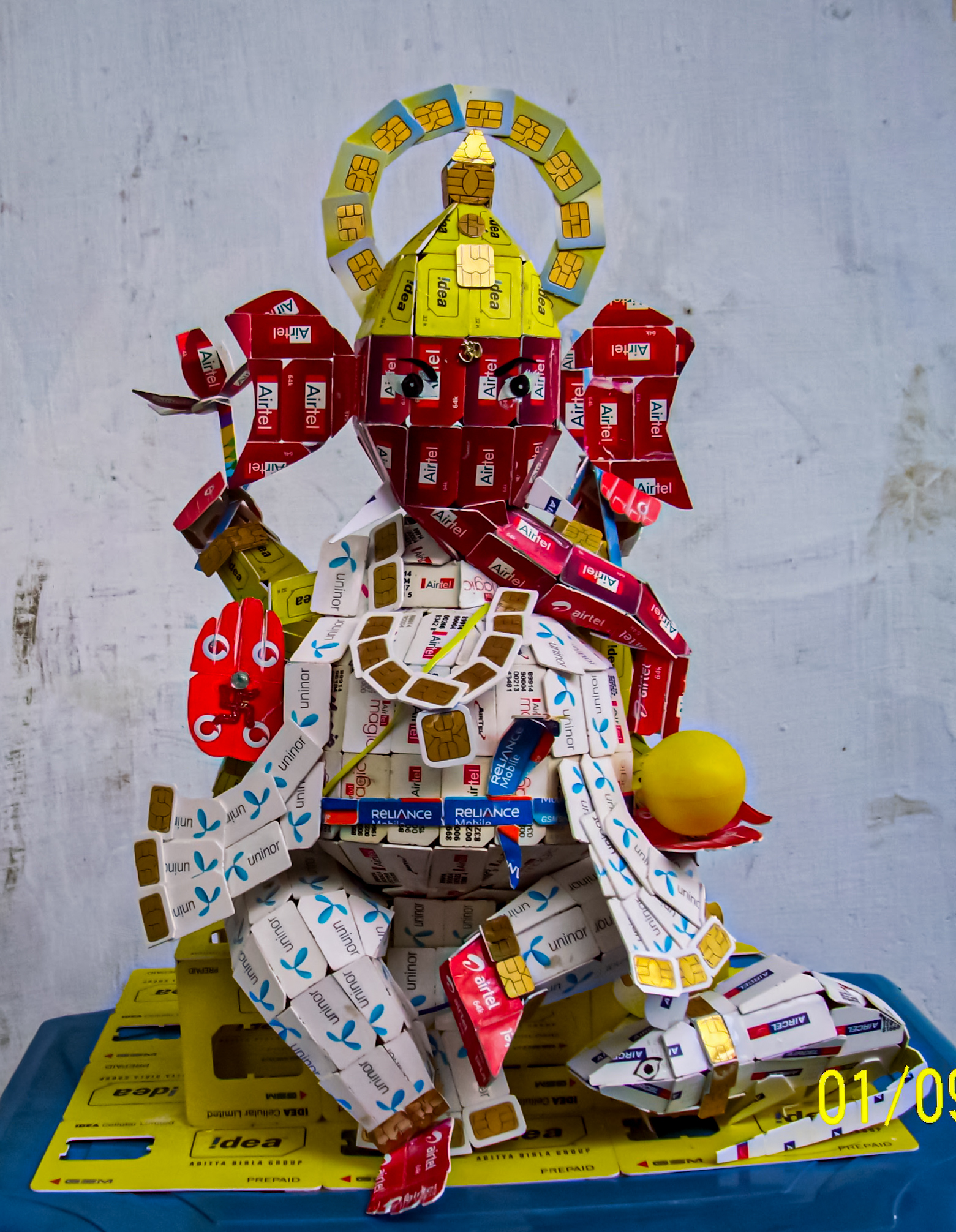
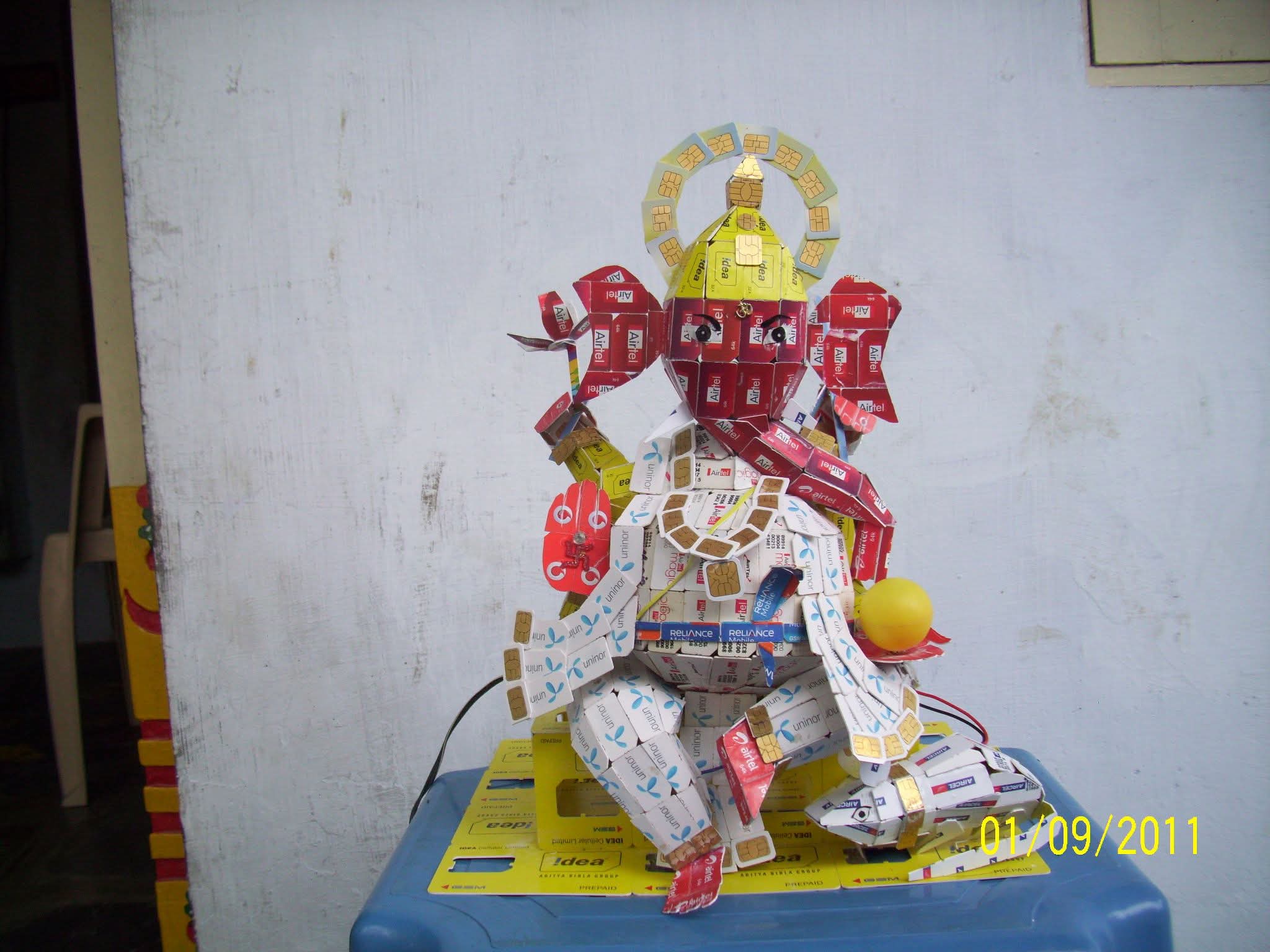
The Detail: This project proved that even obsolete tech contains a hidden, shimmering beauty.
2026: The Modern Era – Credit Cards & Micro-Engineering
Today, my passion has evolved into Micro-Carving and branding. Whether it’s carving an avocado seed or using expired credit cards to form the iQOO "Q" logo, the mission remains the same: Save the Earth from plastic by reimagining its purpose.
Reflecting on the Journey
Looking at the 2008 pencil Ganesha through the lens of a 2026 flagship phone is a powerful reminder. Technology changes, but our responsibility to the environment and our drive to create never should.
Please sign in
Login and share