



























A Short Story About Eid Al Adha.

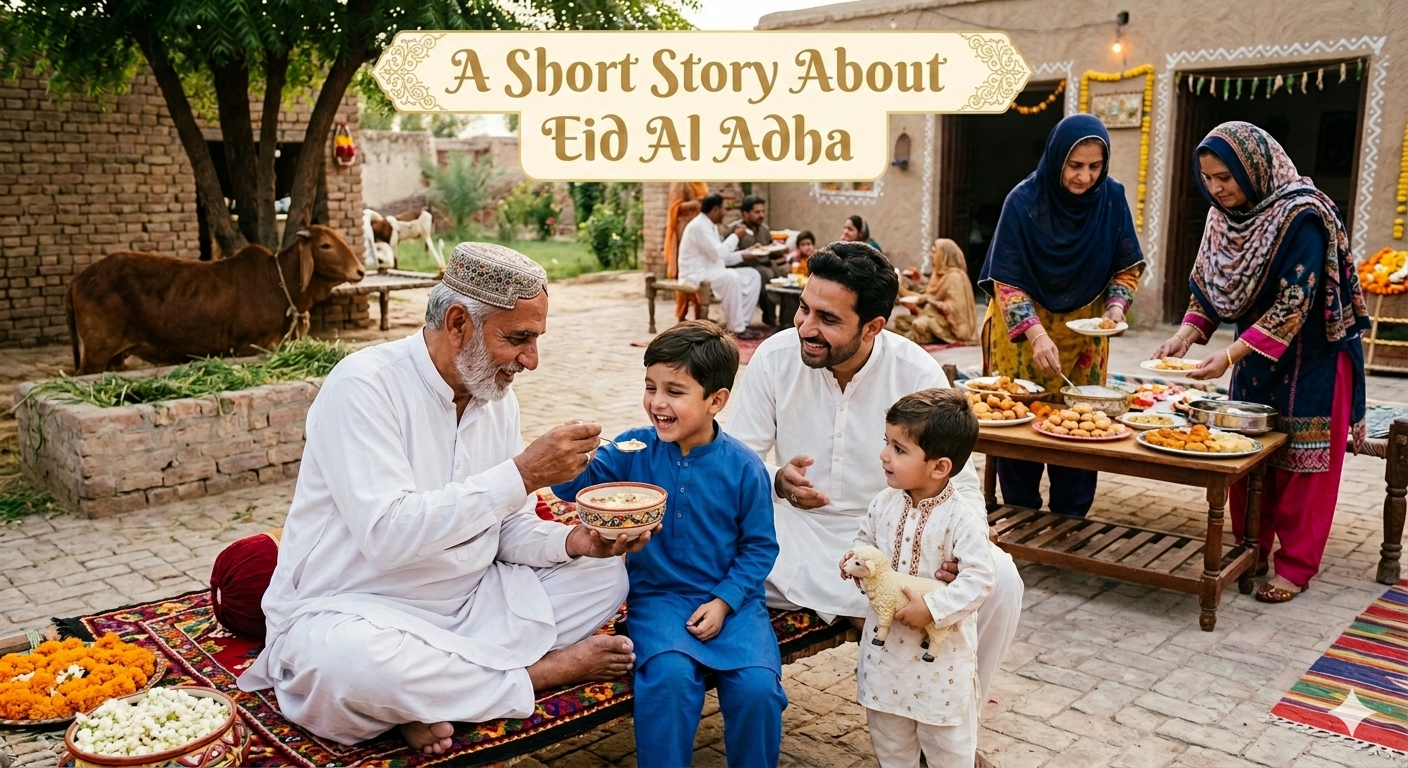
Eid-al-Adha (also known as Bakrid, Bakareid, Eid-uz-Zuha, Qurbani ki Eid, or Eid-e-Qurban; Arabic:
( عید الاضحیٰ ) is a major festival for Muslims, celebrated approximately 70 days after the end of the holy month of Ramadan.
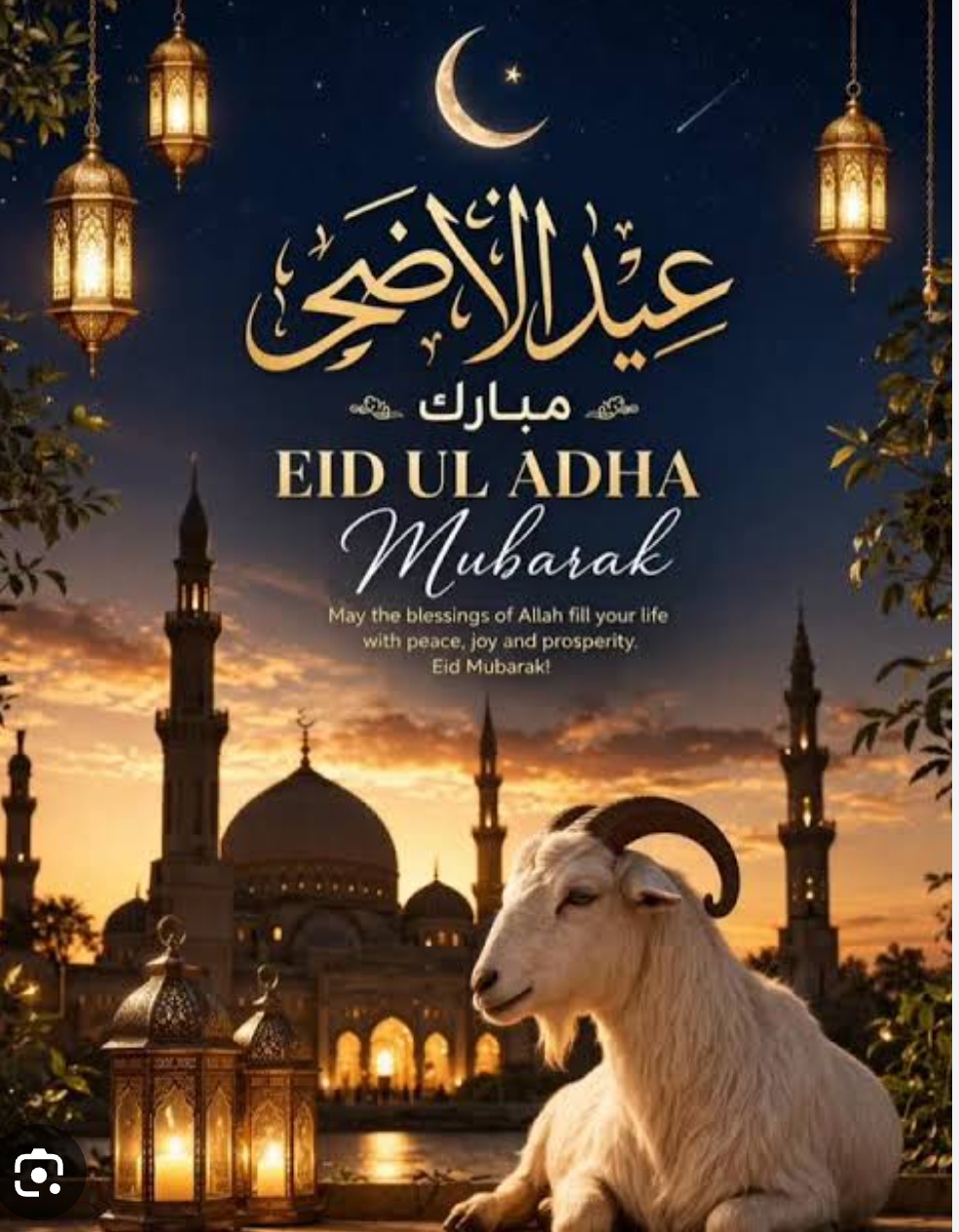
According to Islamic belief, Prophet Ibrahim (Abraham) was about to sacrifice his son Prophet Ismail (Ishmael) in the path of God by His command, but Allah spared his son's life. This festival is celebrated in commemoration of this event.
In Arabic, 'Baqar' means cow. However, in India, Pakistan, and Bangladesh, the name has become associated with the Hindi-Urdu word bakra (goat). Due to the sacrifice of goats in these regions, the original name was slightly modified and it is now more popularly known as 'Bakra Eid'.
Eid-e-Qurban means the spirit of sacrifice. In Arabic, 'Qurb' refers to closeness or being very near, meaning on this occasion, Allah becomes very close to humanity. Sacrifice refers to the slaughtering of an animal, which is done on the 10th, 11th, 12th, or 13th of Dhu al-Hijjah (the month of Hajj) to please God. It is written in the Quran: "We have granted you the Kausar, so pray to your Allah and offer sacrifice."
On Bakrid, people offer a goat for sacrifice and also nurture a goat.
This Eid is known by various names such as:
Eid al-Adha
Eid ul-Adha
Eid ul-Zuha
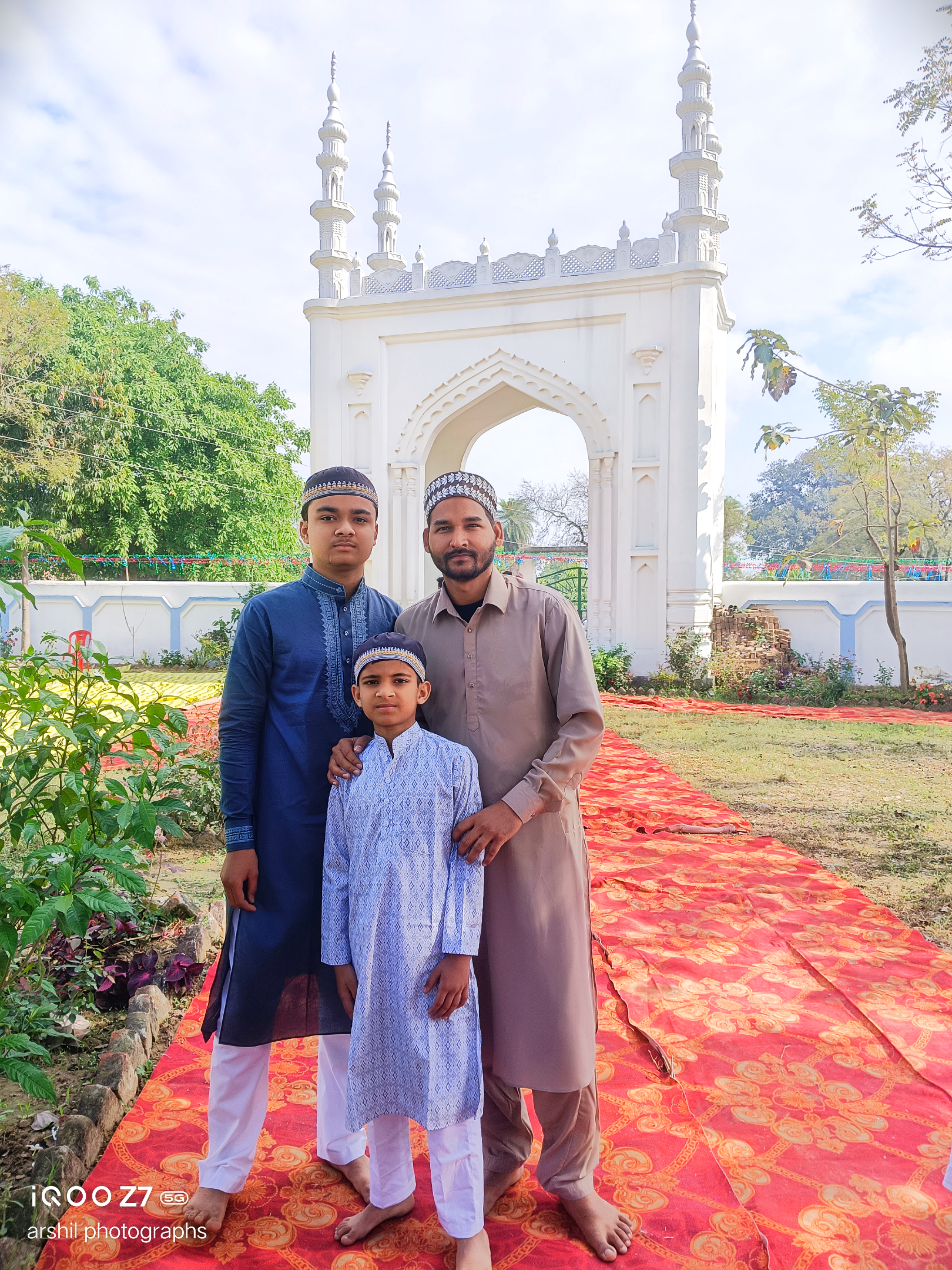
On Eid al-Adha, Muslims gather in massive numbers at mosques. The sight of millions of Muslims dressed in white kurtas offering Eid prayers at an Eidgah (large open-air mosque) is truly heartwarming.
Following the prayers, quadruped animals such as camels, goats, castrated goats, and sheep are sacrificed. Eid al-Adha is celebrated on the \(10^{th}\) day of the month of Dhu al-Hijjah.

The Eid prayer should be performed congregationally. Women's participation in the prayer congregation varies from community to community. It consists of two Rakats (units), with seven Takbirs in the first Rakat and five Takbirs in the second. For Shia Muslims, Salat al-Eid differs from the five daily prescribed prayers, as there is no Adhan (call to prayer) or Iqamah for the two Eid prayers. After the Salam (concluding the prayer), a Khutbah (sermon) is delivered by the Imam.
At the conclusion of prayers and sermons, Muslims embrace one another, exchange greetings (Eid Mubarak), give gifts, and visit each other. Many Muslims invite their non-Muslim friends, neighbors, colleagues, and classmates to their Eid celebrations on this occasion to better acquaint them with Islam and Muslim culture.
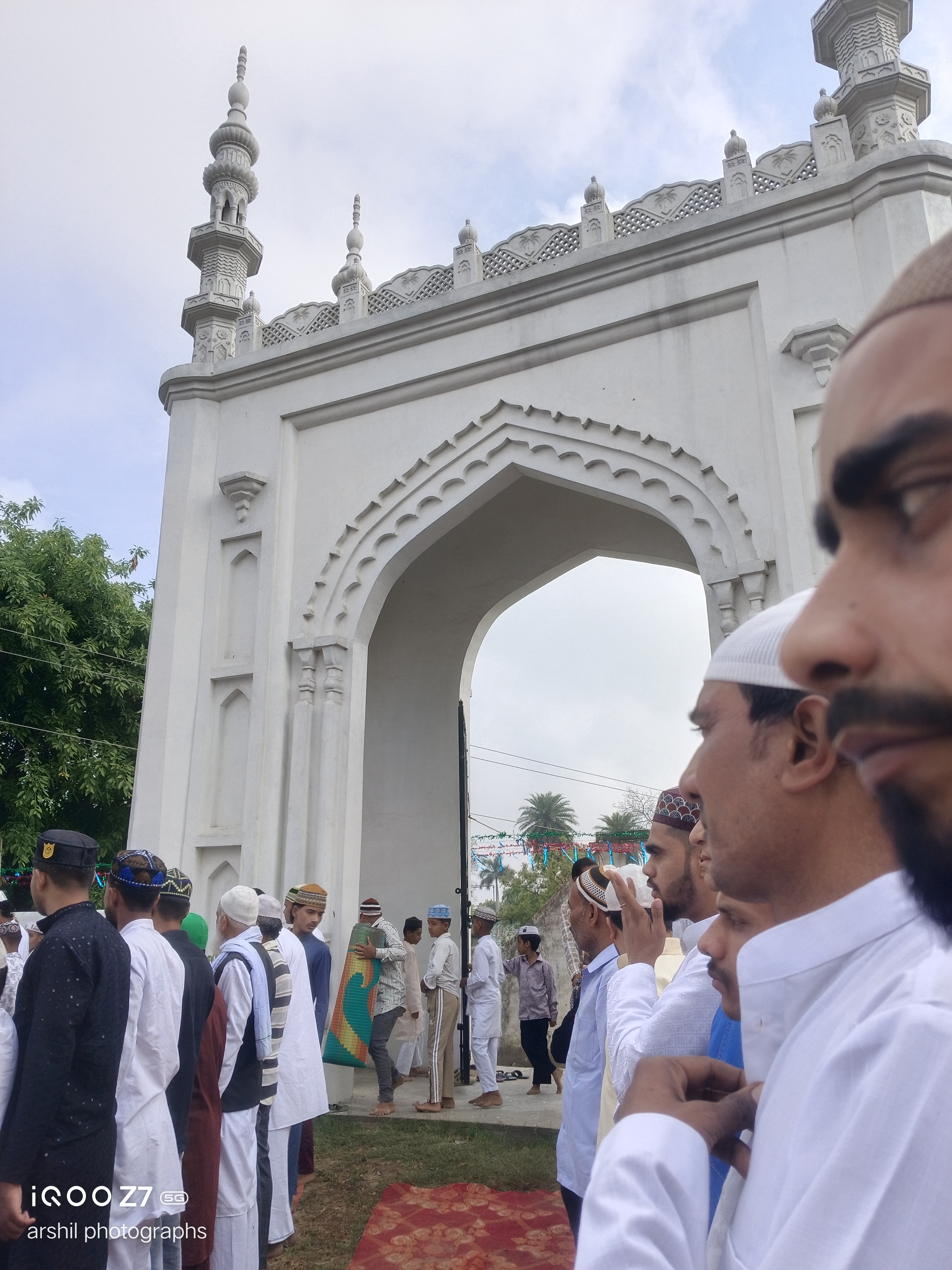
According to Islamicpedia, the prayer for Bakrid (Eid-al-Adha) consists of two Rak'ahs, which are offered in a congregation without Adhan and Iqamah. This prayer has additional Takbirs—generally 6 in the first Rak'ah and 5 in the second, although this number may vary slightly among different Islamic sects. After the prayer, a Khutbah (sermon) is delivered by the Imam, which is considered Sunnah to listen to. Muslims are advised to wear nice clothes, apply perfume, and offer the prayer in an open ground or a large gathering.
My heartiest greetings of Eid al-Adha to all my countrymen and iQOO community FAMILY ❤️
@iQOO Connect @NipunMarya @parakram_h @ParthNirmal @TechSAM009 @ShankarSingh @NITIN @MKJEDI @Manab10 @HasanRazaKhan @Saurav @JStreetS
Please sign in
Login and share