



























Thread No :- 448 Saving a Dead Orbit : The Unprecedented Space Rescue

:: Off Topic Lobby Thread Series ::
Day 173 :- 1 / 3

Hey iQOO family 👋
How's all doing hope you are doing well and
questing like a super quester ....
Space exploration is full of incredible feats, but what happens when a legendary space telescope starts falling back to Earth with no way to save itself?
NASA is about to attempt something completely unprecedented on June 27—a daring commercial orbital rescue mission to catch a falling observatory.
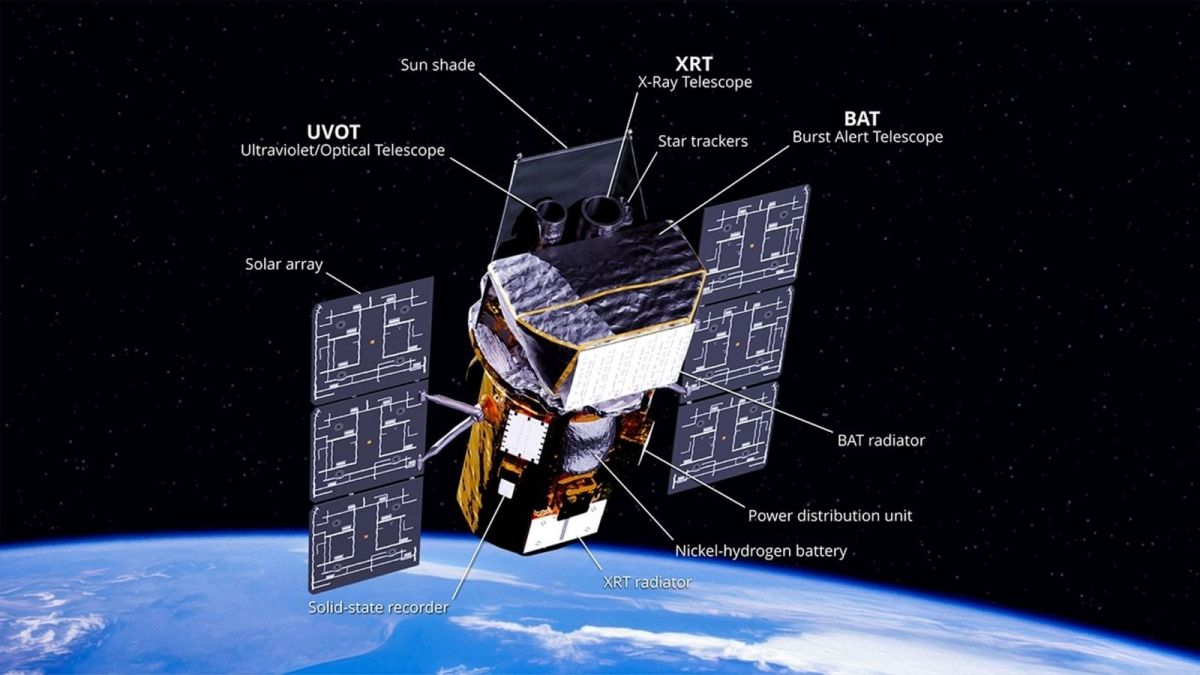
Here is everything you need to know about this gripping cosmic operation👇
🛰️ The Crisis: A Legend in Danger
Launched in 2004, NASA’s Neil Gehrels Swift Observatory was only supposed to last two years. Instead, it spent over two decades capturing more than 2,000 gamma-ray bursts, shedding light on violent cosmic collisions and the birth of heavy elements like gold.
However, heightened solar activity has caused Earth's upper atmosphere to expand. This has created a massive atmospheric drag on the spacecraft.
Because Swift was never built with built-in thrusters or propulsion systems, it has no way to push itself back up. Without intervention, it will fall and burn up in our atmosphere before the end of the year.
The Rescue: "Swift Boost"
NASA isn't letting it go down without a fight. They have partnered with a startup called Katalyst Space Technologies to launch a mission named Swift Boost.
What makes this historic? Swift has absolutely no docking ports. It was never designed to be serviced or caught.
The Mission Vehicle: A custom-built vehicle named Link, designed and built in a record-breaking nine months.
The Launch: Scheduled for June 27, riding on the final flight of Northrop Grumman's Pegasus XL rocket.
The Plan: Link will carefully approach the falling observatory, deploy mechanical robotic arms to safely grasp it, and gradually tow it back up into a higher, safer orbit over several months.
Why This Matters for the Future ?
If this daring maneuver succeeds, Swift will get at least another five years of operational life to study the secrets of the universe.
But more importantly, it marks a paradigm shift in space sustainability. If we can successfully catch and boost dead-orbit satellites that lack docking ports, we can extend the lifespans of hundreds of millions of dollars worth of space tech—reducing space debris and eliminating the need to abandon perfectly healthy instruments just because they run out of altitude.
Source :-
Theindianexpress

Please sign in
Login and share