



iSIM (integrated SIM): key features, benefits and perspective (2023)

From eSIM to iSIM
The accelerated rise of eSIM technology in the past months sent shockwaves through the telecom industry, challenging the conventional use of SIM cards.
With the mainstream adoption of eSIMs, as predicted by Gartner and further fueled by the launch of the eSIM-only iPhone 14 models in September 2022, both consumers and businesses are feeling the effects.
And the eSIM market is expected to top $16 billion by 2027, according to Juniper Research (February 2023).
But eSIMs are just the beginning.
The iSIM revolution to come
The next revolution in the eSIM world is the
iSIM (aka integrated SIM)
, a SIM that integrates directly into the device's processor.
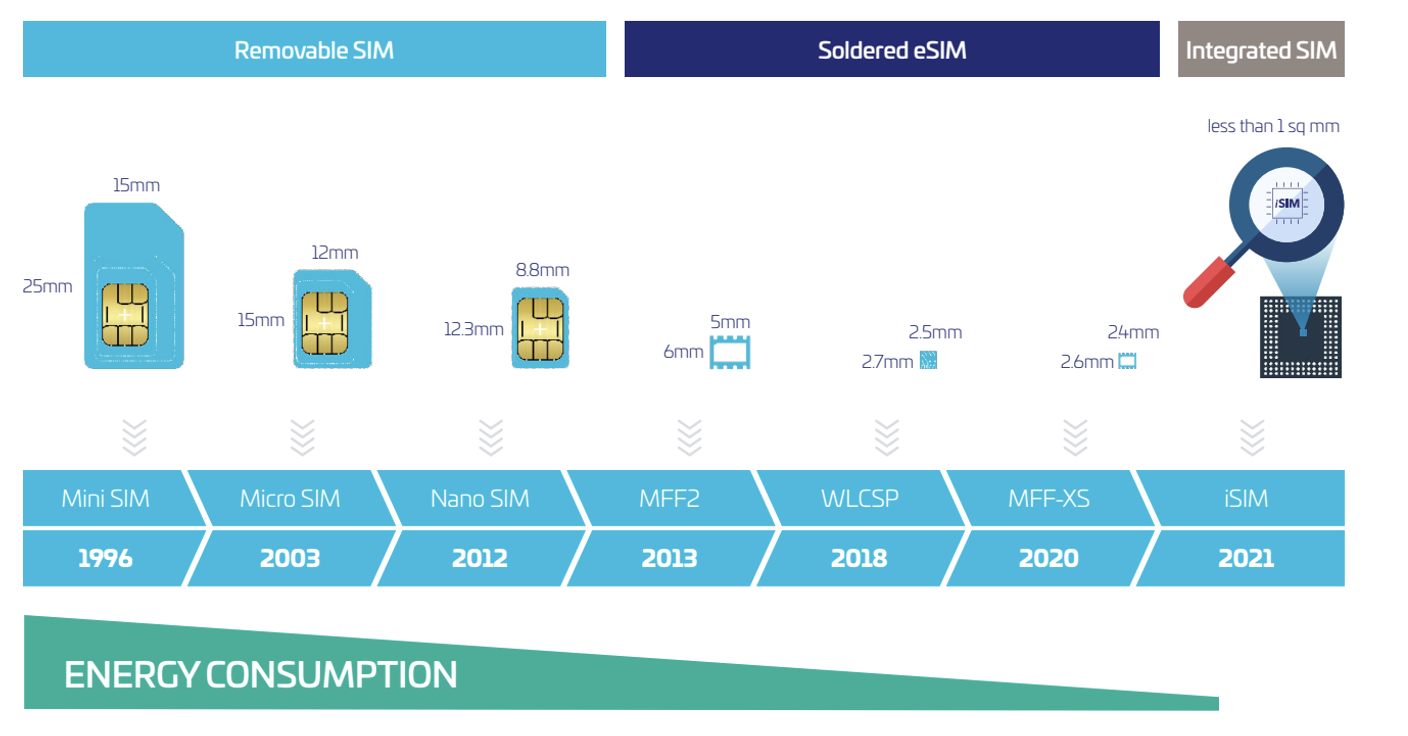
In essence, the iSIM enables devices to connect to a cellular network without needing a physical SIM card or soldered eSIM in a printed circuit board (PCB).
Instead of using a separate physical SIM card, the iSIM technology embeds the SIM features directly into the device's hardware, allowing it to connect to the cellular network.
This feature opens up a range of benefits and opportunities for both manufacturers and carriers.
The iSIM offers two key features:
- It saves space by eliminating the need for a separate component, allowing for the secure connection of smaller devices.
- It requires significantly less power than eSIMs, making, for example, massive IoT use cases more operational.
Benefits of iSIM
The absence of a physical SIM card and tray enables manufacturers to create smaller and more compact devices.
This opens up opportunities for manufacturers to create
smaller, more compact devices
that are easier to carry and use. This will, in turn, reduce the risk of damage from dust or water.
eSIMs and iSIMs simplify manufacturing processes and logistics as they can link to any mobile network operator, regardless of product type.
Overall, the strategic use of iSIMs can significantly improve IoT device design, deployments, updates, and maintenance.
Another benefit of iSIM technology, initiated by eSIM, is
increased security
.
Physical SIM cards can be removed, lost, or stolen, and with them, the ability to access a cellular network.
This drawback can lead to potential data breaches or unauthorized access to sensitive information. With iSIM technology, the SIM information is embedded directly into the device's hardware, making it much more difficult for unauthorized access to occur.
iSIM (and eSIM) technology also provides over-the-air provisioning, making it easier for carriers to manage their customers' devices. A customer must visit a carrier's retail store with traditional physical SIM cards to activate or change their device's SIM information.
With iSIM technology, this can be done remotely, saving the customer time and hassle and making it easier for the carrier to manage their devices.
Increased flexibility
is another benefit of iSIM technology.
With a traditional physical SIM card, a device can only connect to one carrier simultaneously.
With iSIM (and eSIM) technology, a single device can connect to multiple carriers, providing increased flexibility for the user. This feature is particularly useful for customers who frequently travel internationally, as they can switch carriers as needed without purchasing a new SIM card for each carrier.
In conclusion, by eliminating the need for a physical SIM card or an additional soldered eSIM component, iSIM technology reduces hardware costs, enhances security, enables over-the-air provisioning, increases flexibility, and opens up opportunities for smaller device designs.
As the demand for connected devices continues to grow,
iSIM technology
is poised to play an increasingly important role in the future of the cellular industry.
How does iSIM help manufacturers reach their goals?
Both consumer and IoT device manufacturers aim to create products that connect to cellular networks while considering the following design goals:
- Minimizing the cost, maximizing the materials' efficiency, and conserving PCB space for flexibility and competitiveness.
- Reducing power consumption to extend battery life for battery-powered devices.
- Implementing robust security measures to secure the device, maintain end-user privacy, and safeguard cloud services.
- Streamlining testing processes and facilitating cellular feature activation.
The concept of an eSIM functionality running on a secure enclave integrated into a larger IC, also known as a System on Chip (SoC), has been developed to address these needs even better.
Are iSIM more secure than eSIMs?
The security level of iSIM is equal to that of eSIM. The iSIM provides the same level of security as SIM and eSIM by using the same evaluation process and methodology while considering the unique features of an integrated enclave. This is crucial for seamless, multi-national, and interoperable deployments on a large scale.
Podcast
✍️ iSIMs bring smaller, better, faster IoT and consumer devices.
Catch the latest Trending Tech Podcast to hear how integrated SIM technologies will change Internet of Things and consumer communications, enabling smaller device footprints, greater system integration, higher performance, and increased memory capacity.
Source: THALES
Please sign in
Login and share