



























AI-Powered Robot Chemist: Paving the Way for Oxygen Autonomy on Mars

AI-Driven Breakthrough: Oxygen Synthesis on Mars Marks a Giant Leap for Space Exploration
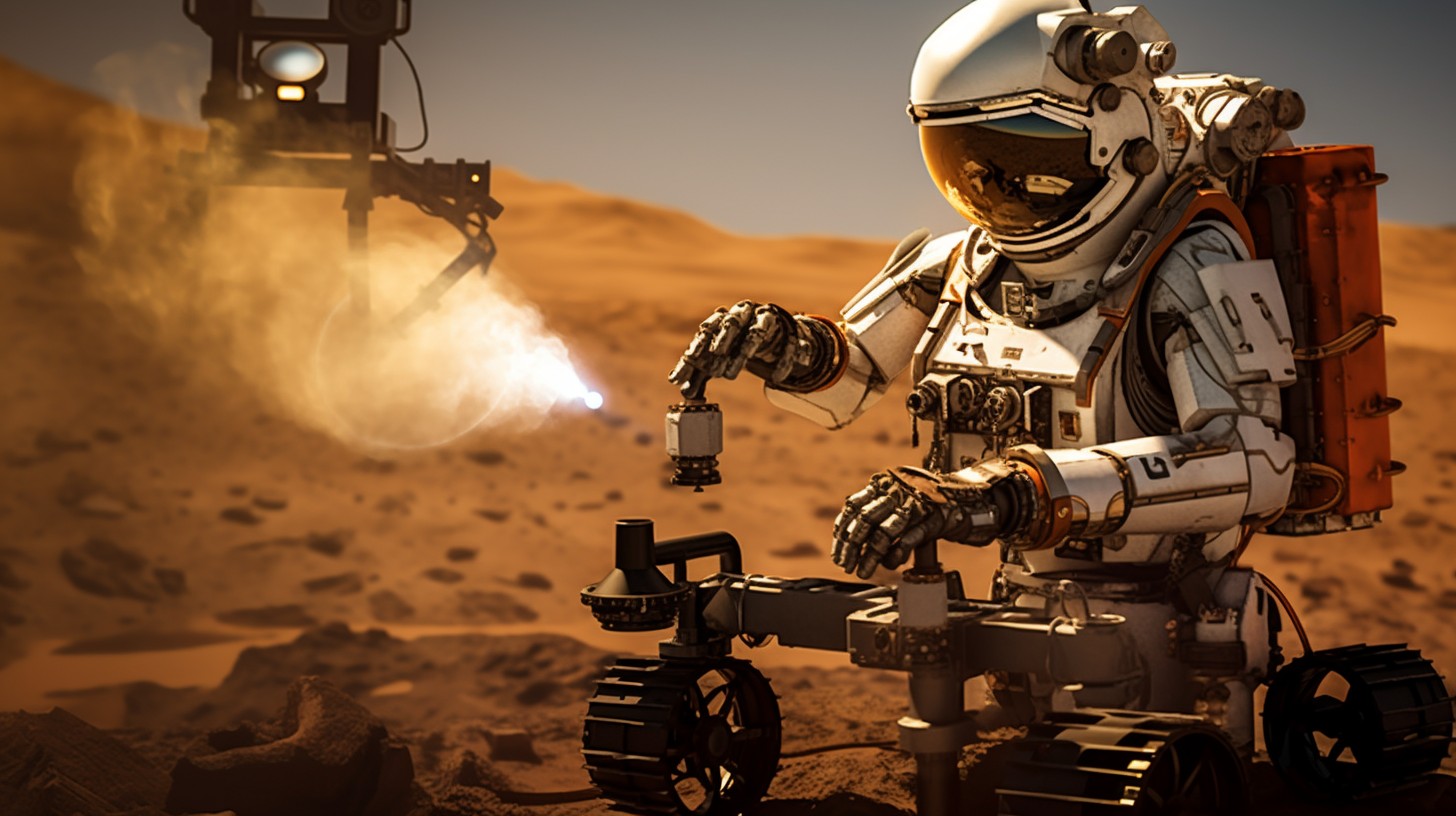
In a groundbreaking development, scientists have unveiled an AI-powered robot chemist capable of synthesizing oxygen-producing compounds from Martian meteorites. This technological leap holds immense promise for future Mars missions, presenting opportunities to optimize resources and decrease dependence on transporting oxygen from Earth.
The key focus of this innovation lies in tapping into the abundant frozen water ice deposits on Mars. By leveraging local resources efficiently, the researchers aimed to address the critical need for oxygen in sustaining life and fueling rockets during crewed missions to the red planet.
The AI chemist, equipped with a laser-scanning mechanism, autonomously identified millions of molecules derived from six metallic elements found in Martian rocks: iron, nickel, manganese, magnesium, aluminum, and calcium. Operating independently, the robot synthesized and tested an impressive 243 different molecules within just six weeks, showcasing a speed and efficiency unattainable through conventional methods.
The most significant aspect of this breakthrough lies not only in the successful identification of a catalyst capable of splitting water in Mars-like temperatures but also in the unprecedented efficiency demonstrated by the AI-driven approach. The researchers underscore that traditional trial-and-error methods would have taken around 2,000 years for a human scientist to achieve similar results.
This remarkable speed in scientific discovery highlights the transformative role of AI in space exploration. However, scientists emphasize the importance of human guidance in shaping the capabilities of AI. As we celebrate the prowess of artificial intelligence, it is crucial to recognize the collaborative efforts required to adapt the AI chemist to operate under diverse Martian conditions, accounting for factors such as atmospheric composition, air density, humidity, and gravity.
The successful synthesis of oxygen on Mars through AI-driven experimentation signifies a major stride towards achieving sustainability and self-sufficiency in future interplanetary missions. As we look ahead, the fusion of human expertise and AI innovation will undoubtedly play a pivotal role in unlocking the mysteries of the cosmos and establishing a sustainable human presence beyond Earth. The journey to Mars has just taken a significant leap forward, and the marriage of artificial intelligence and human ingenuity is proving to be an indispensable force in shaping the future of space exploration.
Nitin Panwar
Moderator
Please sign in
Login and share