



























Diving Deep: How the Internet Crosses Oceans in a Blink

Our world feels interconnected, with information zipping from continent to continent in the blink of an eye. But how does this magic happen? While satellites may get the glamorous credit, the unsung heroes of transoceanic data transfer are the mighty undersea cables, weaving an invisible web across the depths.
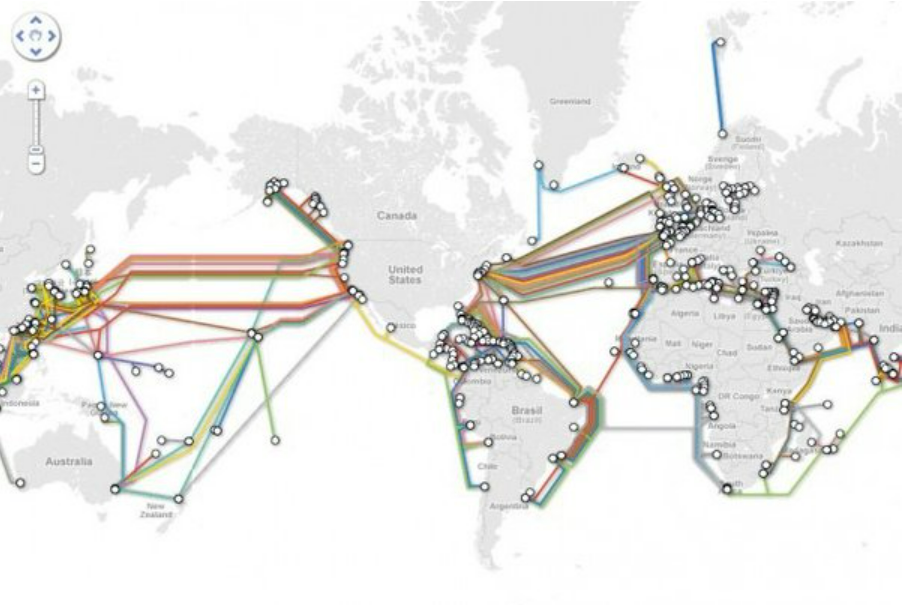
Forget clunky copper wires, these cables are marvels of engineering, their thin strands made of optical fibers carrying data as pulses of light. These strands, thinner than a human hair, can transmit information at the speed of light, making even vast distances disappear in milliseconds.
But laying these cables is no simple feat. Imagine laying thousands of kilometers of fragile fiber across treacherous ocean floors, battling currents, storms, and even hungry sharks! Specialized ships deploy the cables, carefully embedding them in the seabed for protection. And just like land-based highways, undersea cables have landing points on each continent, connecting to sprawling networks of terrestrial cables that deliver data to our devices.
So how vast is this underwater network? There are currently over 400 active submarine cables, stretching over 1.5 million kilometers – enough to wrap around the Earth nearly 20 times! These cables carry a staggering 98% of all international internet traffic, ensuring the seamless flow of information across borders and oceans.
But who lays these cables and why? Companies like Google, Facebook, and Amazon are major players, with a vested interest in maintaining a fast and reliable global internet. Governments and international consortia also play a role, recognizing the vital importance of digital connectivity for economic growth and international relations.
However, this underwater infrastructure is not without its challenges. Cable breaks can disrupt entire regions, highlighting the vulnerability of this seemingly invisible backbone. Additionally, ensuring equitable access to this global network remains a complex issue, with disparities in internet speeds and connectivity persisting worldwide.
Looking ahead, the future of undersea cables is bright. New technologies are being developed to boost capacity and speed, with some cables now capable of transmitting petabytes of data per second. Additionally, research is underway on new materials and construction methods to improve resilience and reduce environmental impact.
So, the next time you scroll through your newsfeed or video chat with a friend across the globe, remember the silent symphony of data playing out beneath the waves. These undersea cables, the unseen arteries of the internet, are a testament to human ingenuity and our insatiable desire for connection.
Please sign in
Login and share