




























A New Deep-Sea Creature with Fang-Like Teeth Has Been Found

A mysterious deep-sea creature with fang-like teeth has been discovered in the unexplored waters off the coast of Cabo Verde.
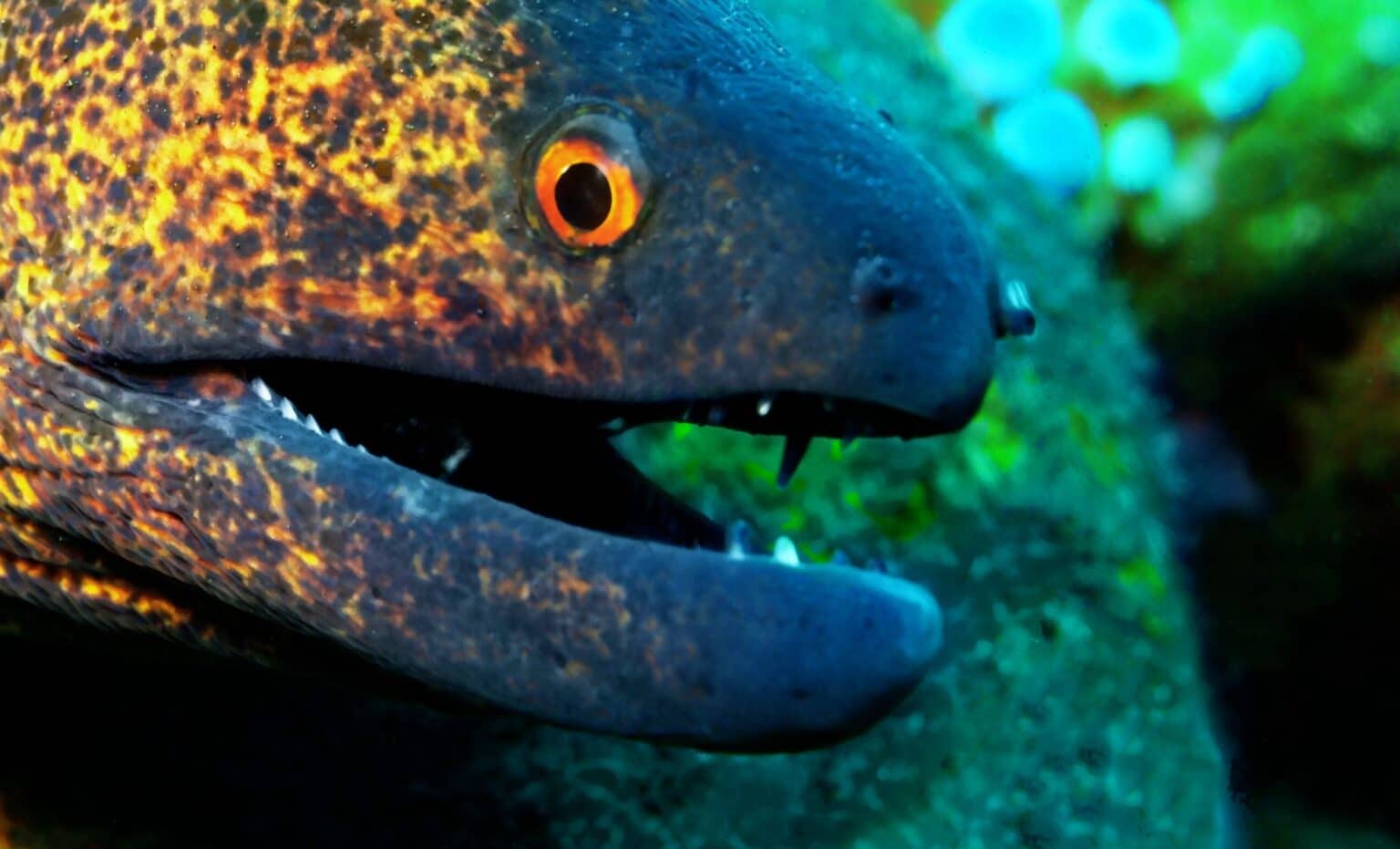
A groundbreaking discovery has emerged from the deep waters off the coast of Cabo Verde, as scientists have identified a new eel species with fang-like teeth and a distinctive spoon-shaped nose. This unexpected find was made during an expedition by the research vessel Dr. Fridtjof Nansen, which was studying marine biodiversity around the Cabo Verde Archipelago. The study, published in Zootaxa, highlights this rare discovery and the importance of the region’s still largely unexplored ecosystems. The newly discovered species has been named Mystriophis caboverdensis, marking the first documented specimen of its kind.
A Surprising Discovery in the Deep Sea
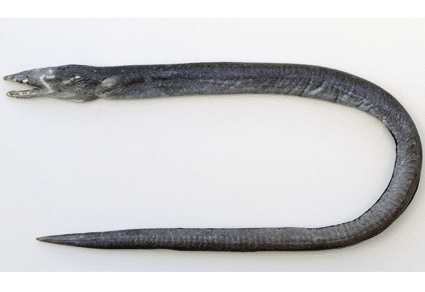
During a deep-sea research mission aimed at cataloging marine species in the Eastern Central Atlantic, researchers aboard the Dr. Fridtjof Nansen trawled the waters of the Cabo Verde Archipelago. The team’s objective was to gain a deeper understanding of local fish populations and marine ecosystems. As they hauled in their catch, they were shocked to discover an eel that did not match any known species. This eel, measuring about 28 inches (0.7 meters) long, featured a blunt snout, large eyes, and fang-like teeth around its head, making it immediately stand out. A closer examination revealed that it belonged to the genus Mystriophis, previously known to contain similar species but never one with such unique characteristics.
Key Features and Characteristics of Mystriophis Caboverdensis
The new eel species, named Mystriophis caboverdensis, is characterized by several distinct features that set it apart from its relatives. These include its short, blunt snout, which gives it its spoon-nose appearance, and large, expressive eyes. One of the most notable features of this eel is the fang-like arrangement of its teeth, particularly near its pointed head. Dr. Alciany Nascimento da Luz, one of the lead researchers of the project, explained, “It co-occurs in the tropical eastern Atlantic with two similar looking species.” However, the arrangement of its teeth and fin placement made it clear that this eel deserved its own classification. The dorsal fin, for example, sits slightly further ahead compared to its closest relatives.
The Role of DNA Analysis in Identifying New Species
Despite the unusual appearance of the eel, identifying it as a new species was not immediately apparent. Researchers had to rely on detailed morphometric analysis, examining the fin placement, head-to-body ratio, and other physical traits. This approach helped distinguish Mystriophis caboverdensis from other similar species. Additionally, genetic testing played a crucial role in confirming its status as a new species. DNA analysis revealed a 3.6% genetic difference between this eel and its closest relative, Mystriophis crosnieri, which was enough to classify it as a distinct species. This combination of physical and genetic data ensured that the eel could be classified as separate from other known species in the region.
Source;IndianDefencereview
Please like and follow your gaming and knowledge Questers @Kvkartikji04
Please sign in
Login and share